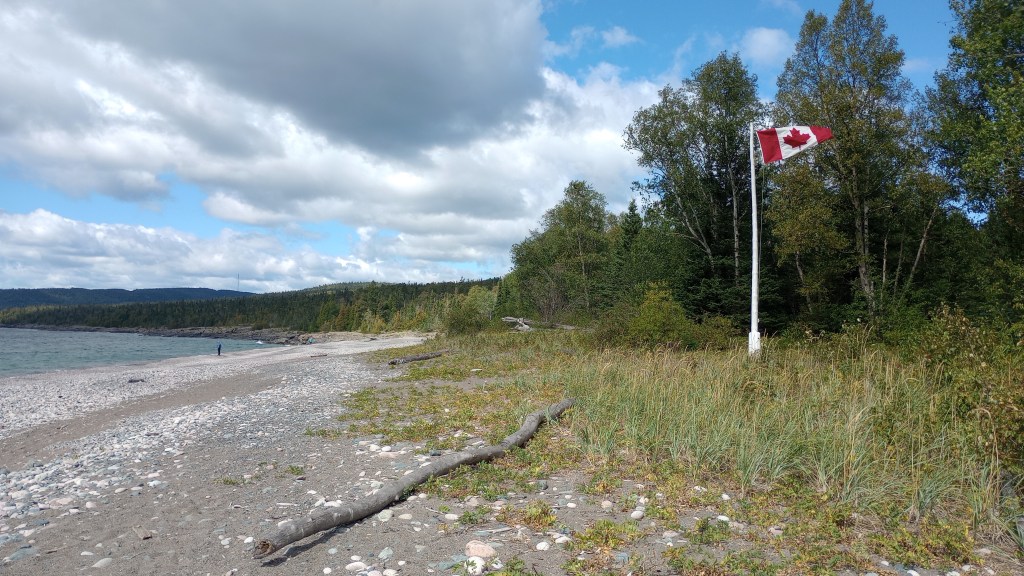
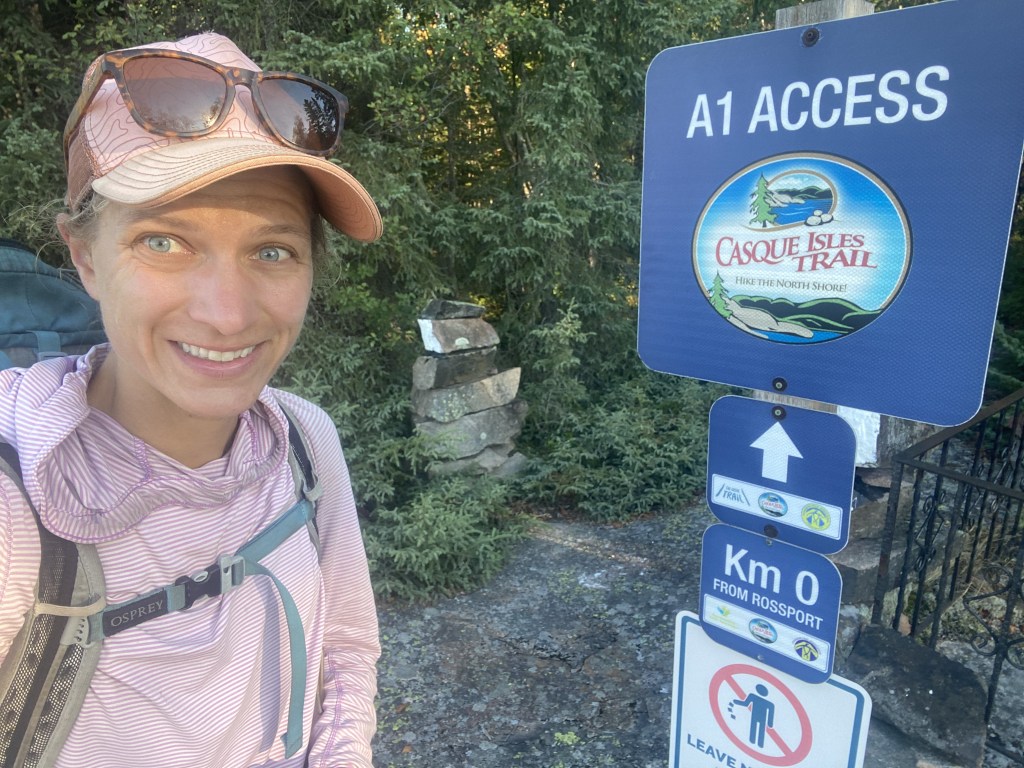
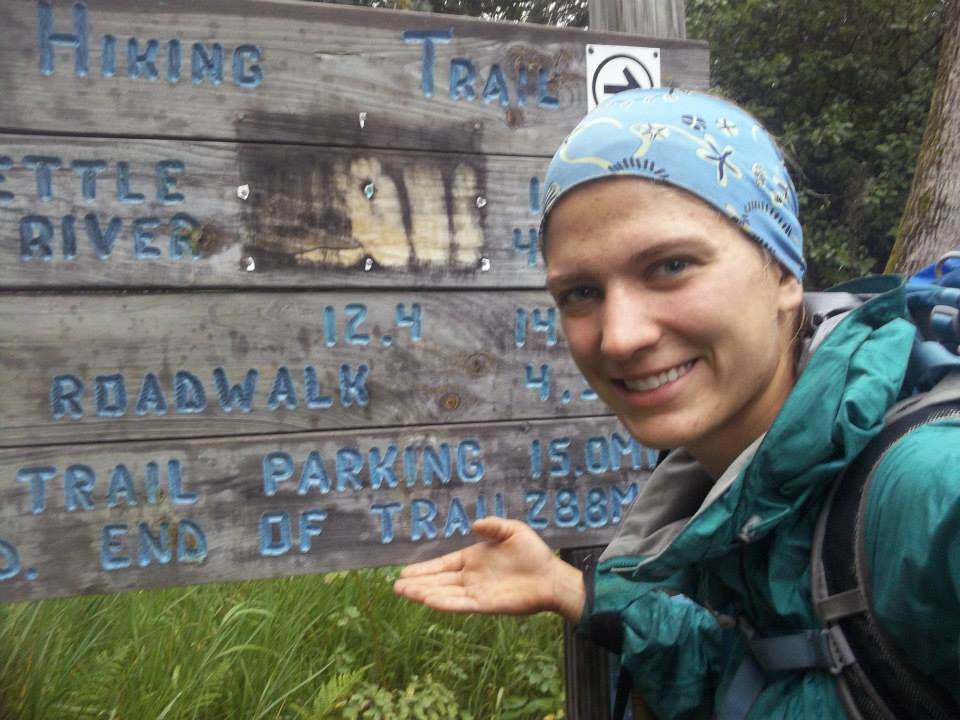
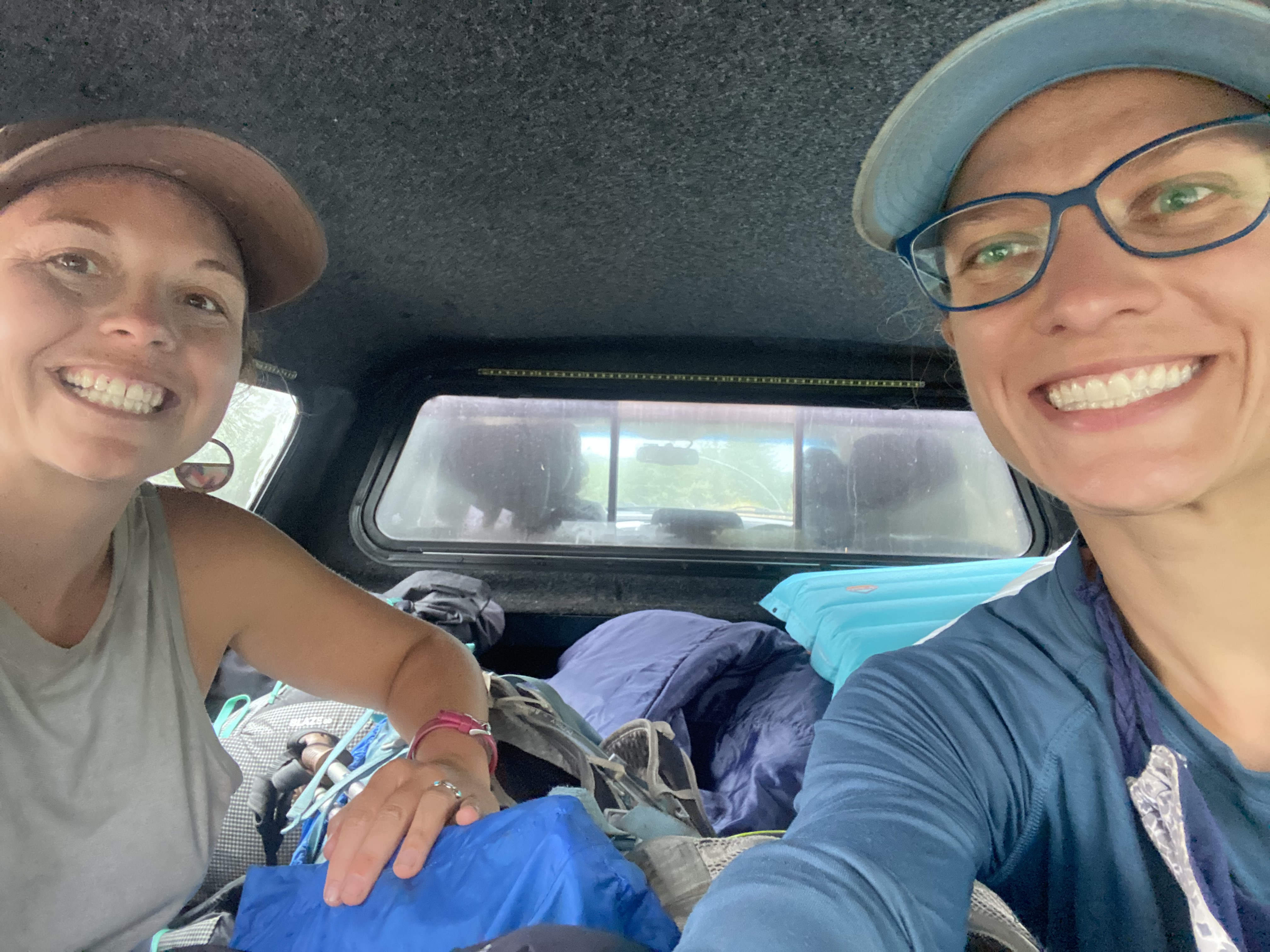
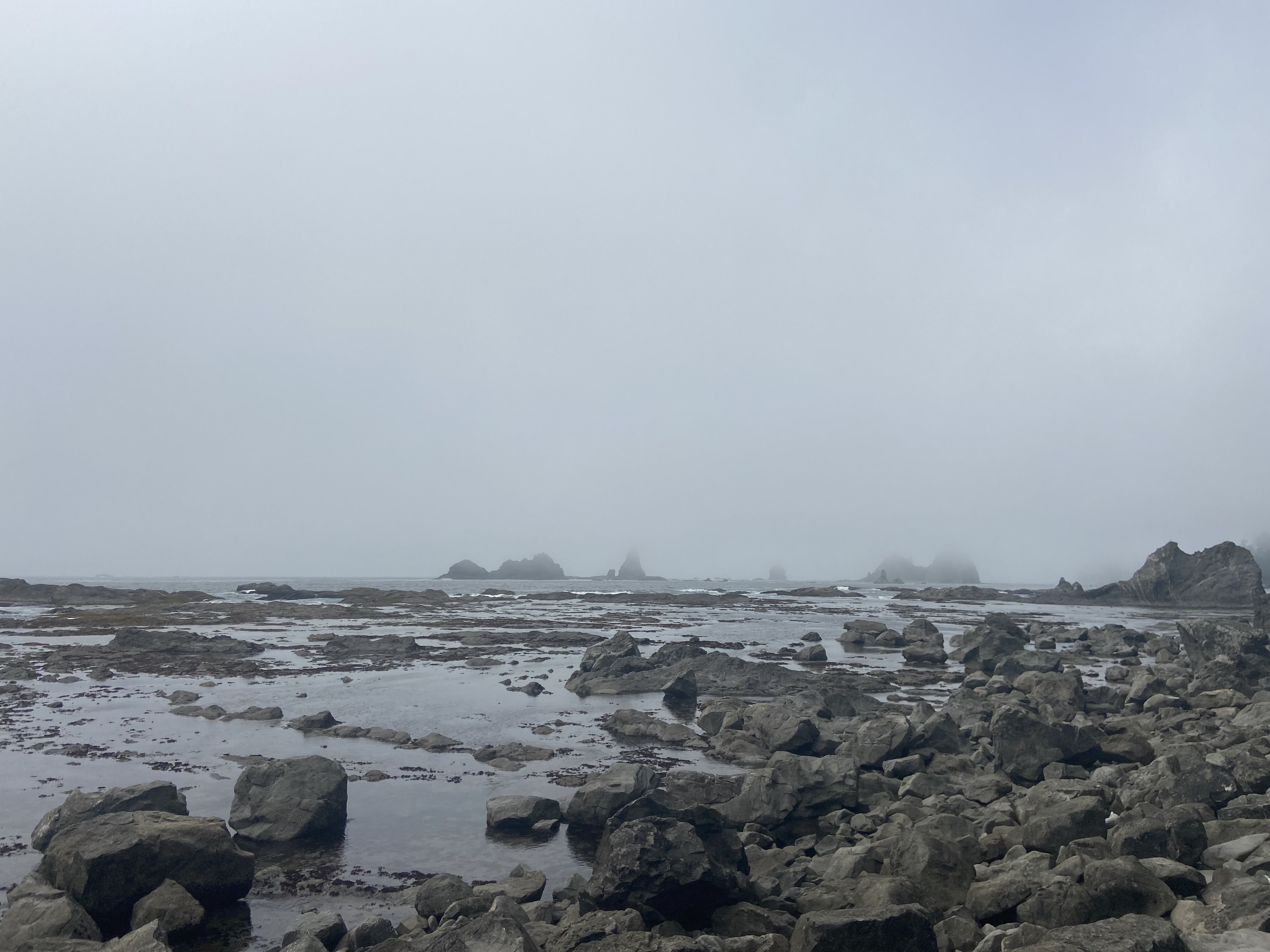
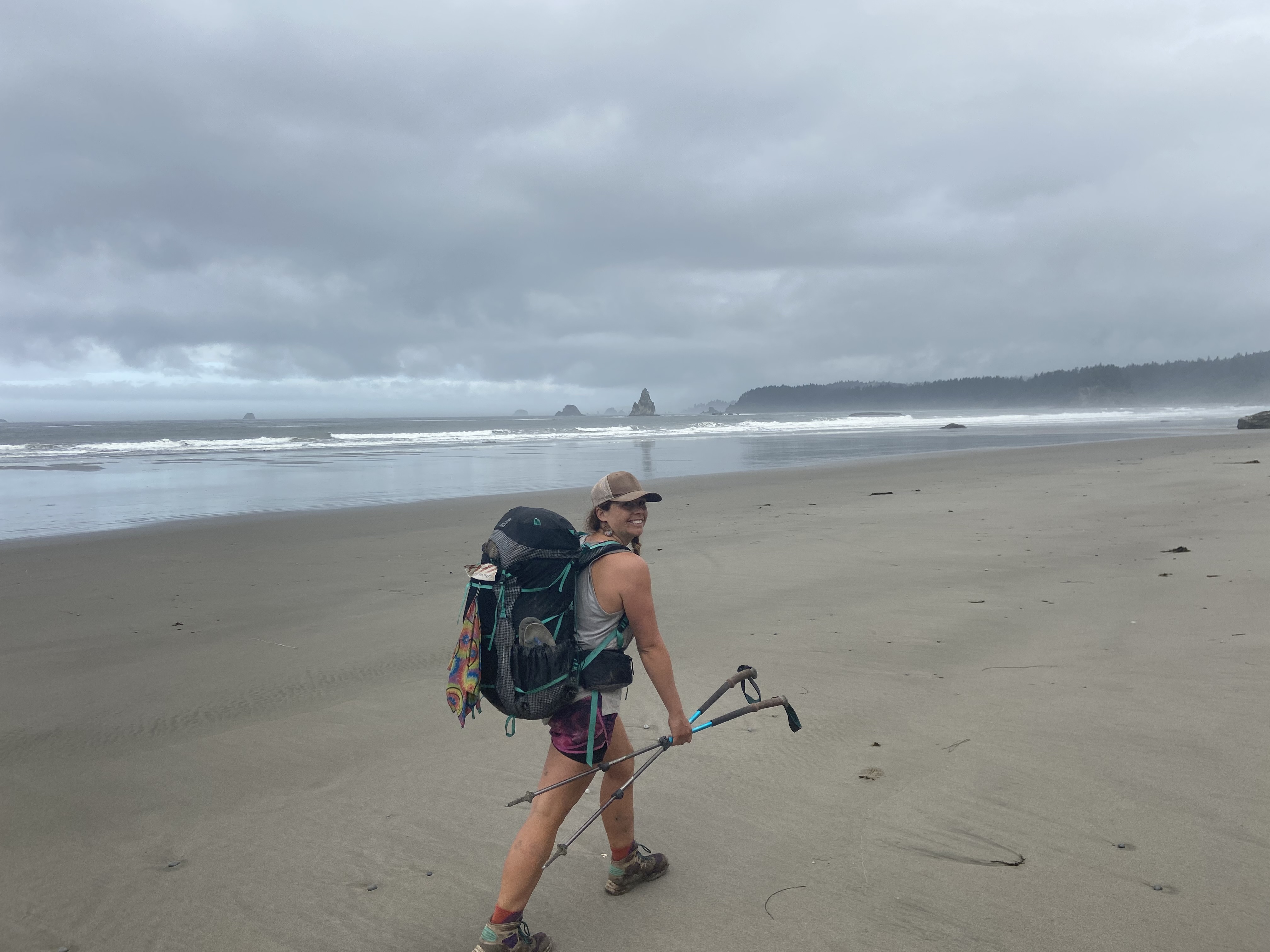
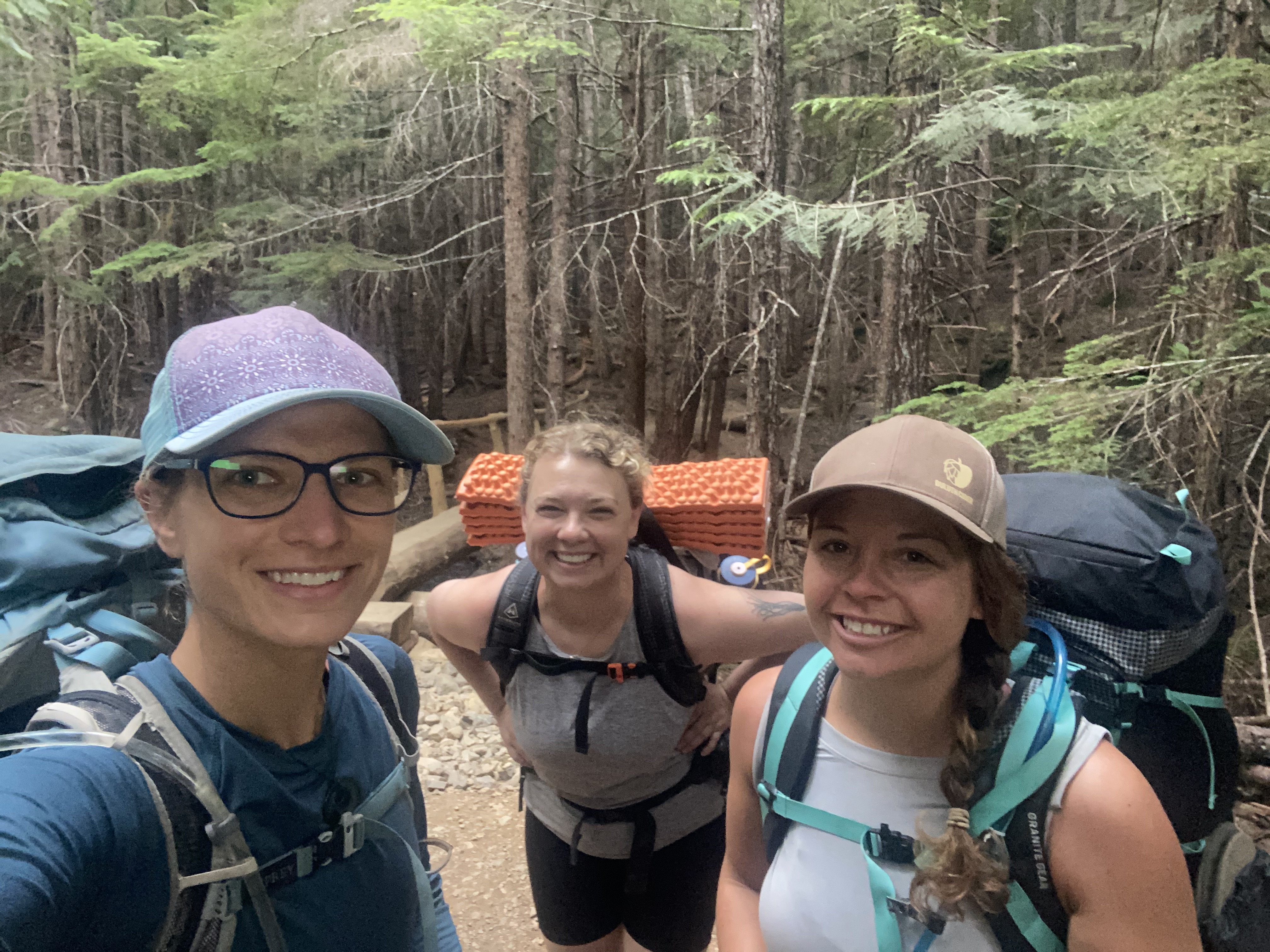
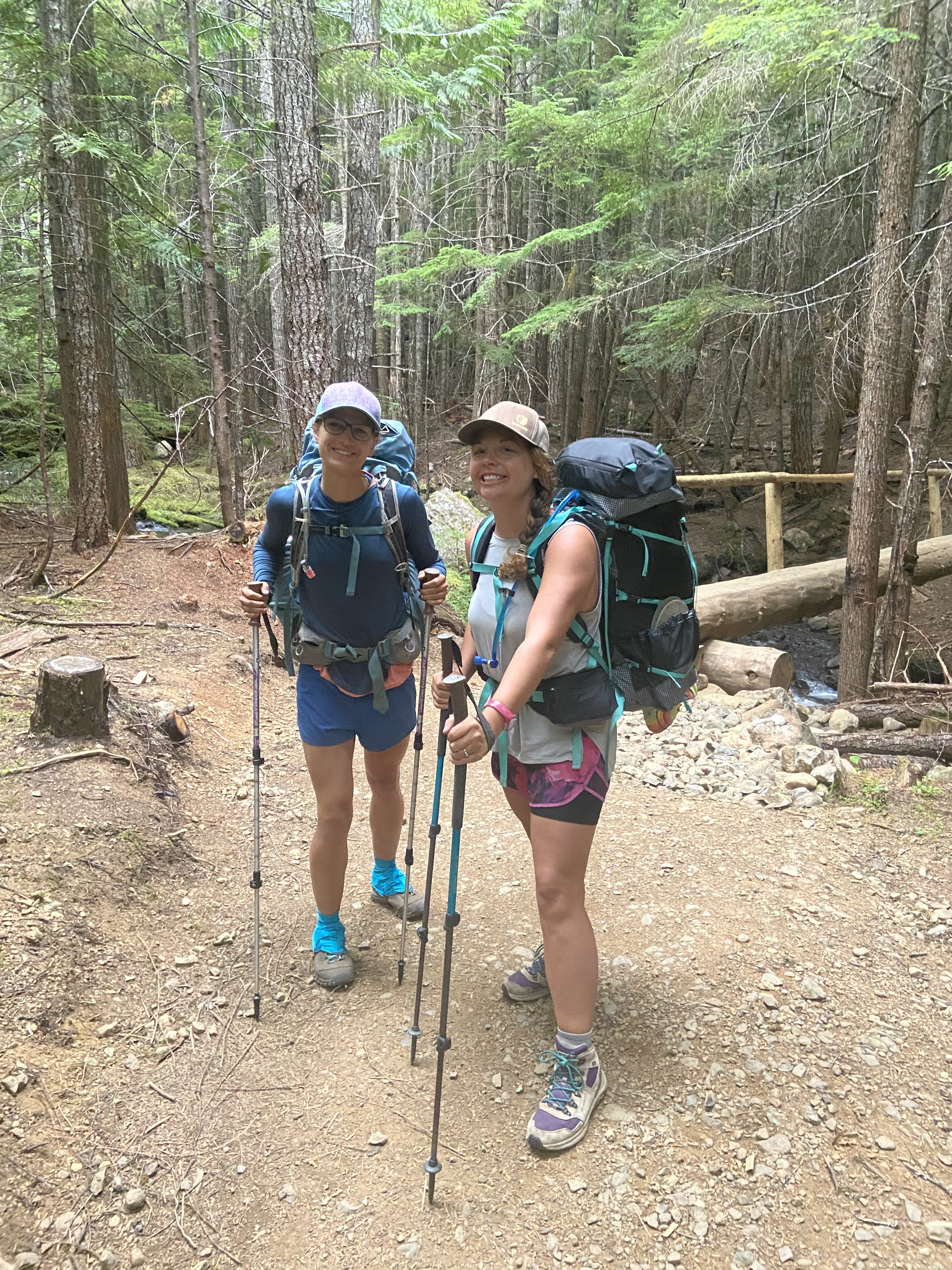
Exploring Edgesof the self and the world2024-10-25T20:56:11Zhttp://exploringedges.com/feed/atom/WordPress.comexploringedgeshttps://exploringedges.wordpress.com<![CDATA[Casque Isle Trail]]>http://exploringedges.com/?p=35932024-10-25T20:56:11Z2024-10-16T13:00:00ZThis past Memorial Day weekend I had the opportunity to check out a trail in Canada, the Casque Isle Trail. The Casque Isle was Trail was built in the 1970s and runs 53 km, linking the towns of Terrace Bay, Schreiber, and Rossport, Ontario.
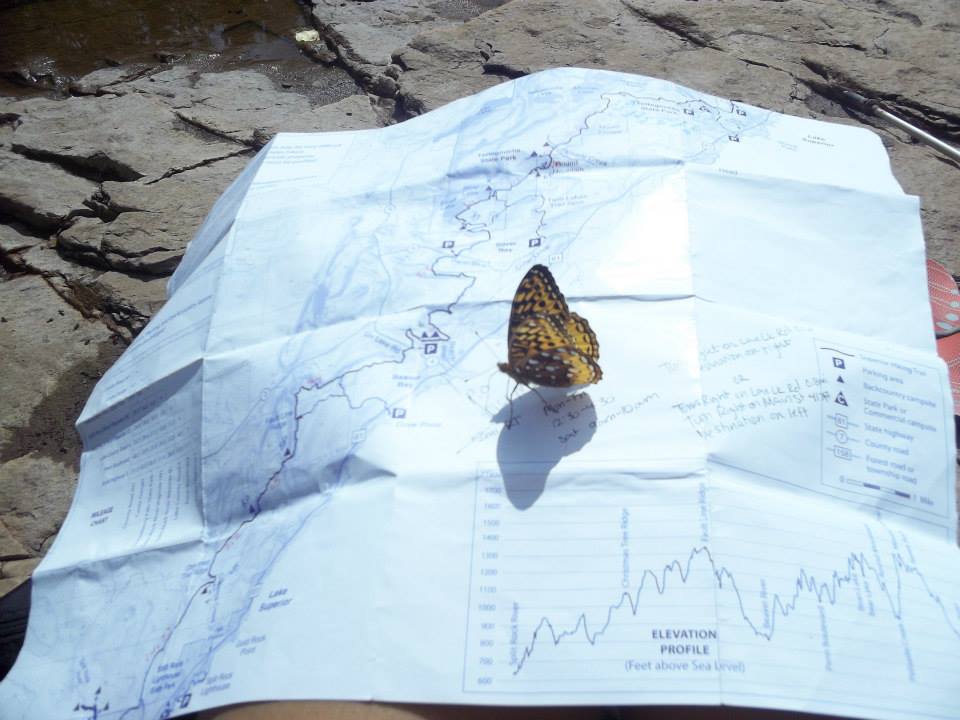
I knew very little going into this hike – I had done some basic research and located some maps for the trail, but I was going into it blissfully trusting my experience and my very experienced friend who had invited me. She had done a lot of research into it and was concerned about one section in particular, but I was like, “it’s only 33 miles, how hard can it be?”
Quite hard turns out!
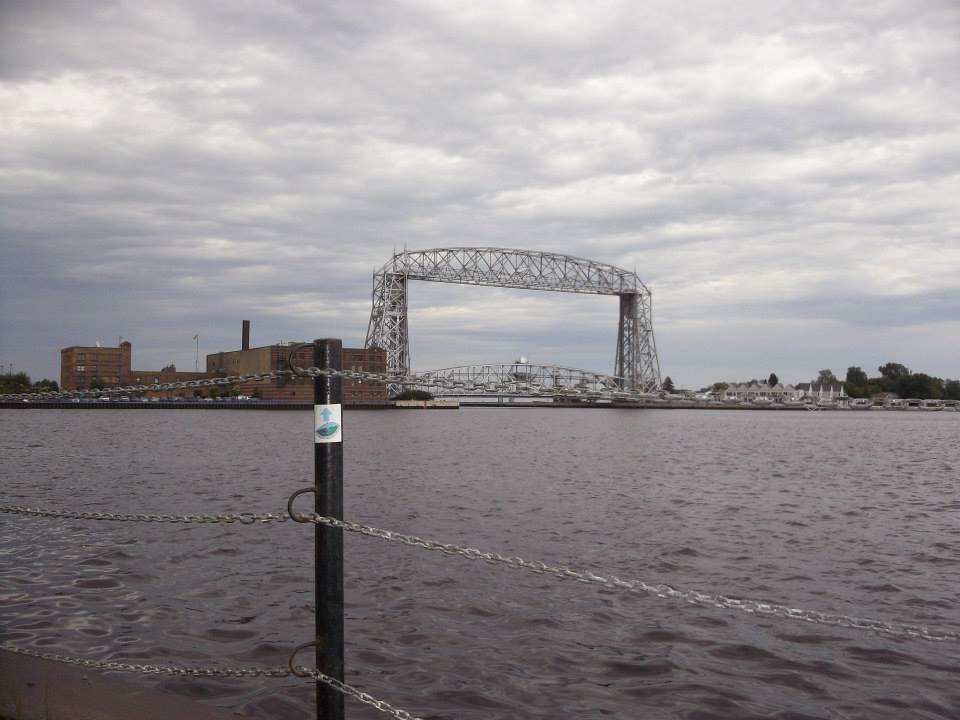
We left the Duluth/Two Harbors area after work on Thursday. Our original plan was to camp at a state park on the US side of the border, cross over into Canada on Friday, and make it up to our shuttle pickup by noonish. It would make for an early morning wake-up but, as long as customs didn’t take too long, it certainly could work. However, there were some severe storms forecasted to hit overnight in the area we were to be camping, so we considered the options: stick with the original plan, ride out the storms, and start our trip by packing up soaking wet gear early in the morning, or pivot from the plan by driving all the way up to Thunder Bay on Thursday night, find a cheap hotel, and have a dry and more relaxed Friday morning.
We opted for the second option, which meant that we’d be going through customs fairly late in the evening. It’s funny because even though we had nothing fishy about our trip I still got nervous going through customs. We had taken my car because it is in my name and had our passports, but there is something intimidating about driving up to the big lit up border crossing in the dark. I’ve done so many airport customs that you’d think it would be no big deal, but I had never actually been the person in the driver’s seat going into Canada (always a passenger).
Since we weren’t criminals and we managed to not act suspiciously (we truly were just going to hike in Canada) we made it through customs smoothly. Then, onwards to Thunder Bay and our spot we had booked to stay for the night: Prince Arthur Waterfront Hotel. Arriving we had to make a trip around the block because of construction but eventually figured out where we were supposed to park and to check in. It was quite late by now and moderately spooky – I was glad to have a travel buddy! By the main desk there was a poster for a paranormal activity conference that was to take place later in the fall at the hotel, but I chose not to research the ghost stories until after our stay.
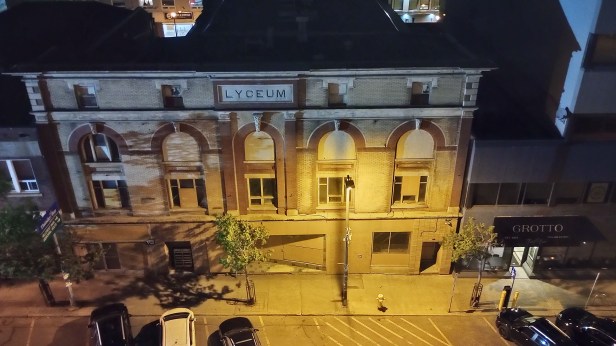
The view from our hotel room, picture taken by Jo.
Check-in went fine, and we made it up to our room – really rooms! – as we ended up getting two adjoining rooms with one bathroom for the price of one. The décor was “historic” but everything was clean enough, and we got to watch the rain and wind lash the windows from inside a nice dry space instead of getting soaked in our tents. Deluxe!
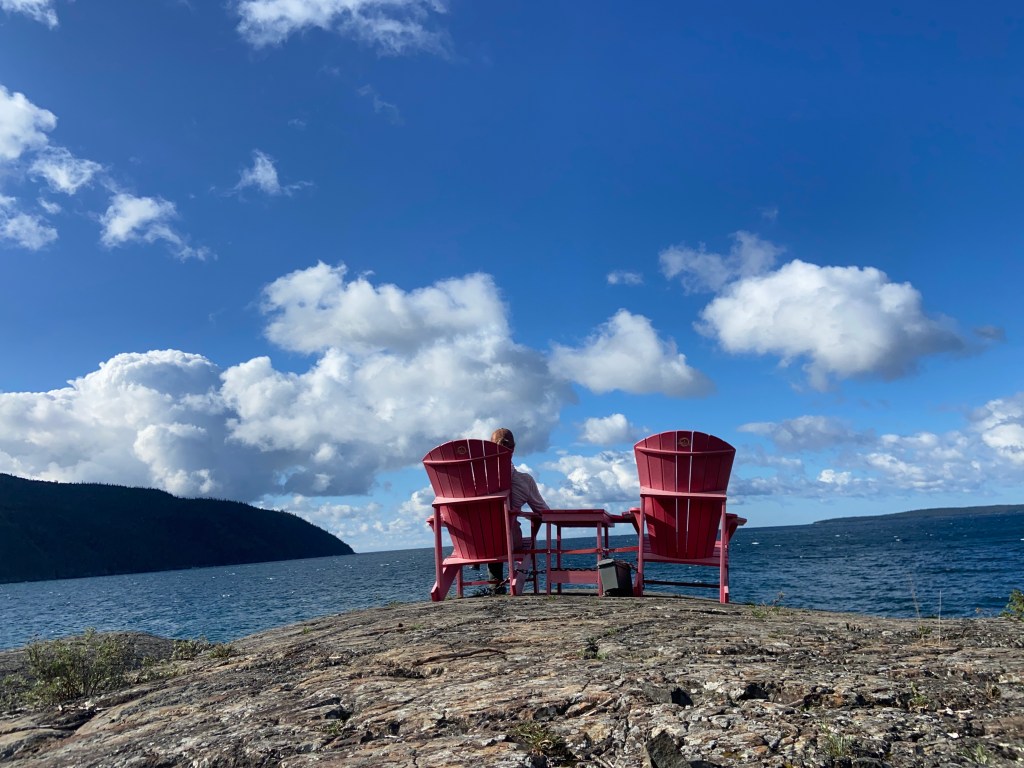
The next morning we found some local coffee and an ATM for some Canadian currency for our donation to the shuttle driver and then headed out of town. Our plan was to meet our shuttle at a local park in Rossport and have them bring us to the other end of the trail in Terrace Bay. It was a such a beautiful spot to hang out for a shuttle!
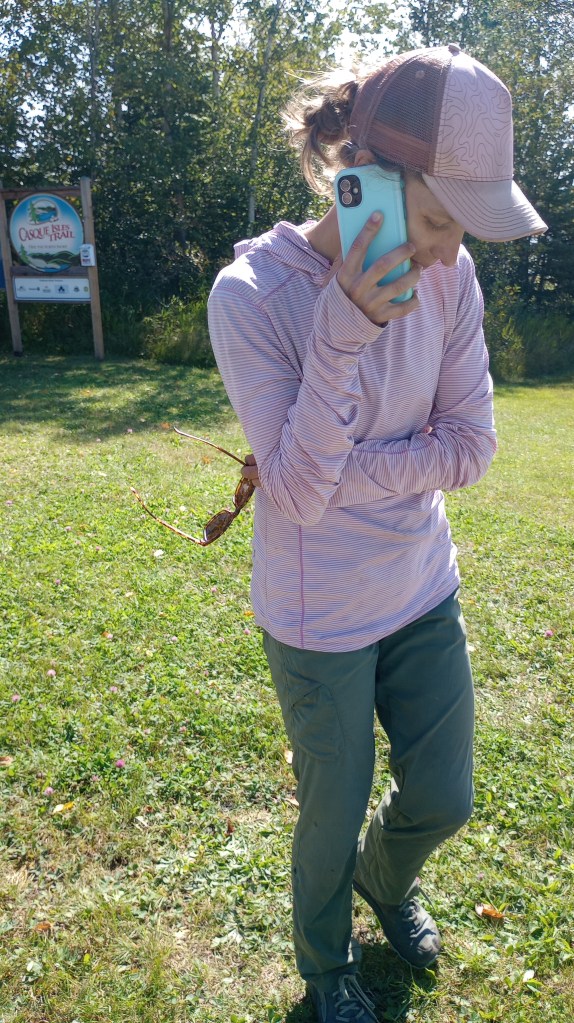
Our pick up time came and went and we started getting worried about our shuttle driver. We double and triple checked the correspondence and came up with contingency plans in case they never came. Finally I ended up calling the club who manages the trail and they had someone come out to get us – and their response time was so fast! Before we knew it we were being whisked away towards the northern terminus of the trail. Cell phones and international calling is handy sometimes.
Calling up our shuttle, picture taken by Jo.
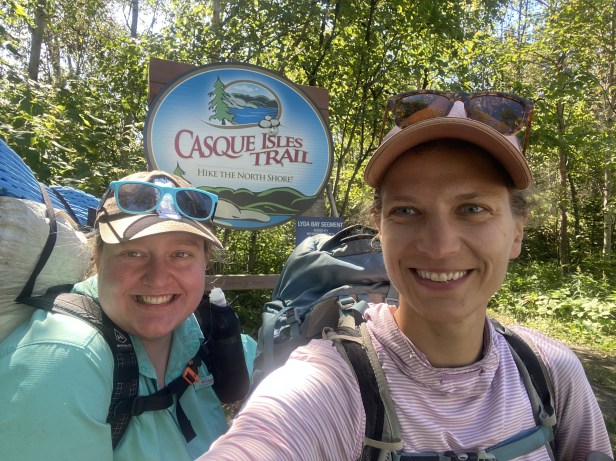
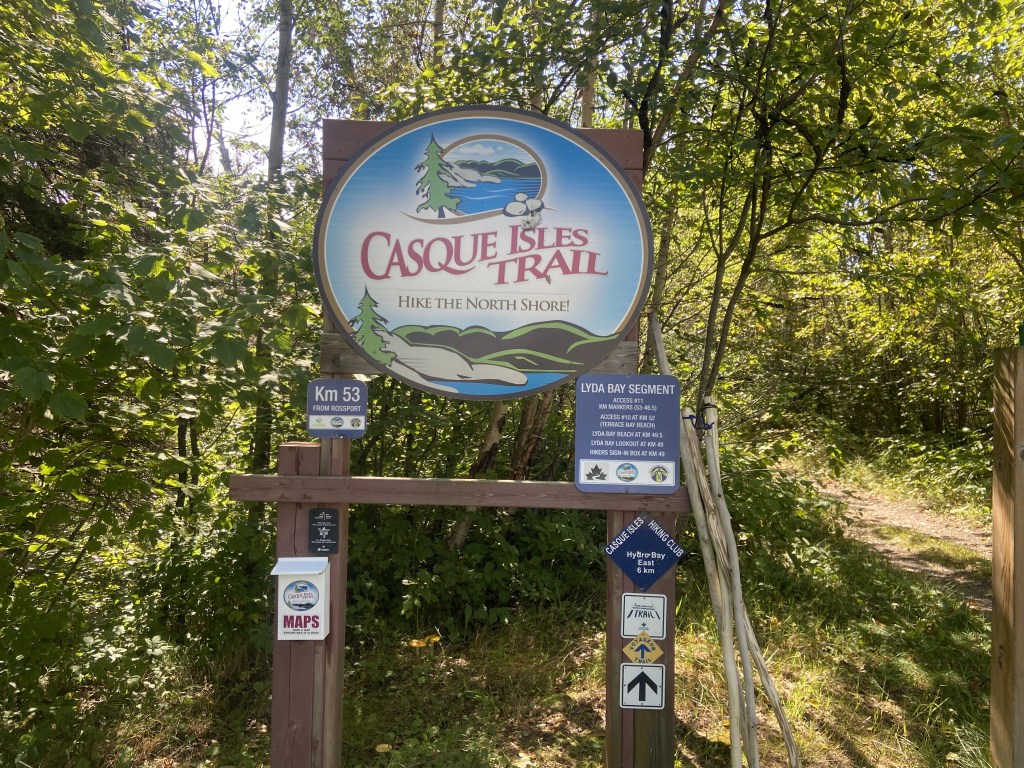
Within a half an hour or so we were dropped at our starting point. We started off down the trail, and it started easy as an ATV-type trail. We would find as the kilometers clicked behind us that it wouldn’t stay this easy!
The start!
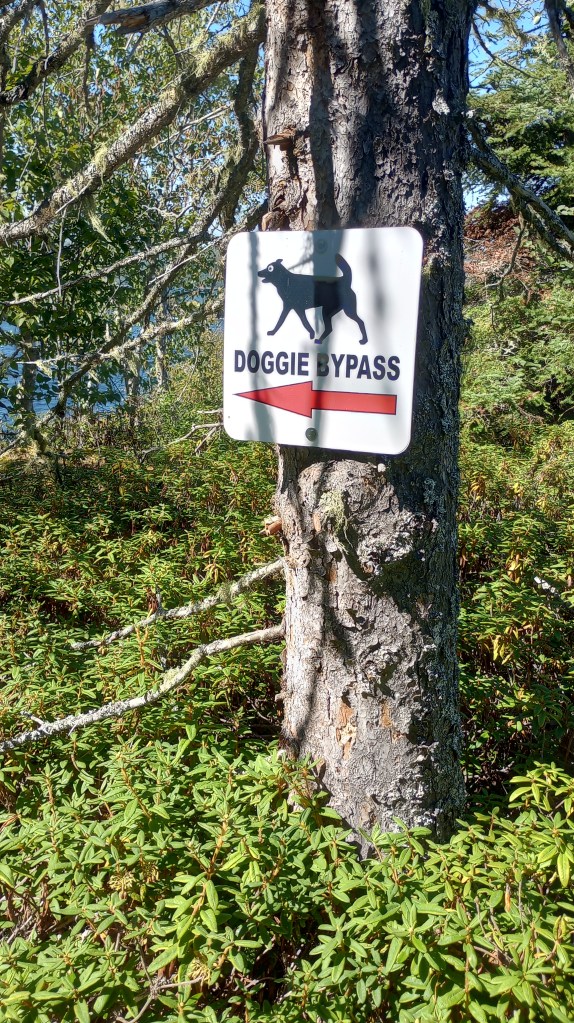
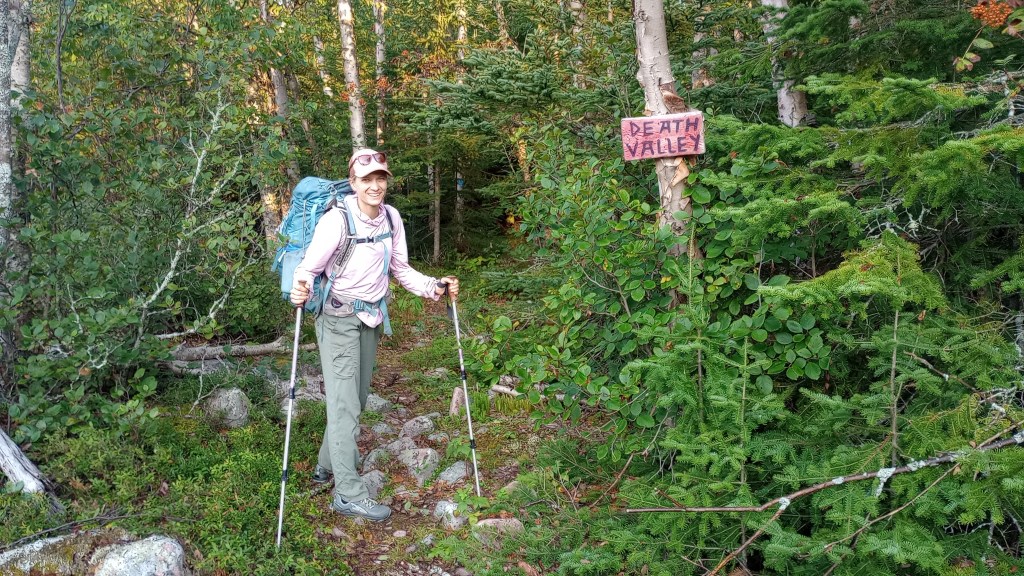
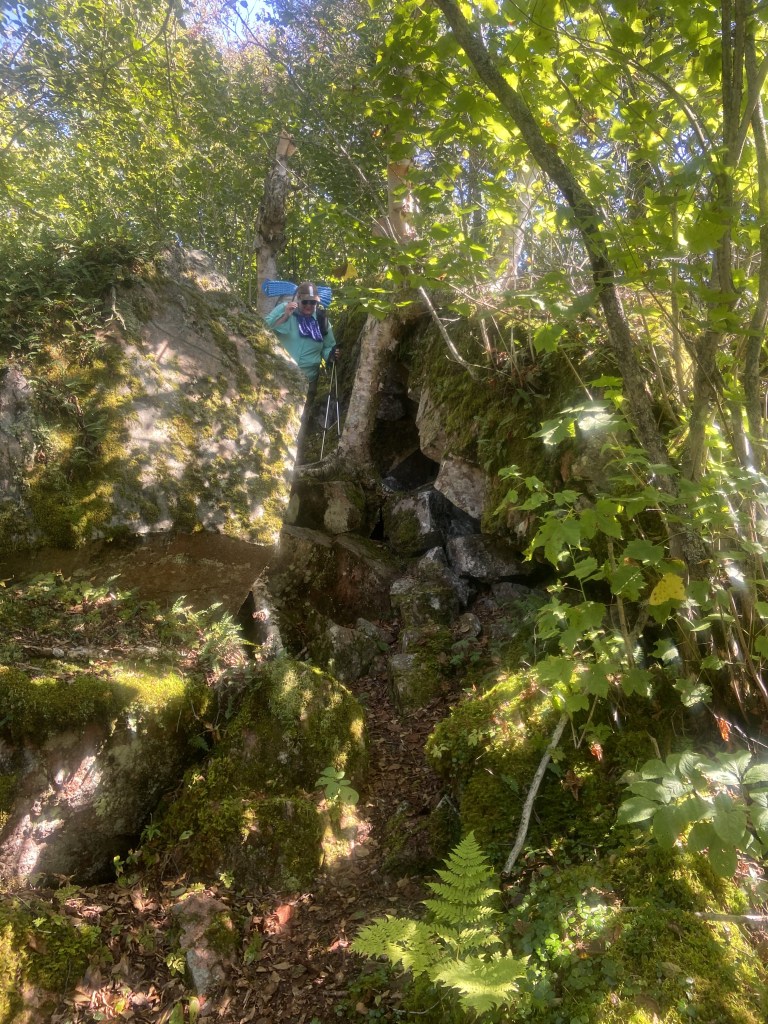
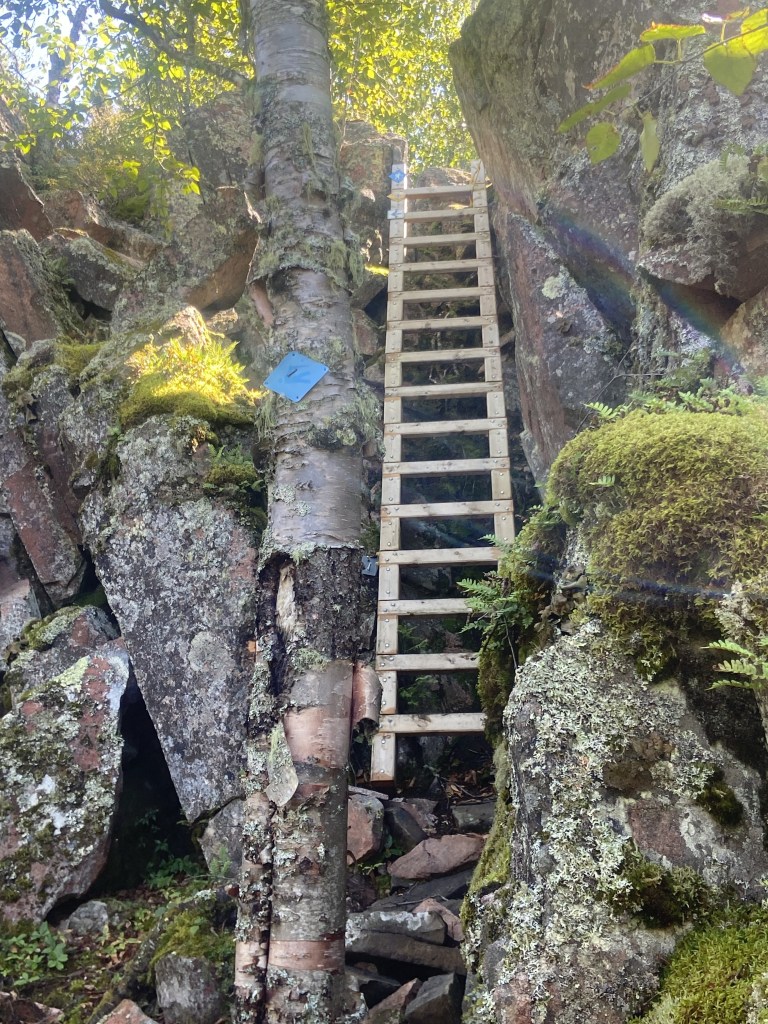
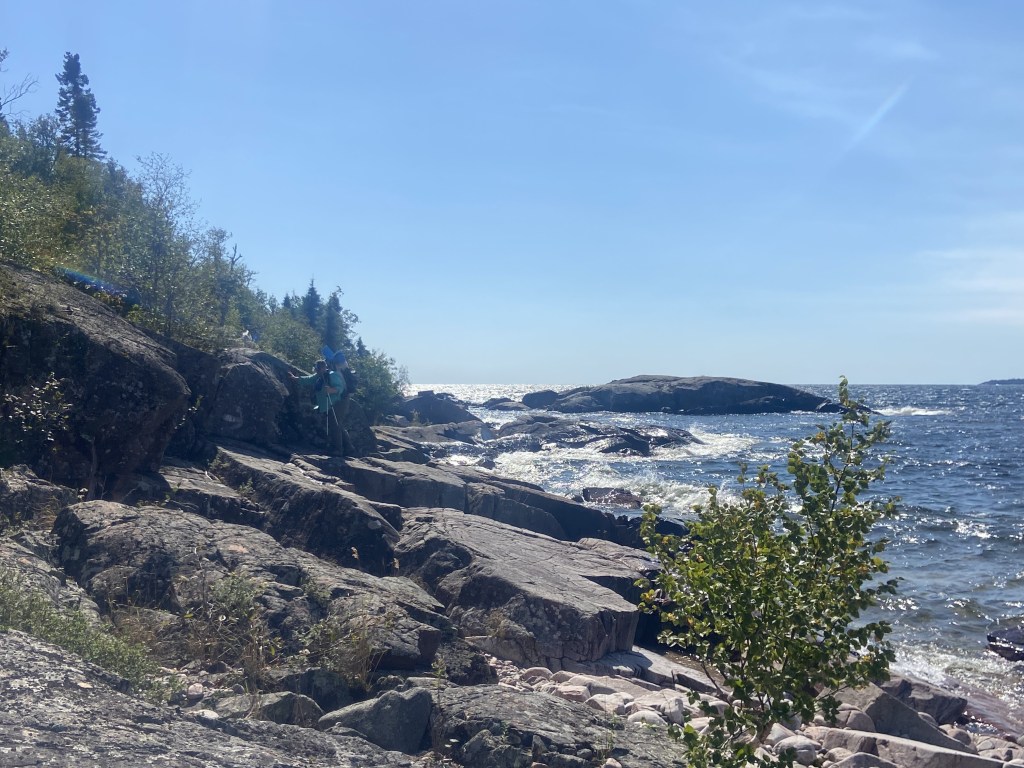
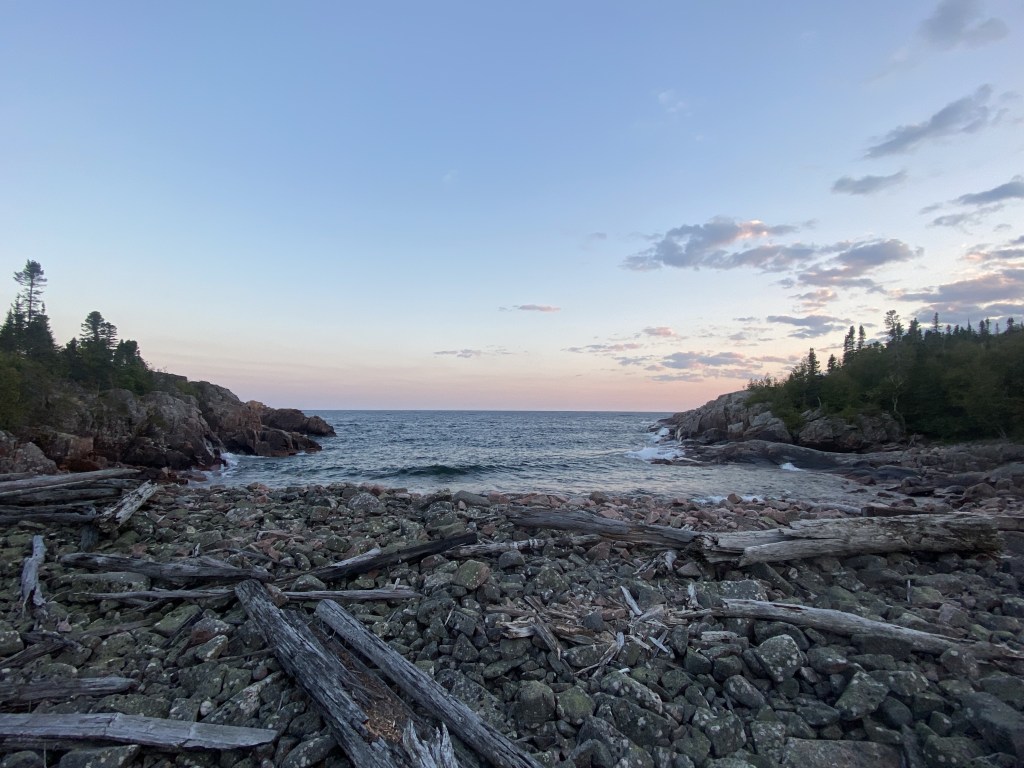
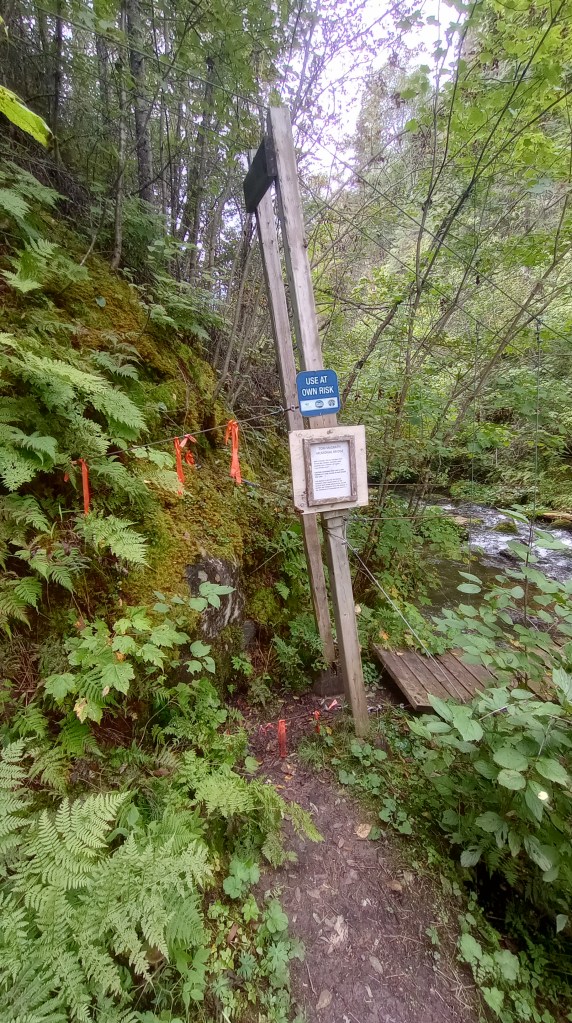
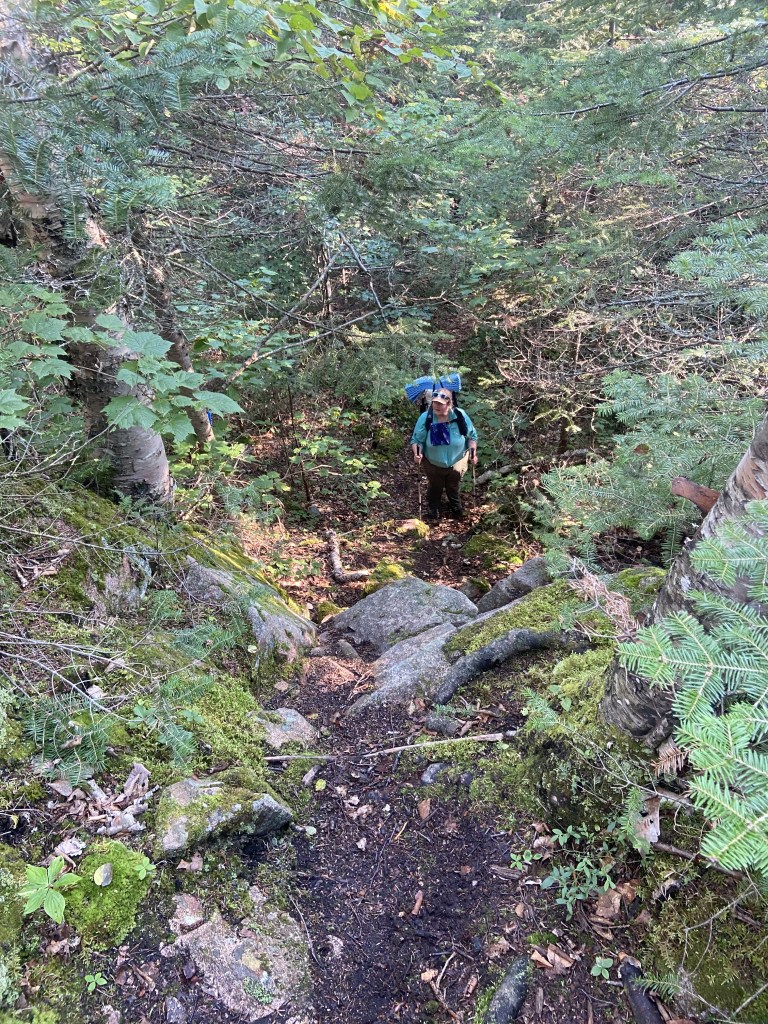
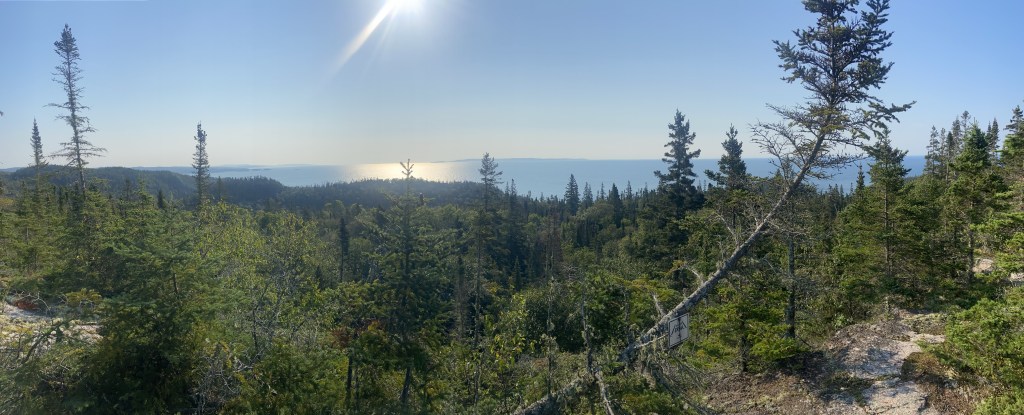
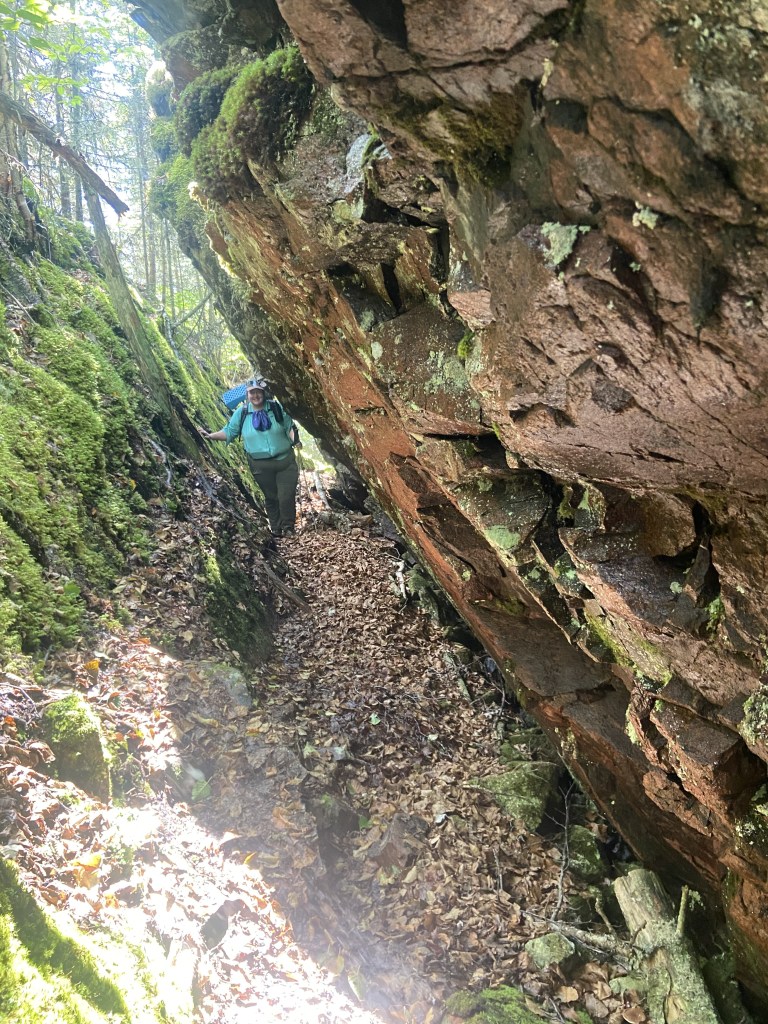
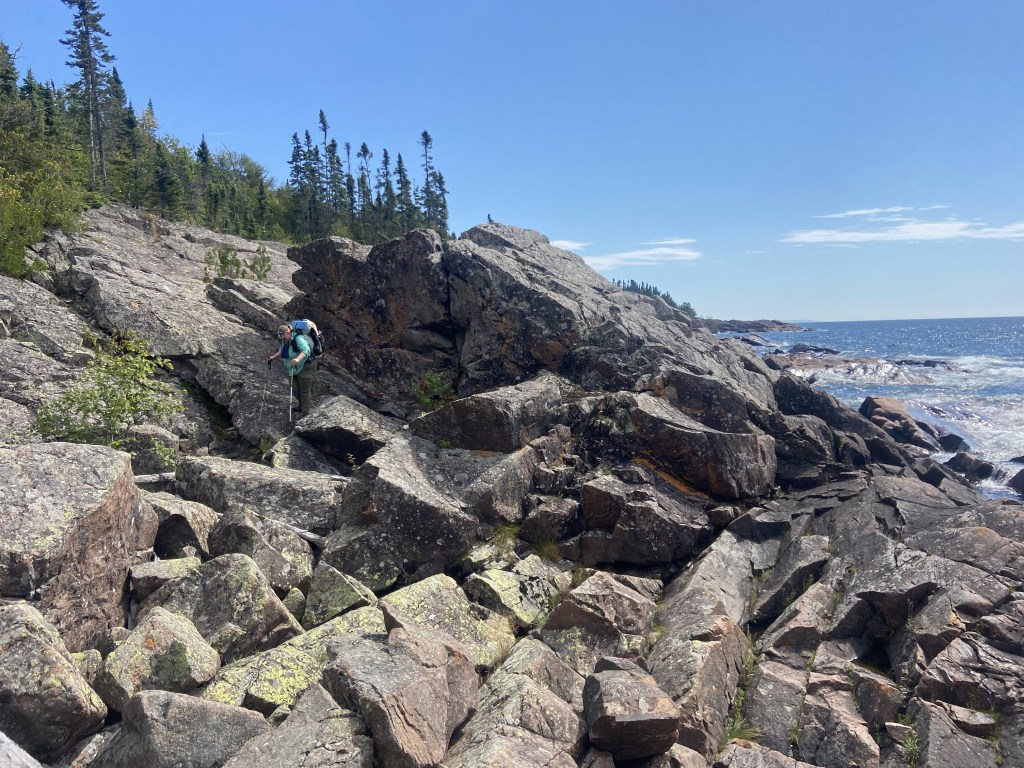
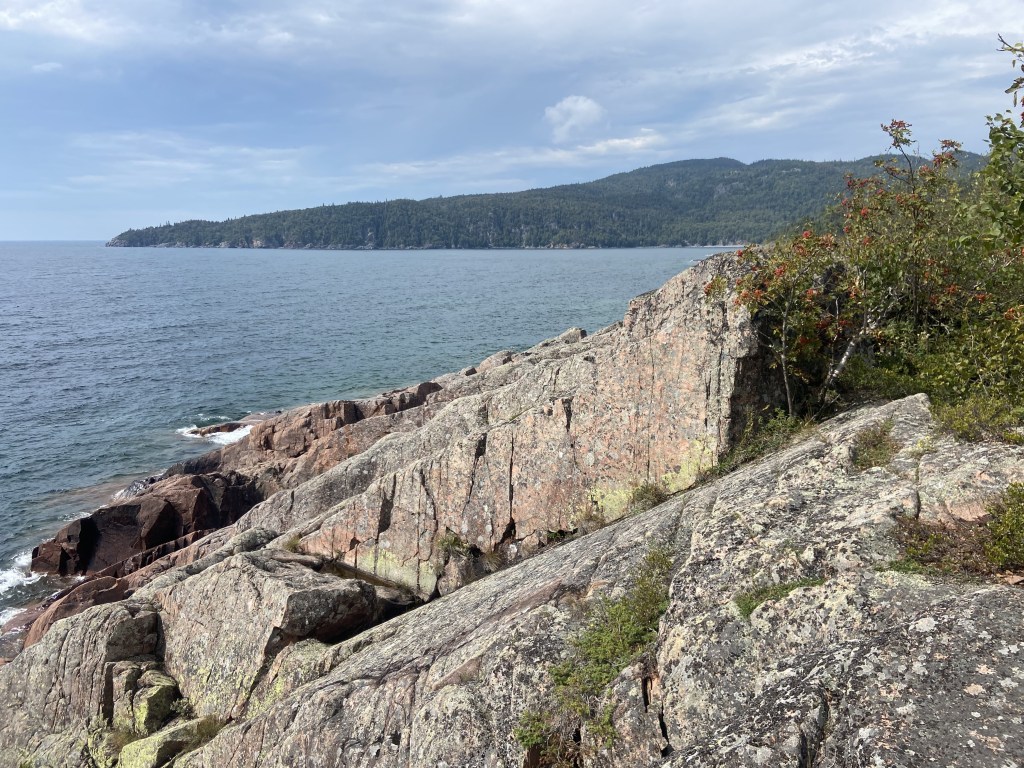
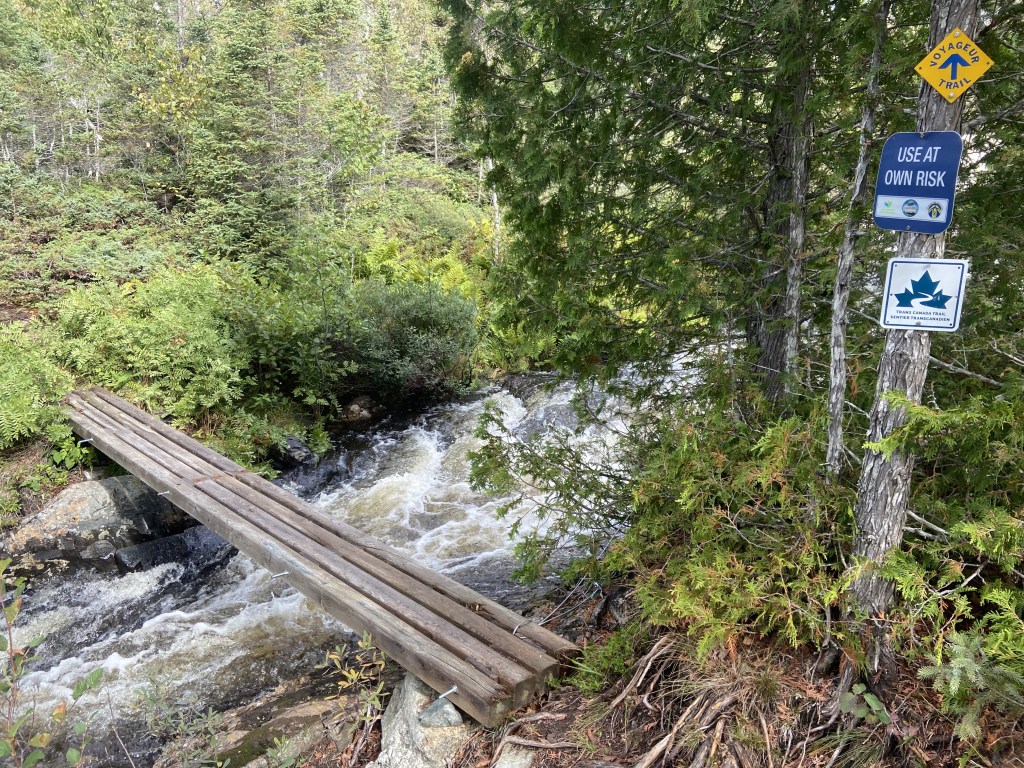
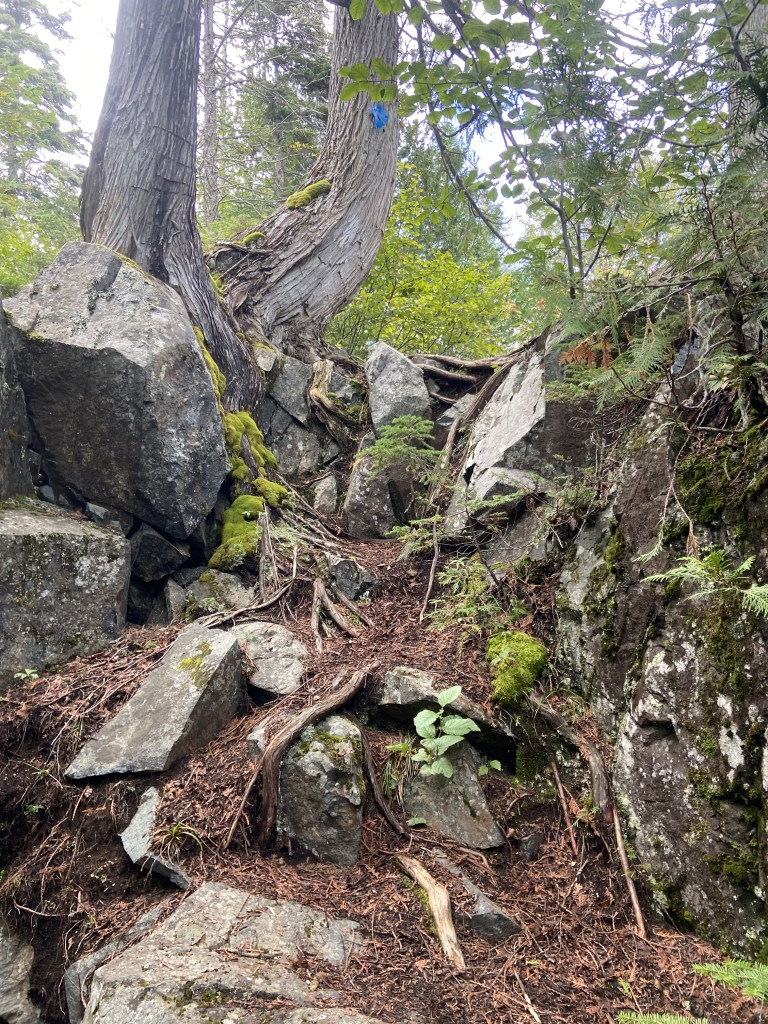
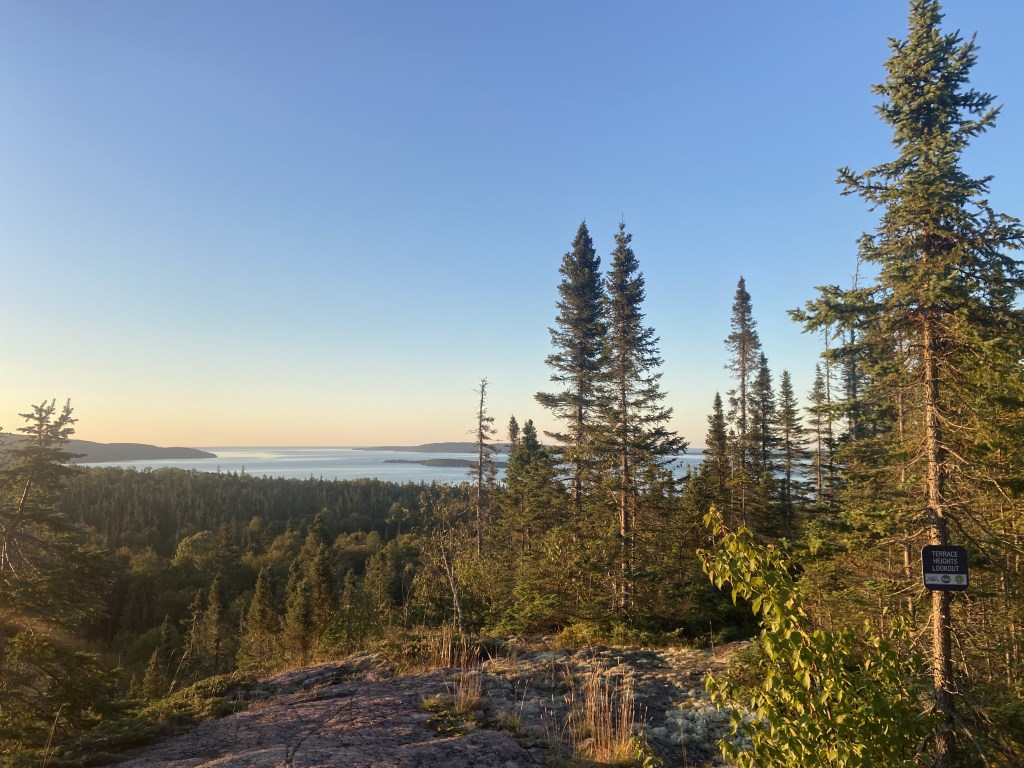
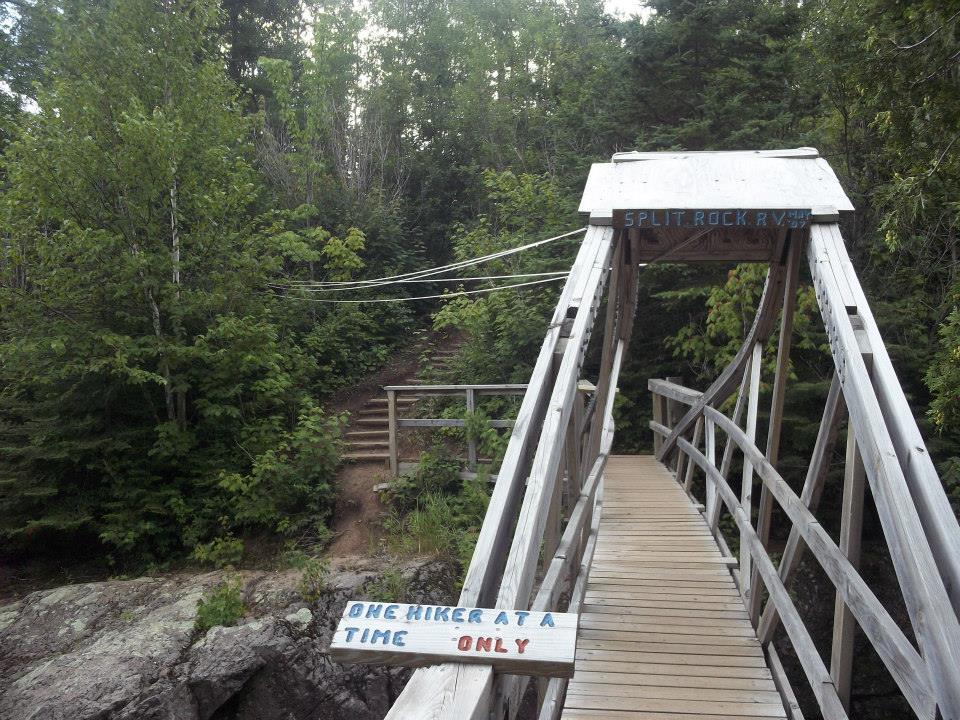
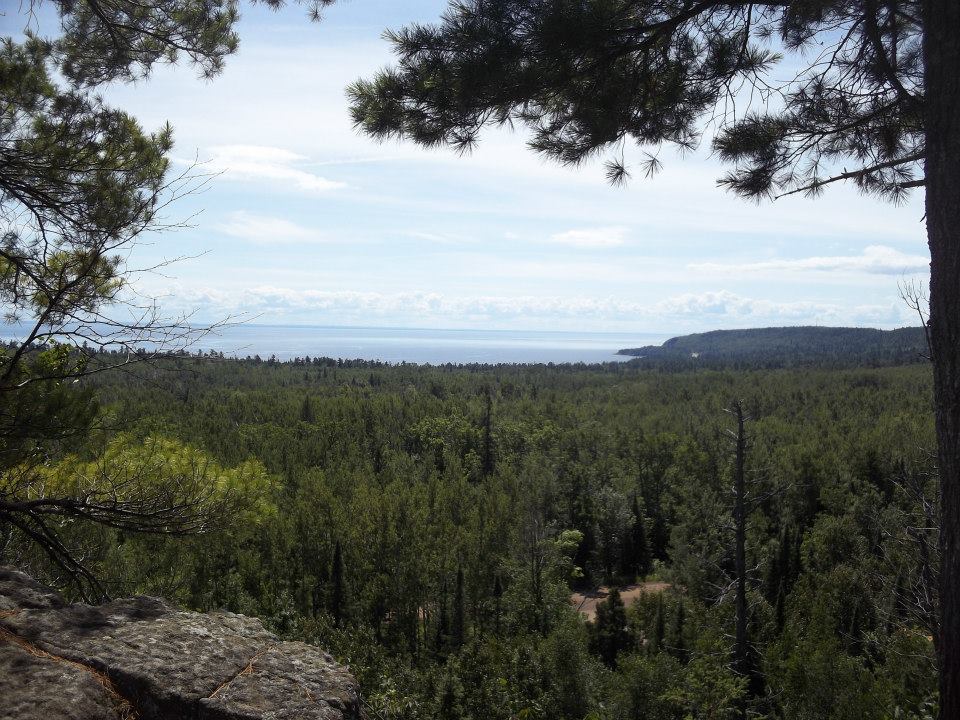
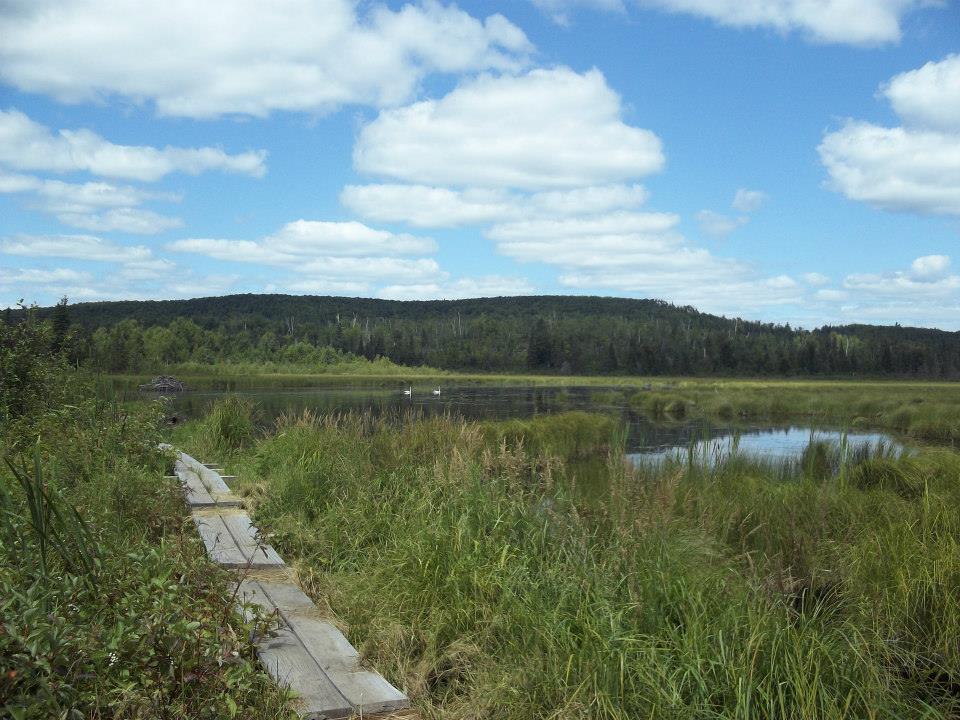
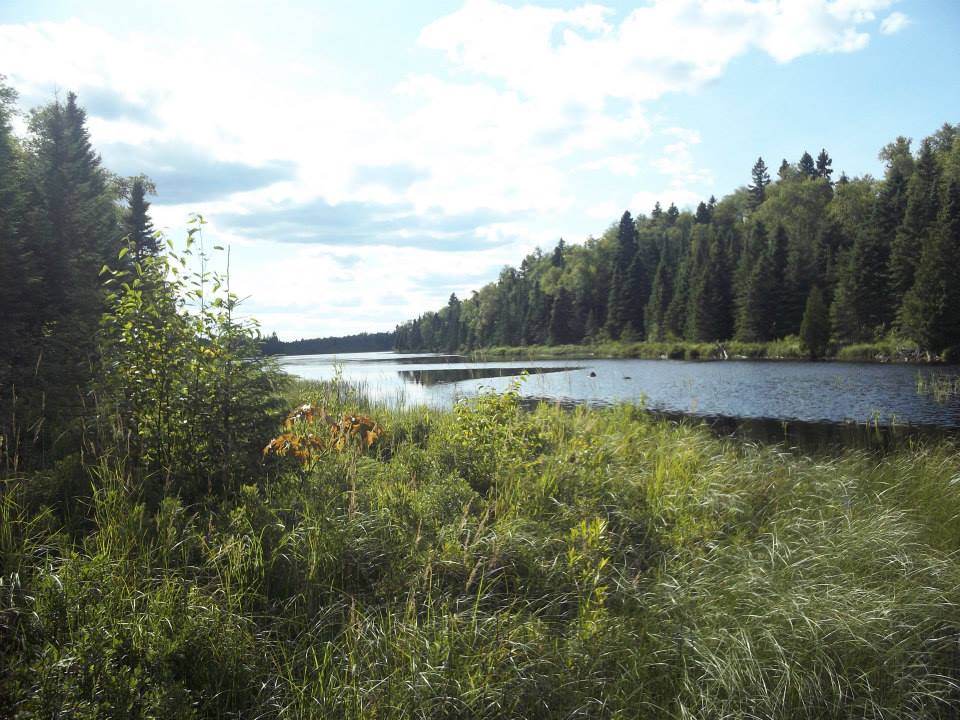
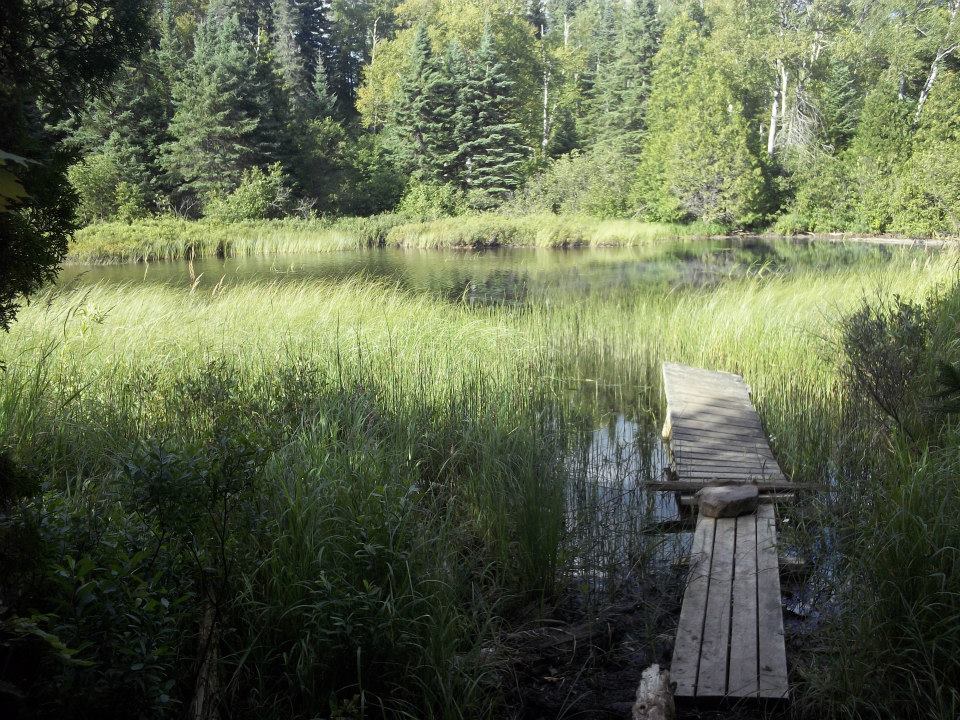
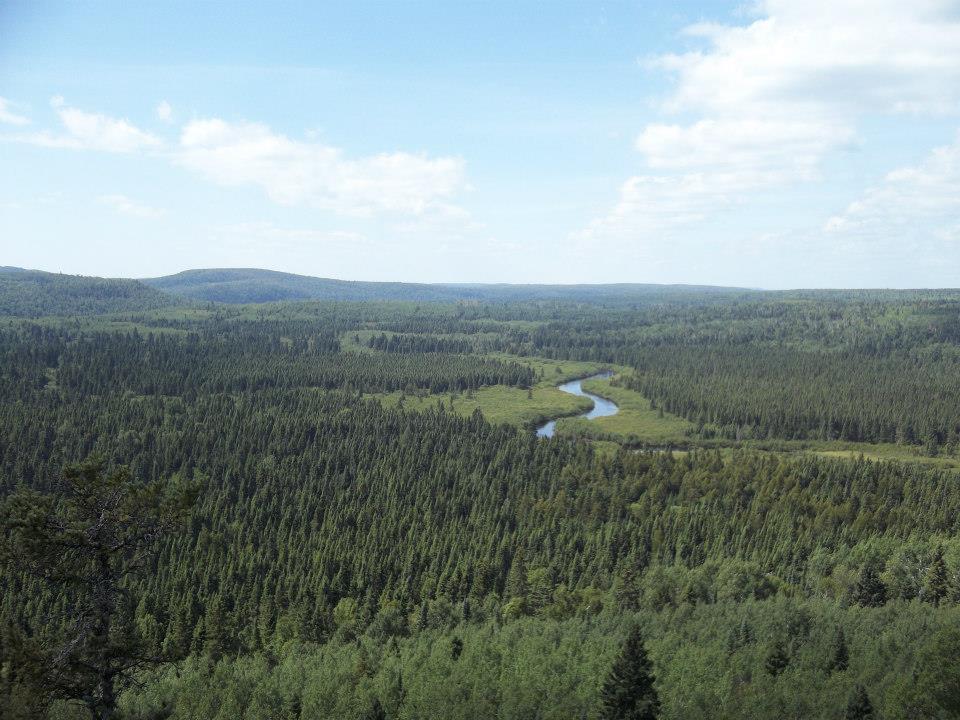
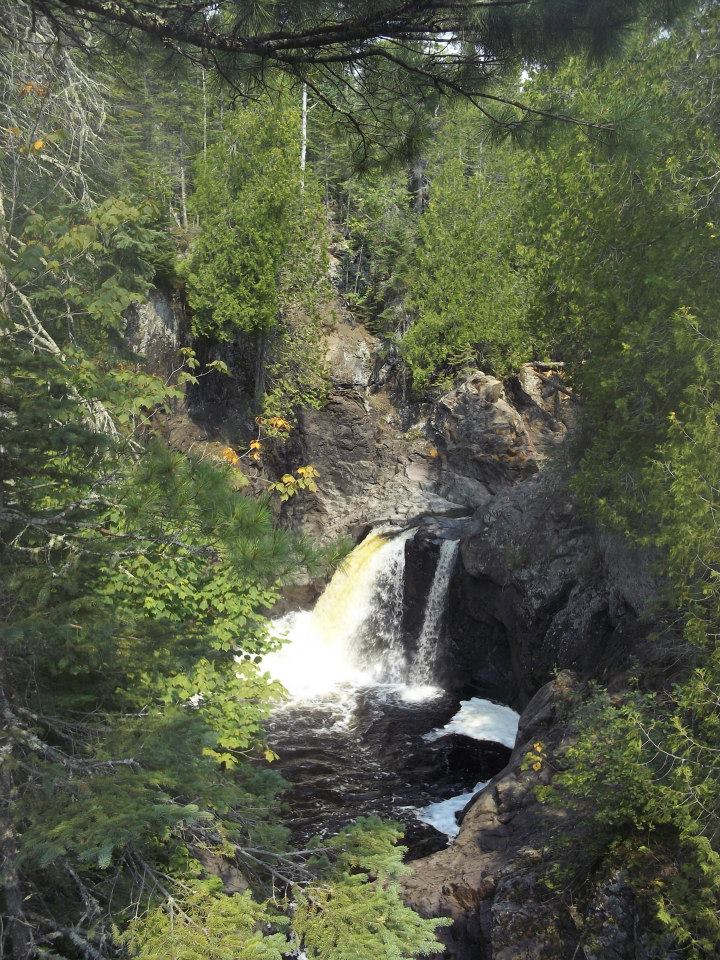
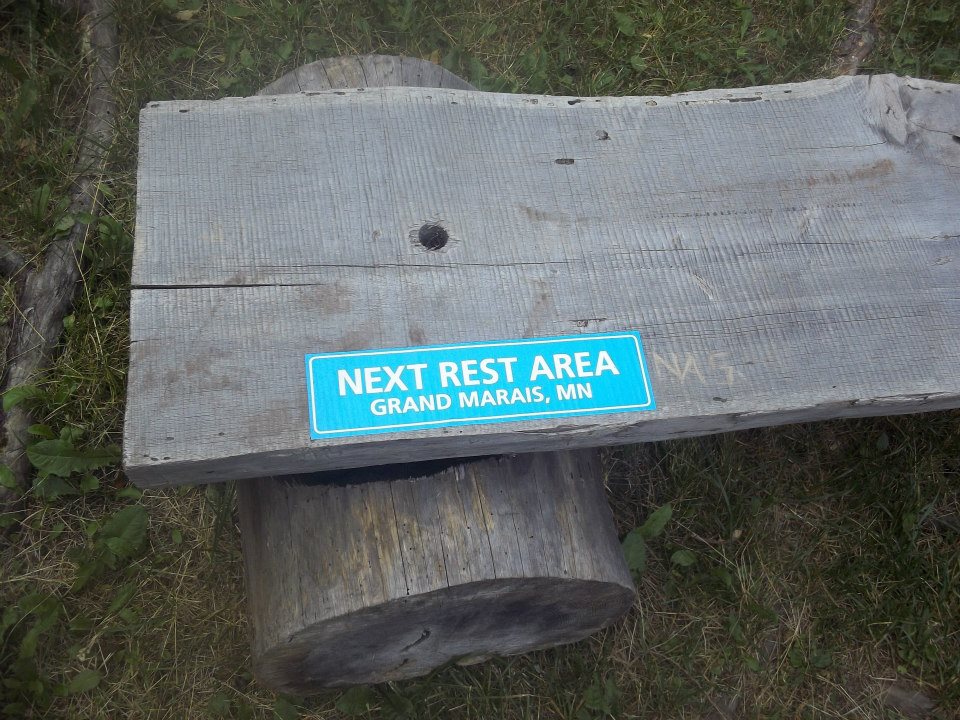
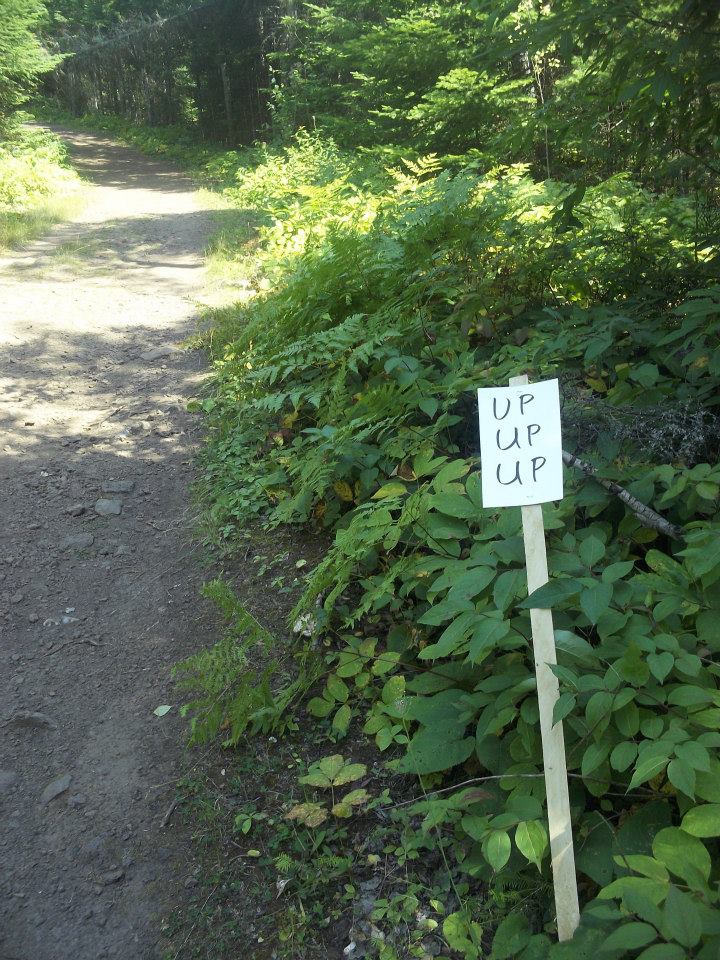
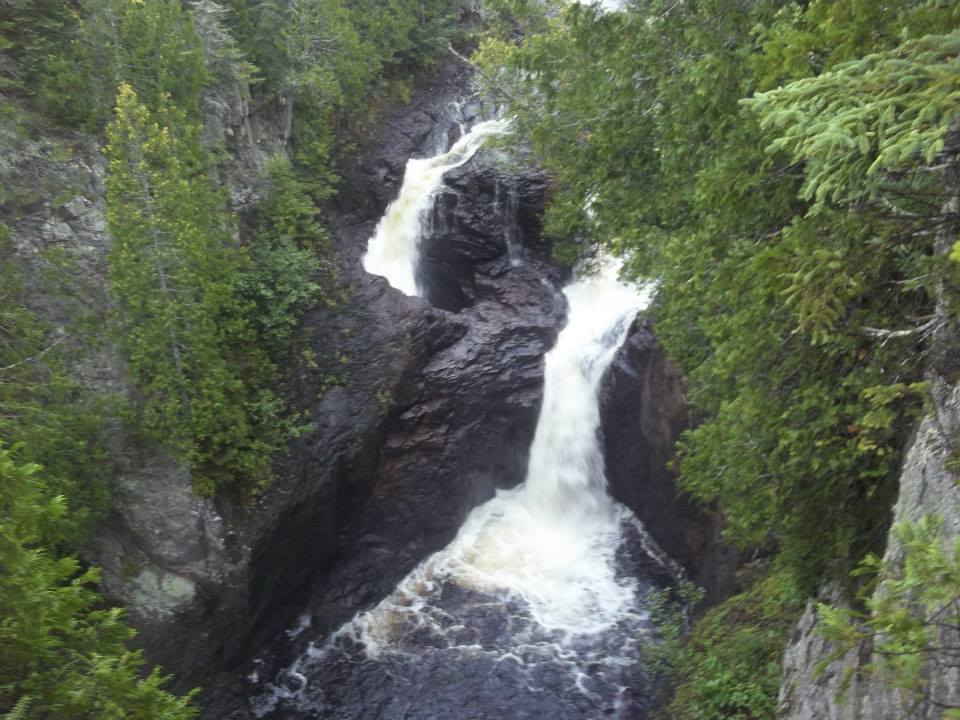
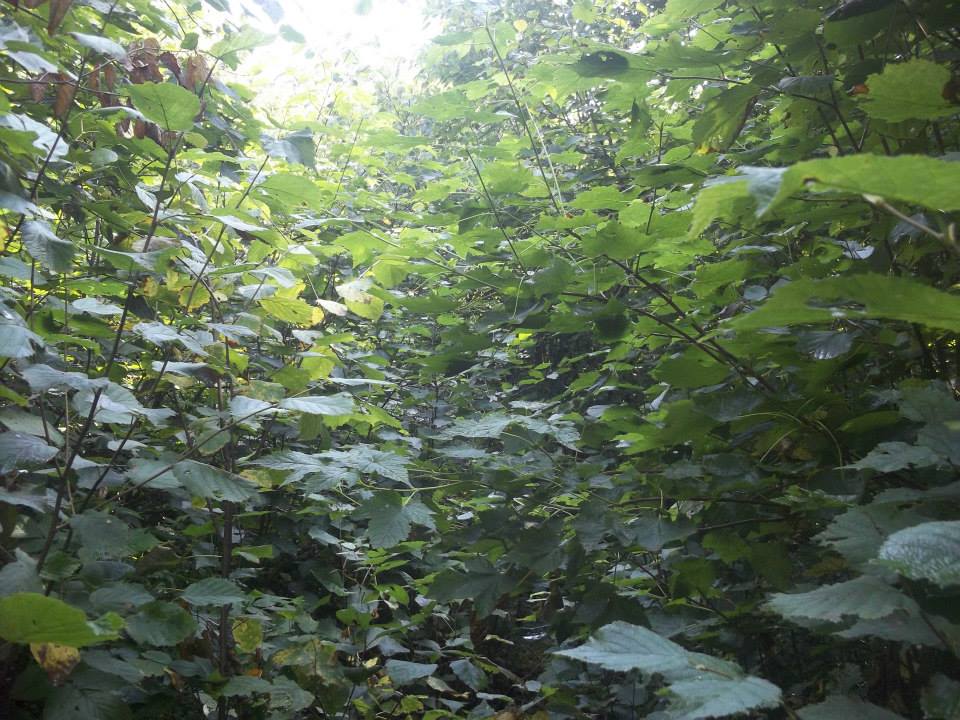
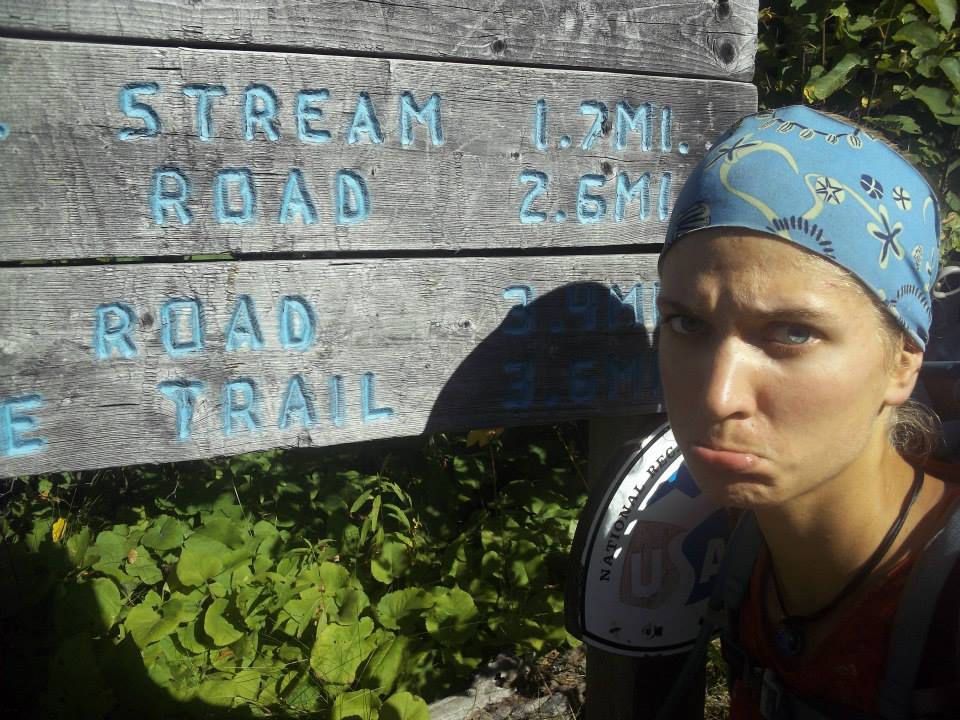
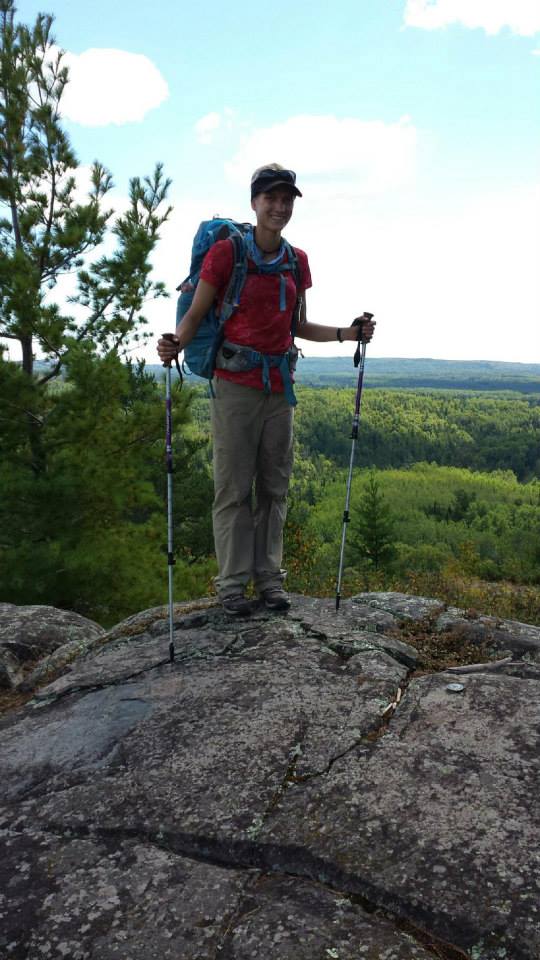
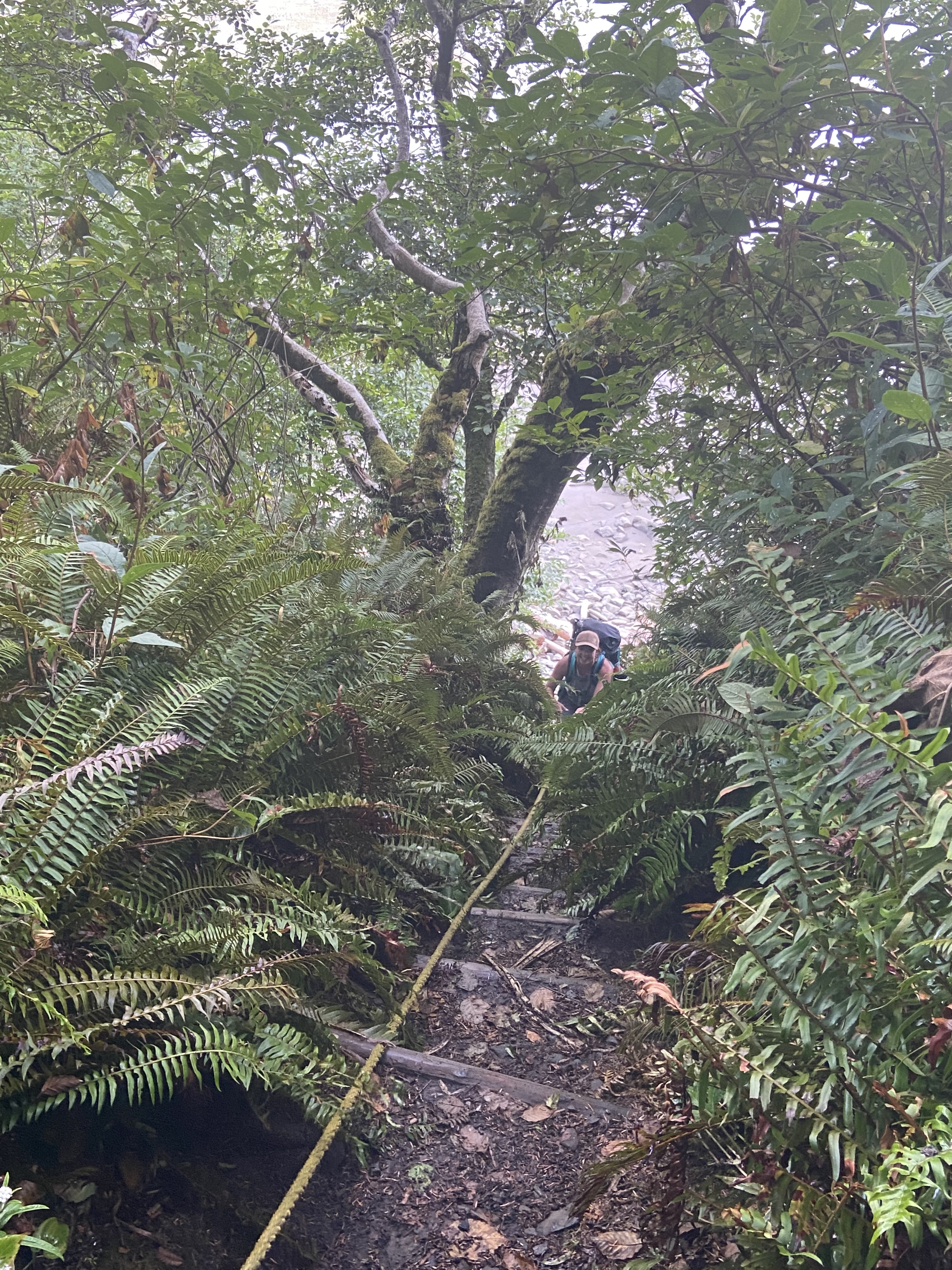
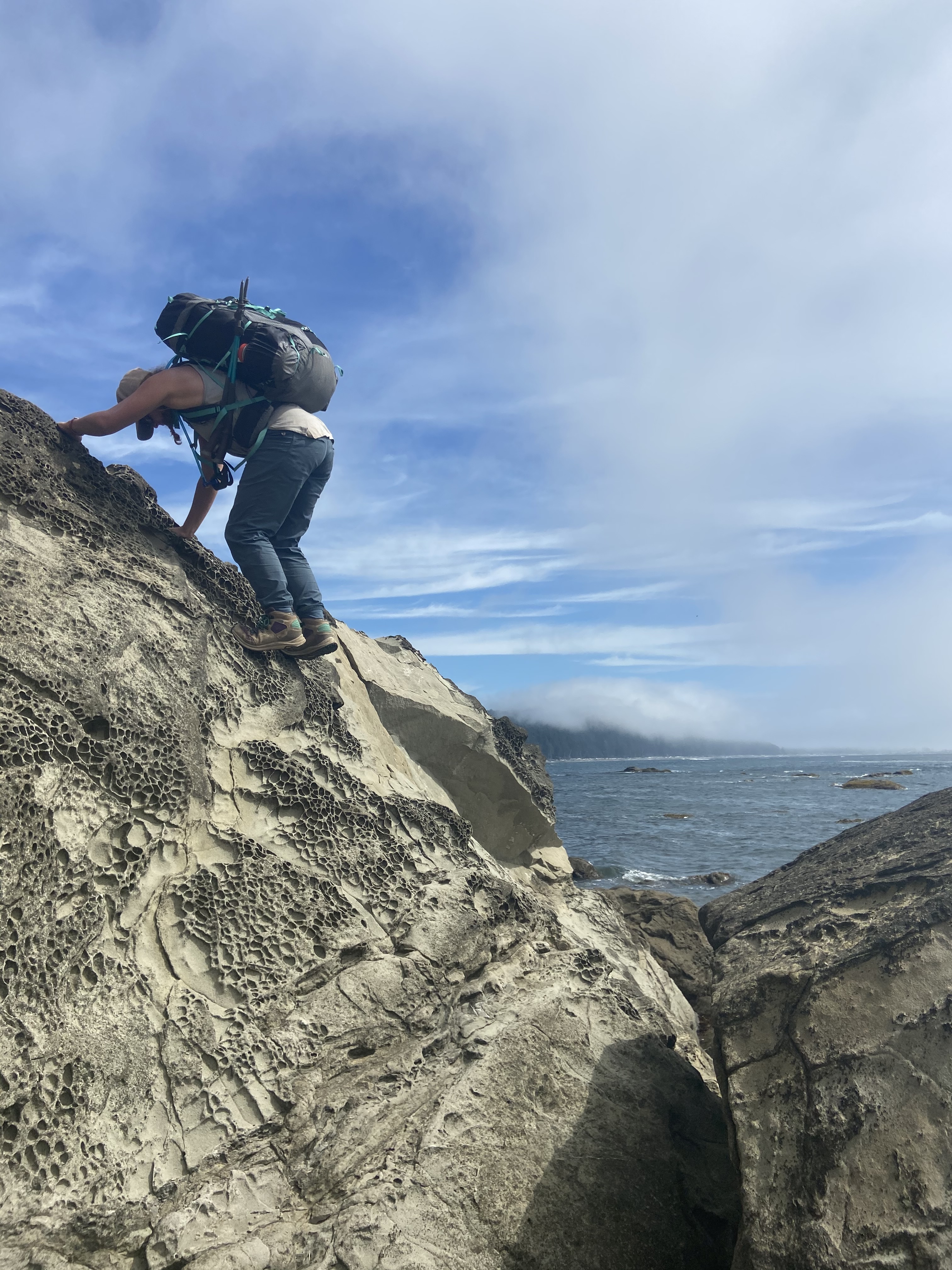
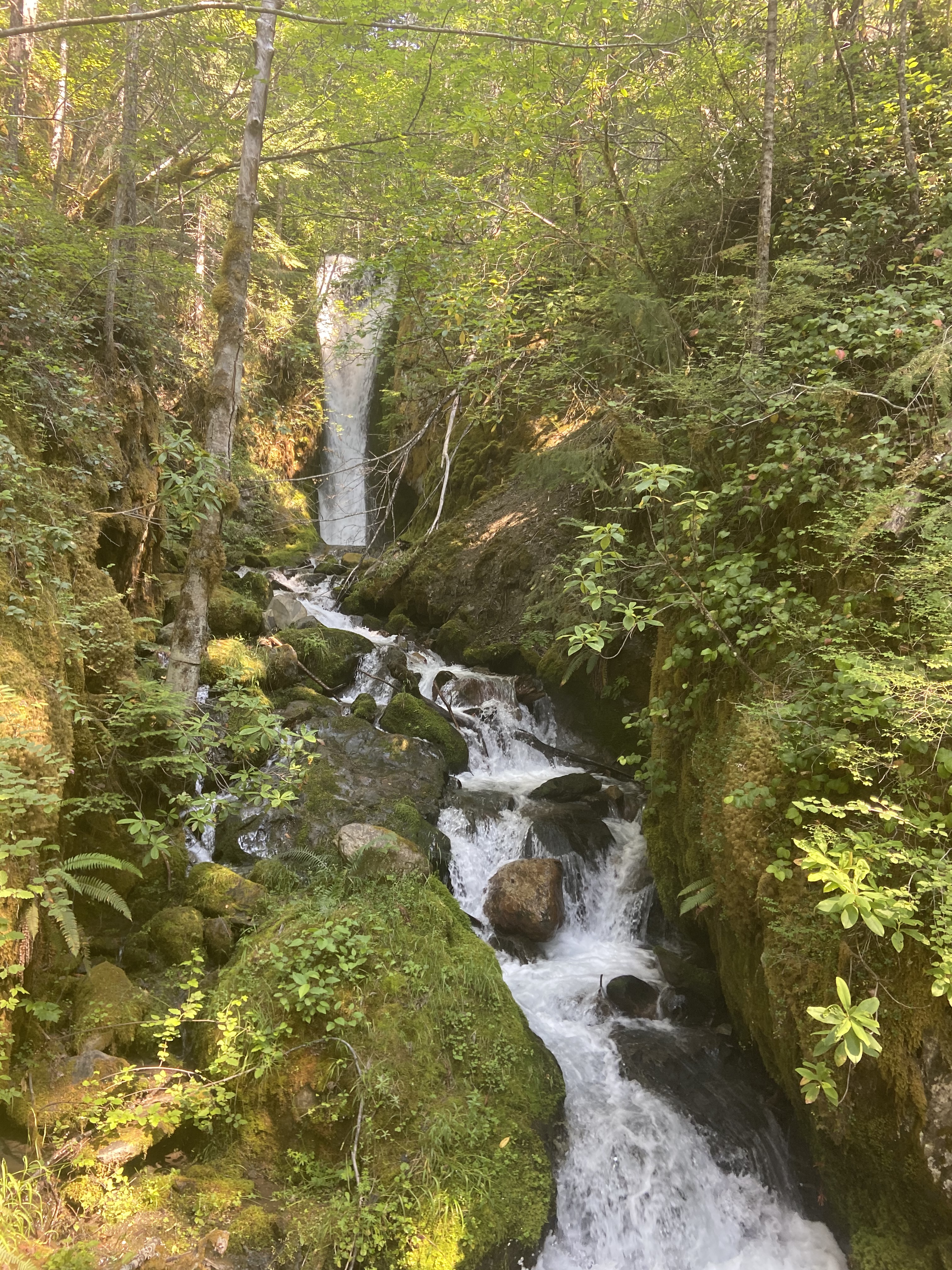
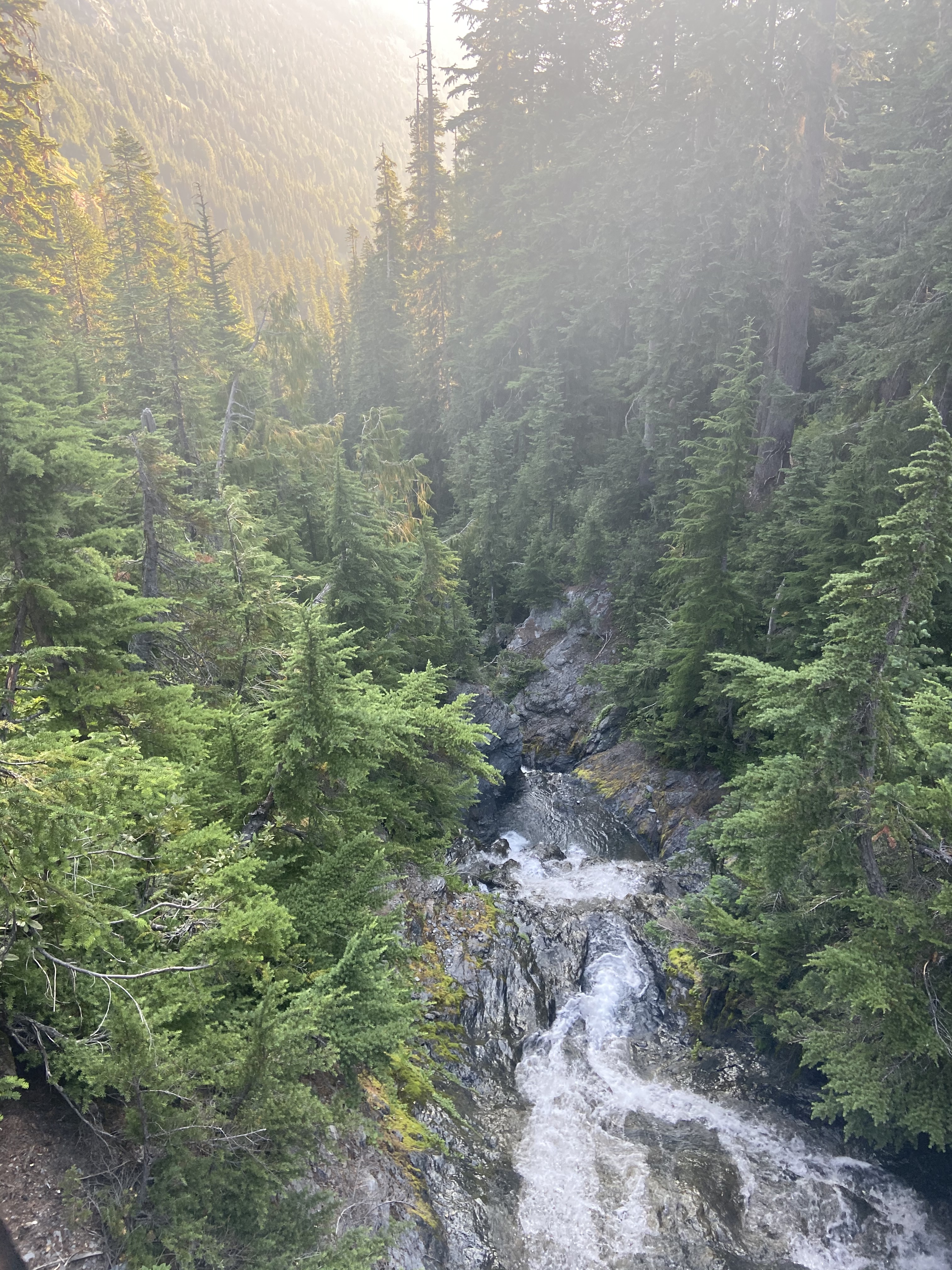
This trail felt reminiscent of the Pacific Northwest Trail for me, like it was PNT-lite. It had some similar feels to it, like the people who originally plotted both trails out had similar energy levels and goals. Energy being “high” and goals being “views”. Sometimes the trail would head across fields of football sized rocks, sometimes it would zig and go straight up a hill to a lookout before zagging and coming right back down, sometimes one would be hiking along and suddenly come to a scramble, or would walk into a boggy area. The most unique “hiking” occurred along the Death Valley section. This involved some moderately sketchy and exposed scrambling on slanty ancient lava flows, complete with giant fissures where, if you fell, I’m pretty sure your body would disappear and never be found. But there were great views too!
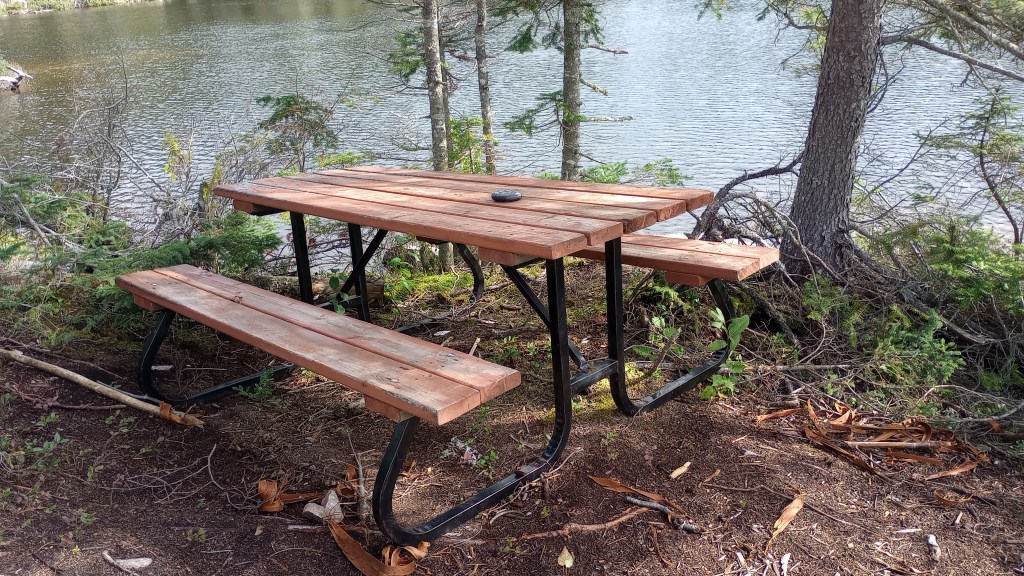
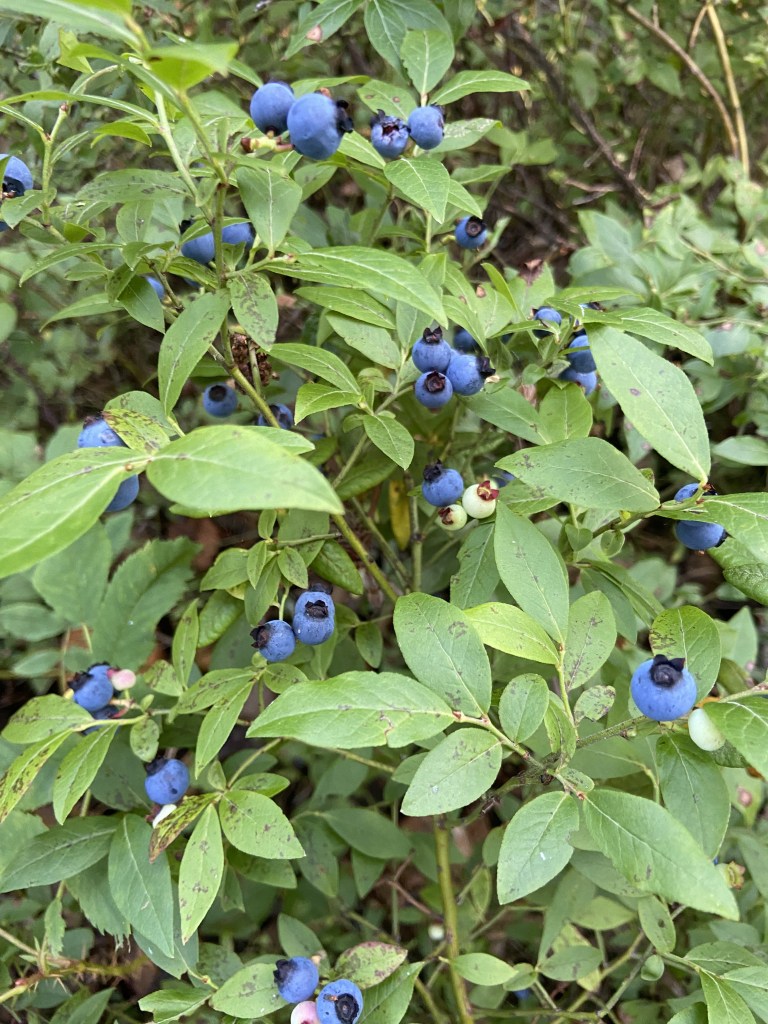
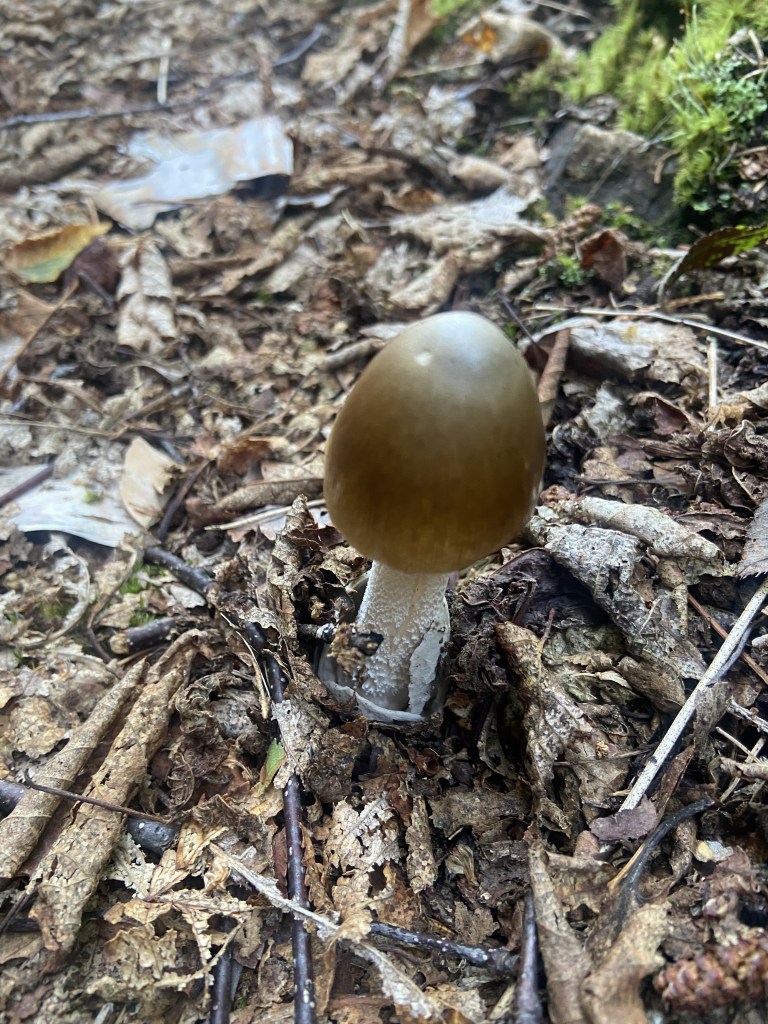
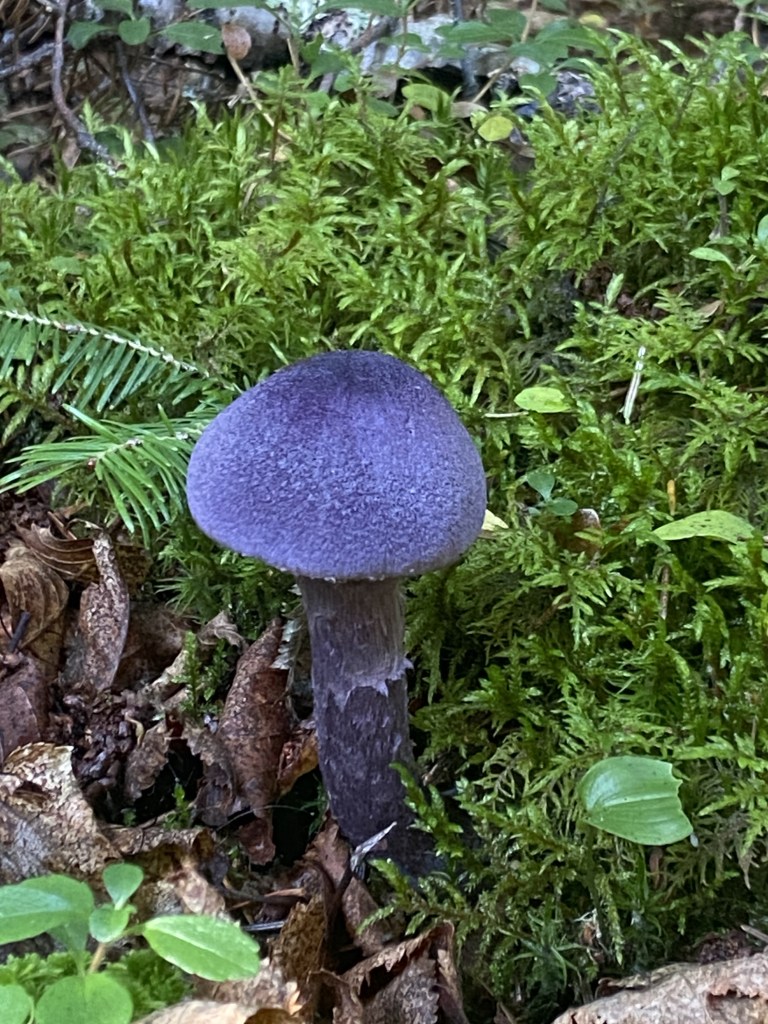
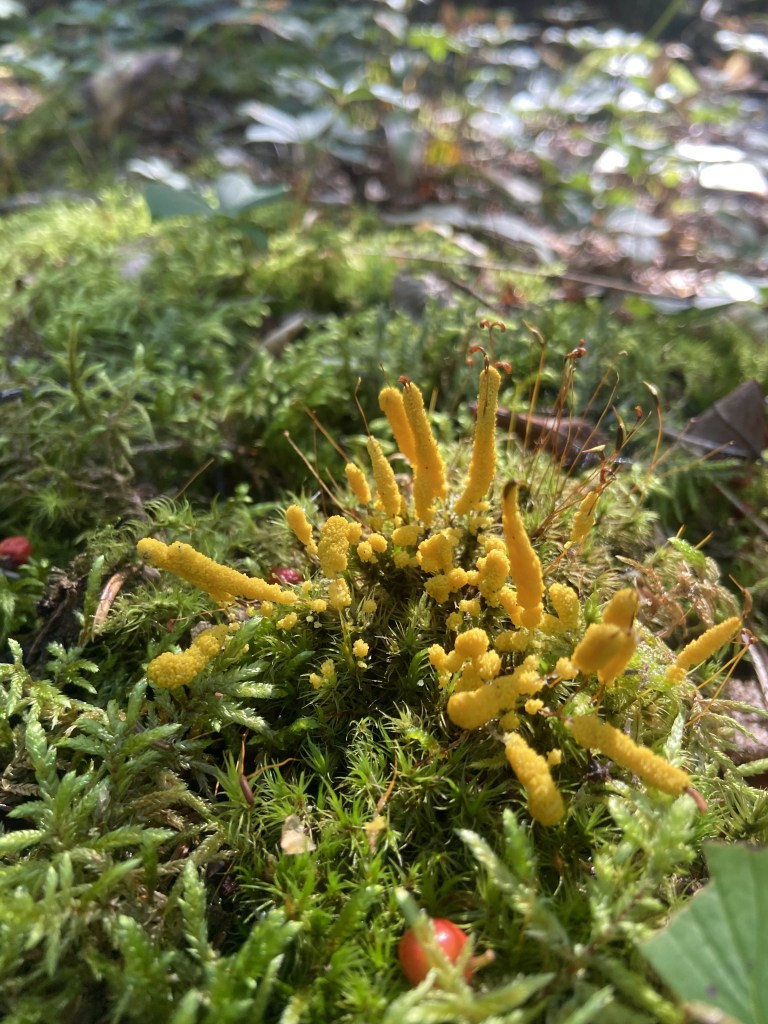
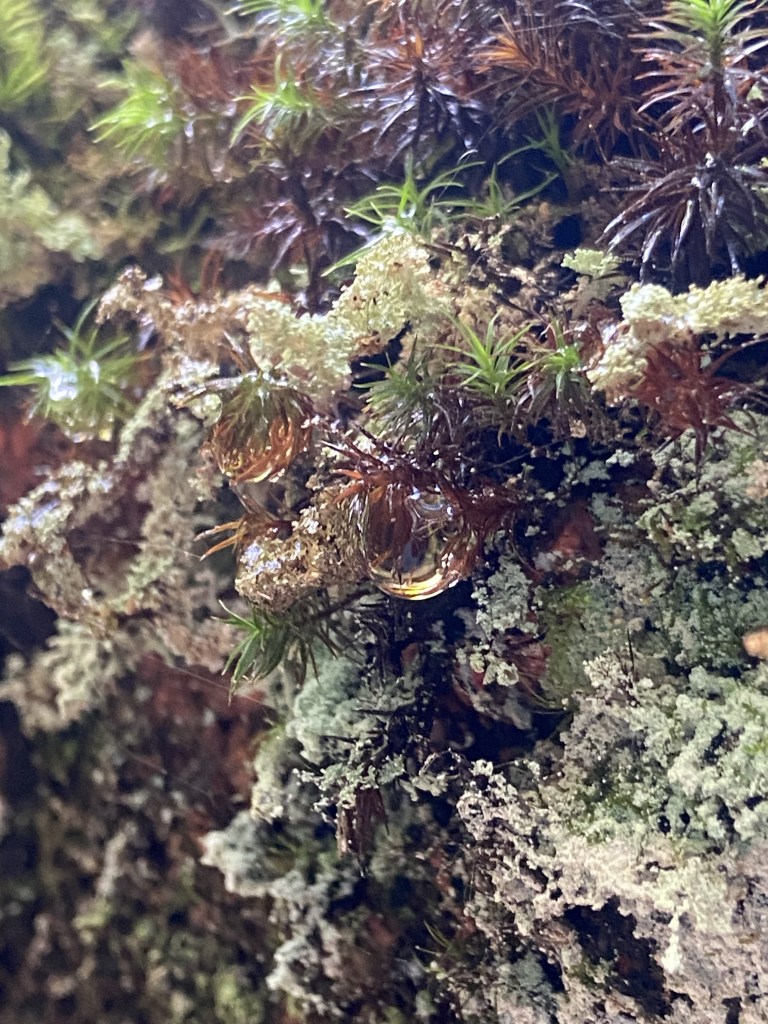
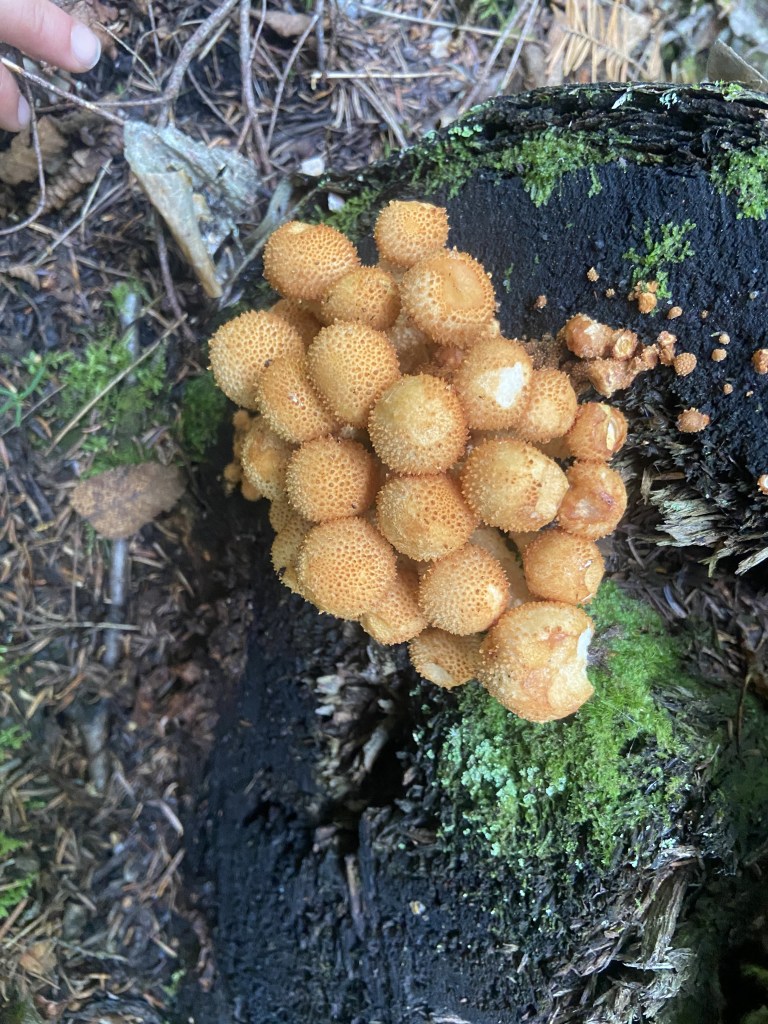
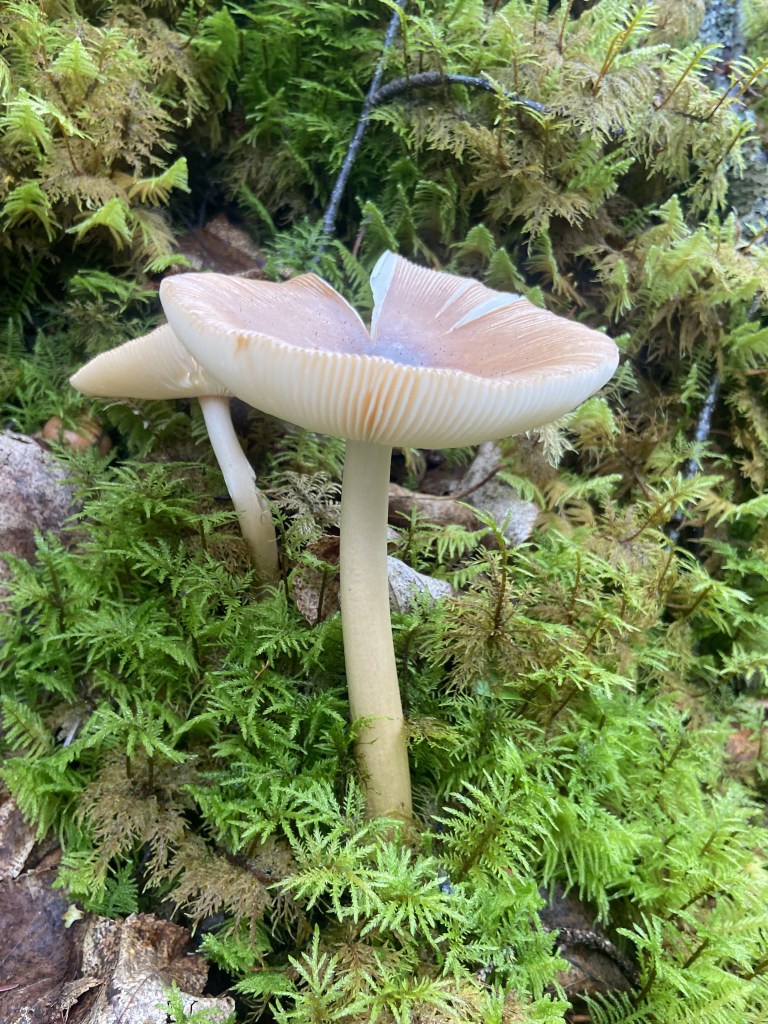
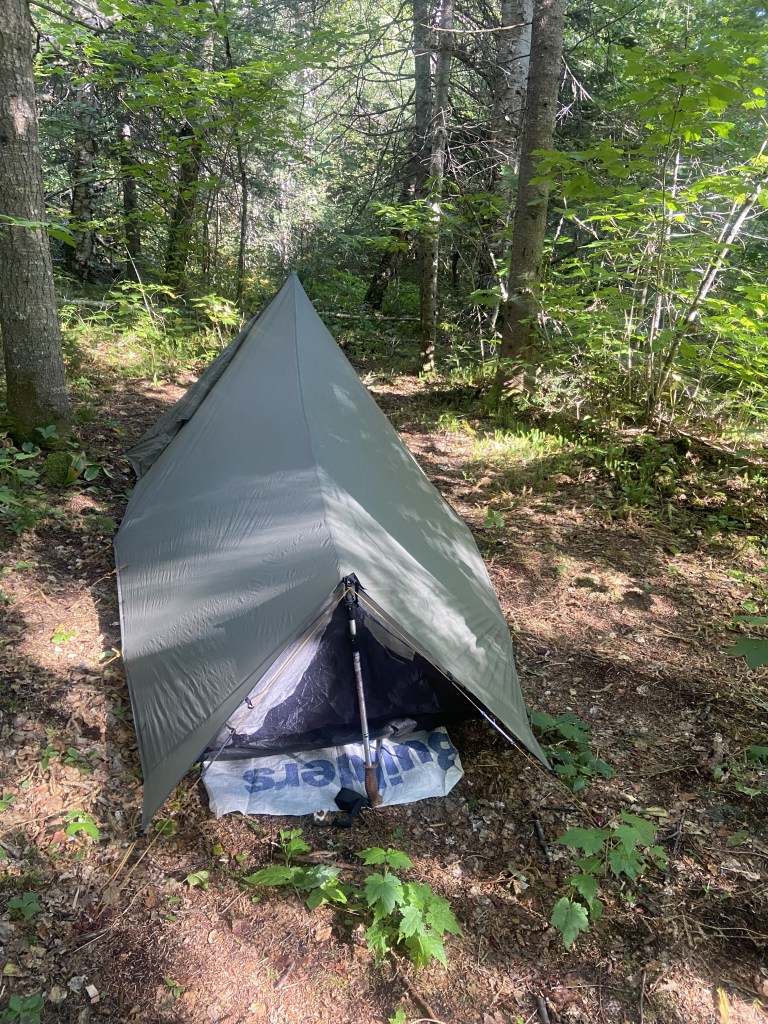
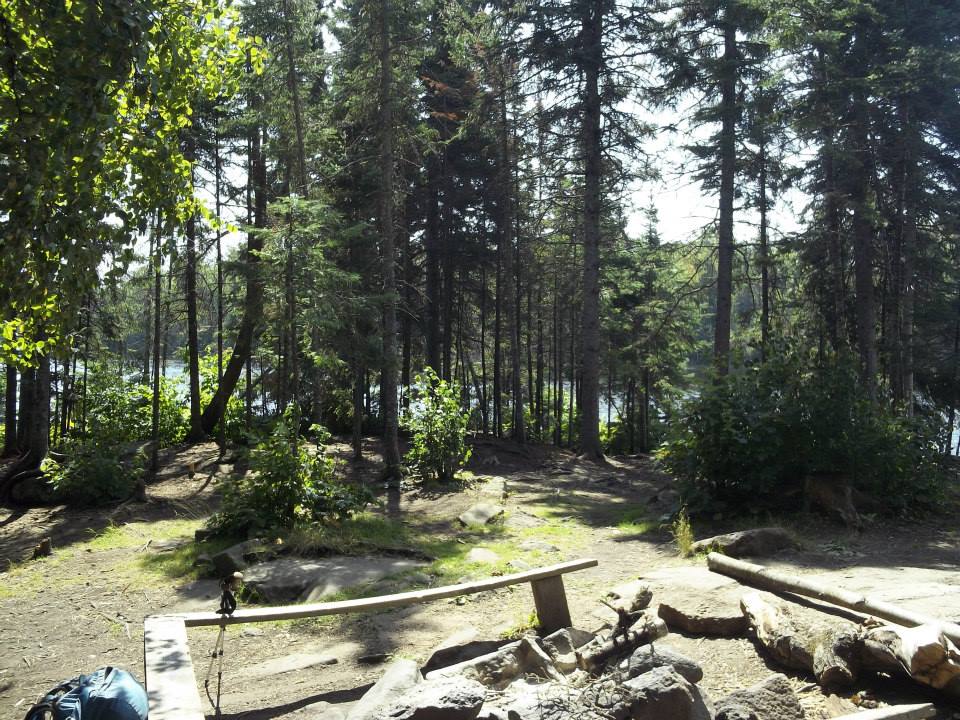
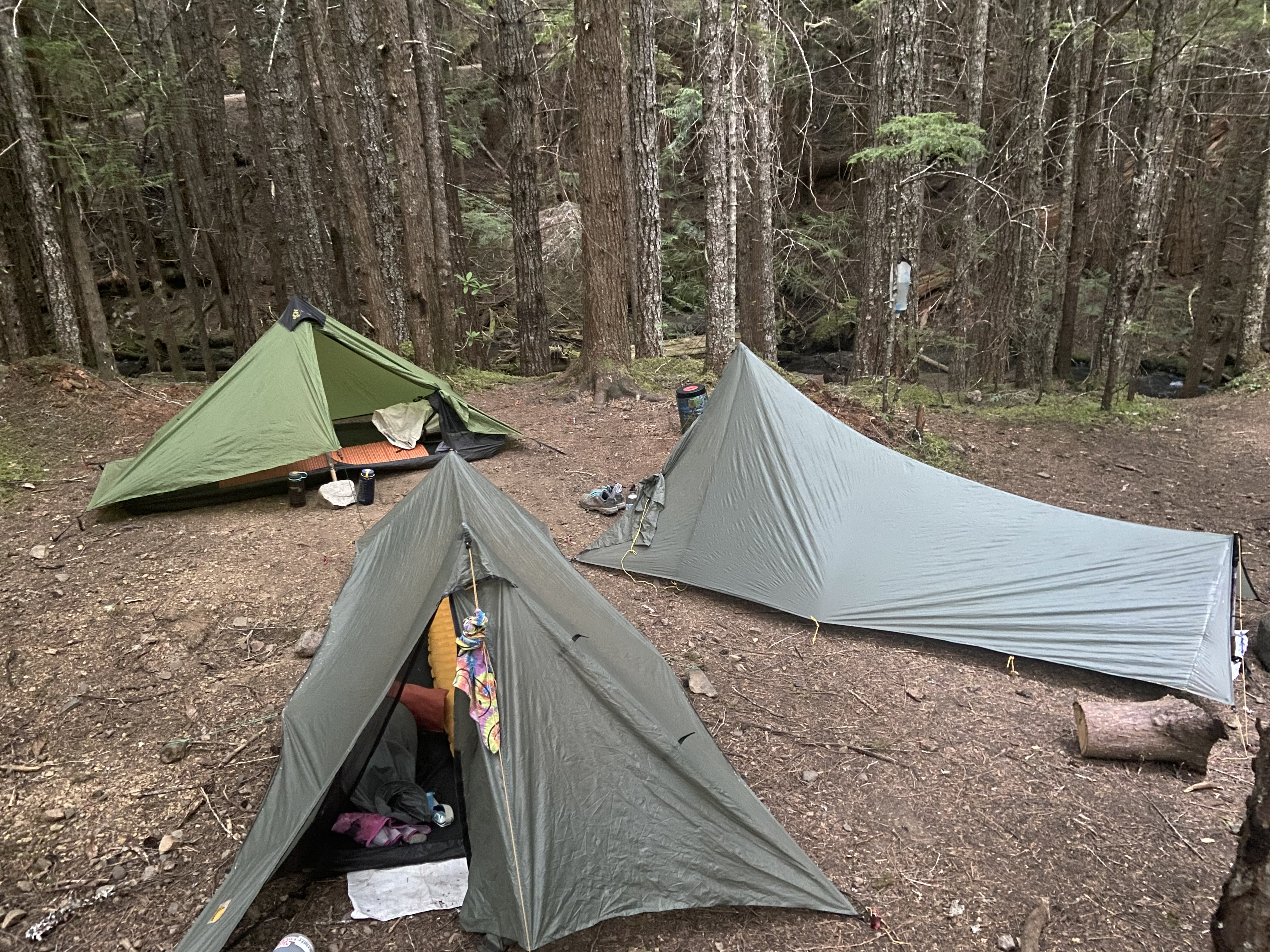
Unlike the PNT, however, it was quite well marked, consistently maintained, and easy to follow. Campsites mostly had some flat-ish spaces and they also had the fancy amenities of picnic tables and a bear locker. I didn’t see any signs of bears in the area, but I did see plenty of moose tracks. Some of the areas we went through definitely felt like fairies must live there because there was so much cool moss, lichens, and fungi. We also hit the trail at peak blueberry picking season. What a treat!
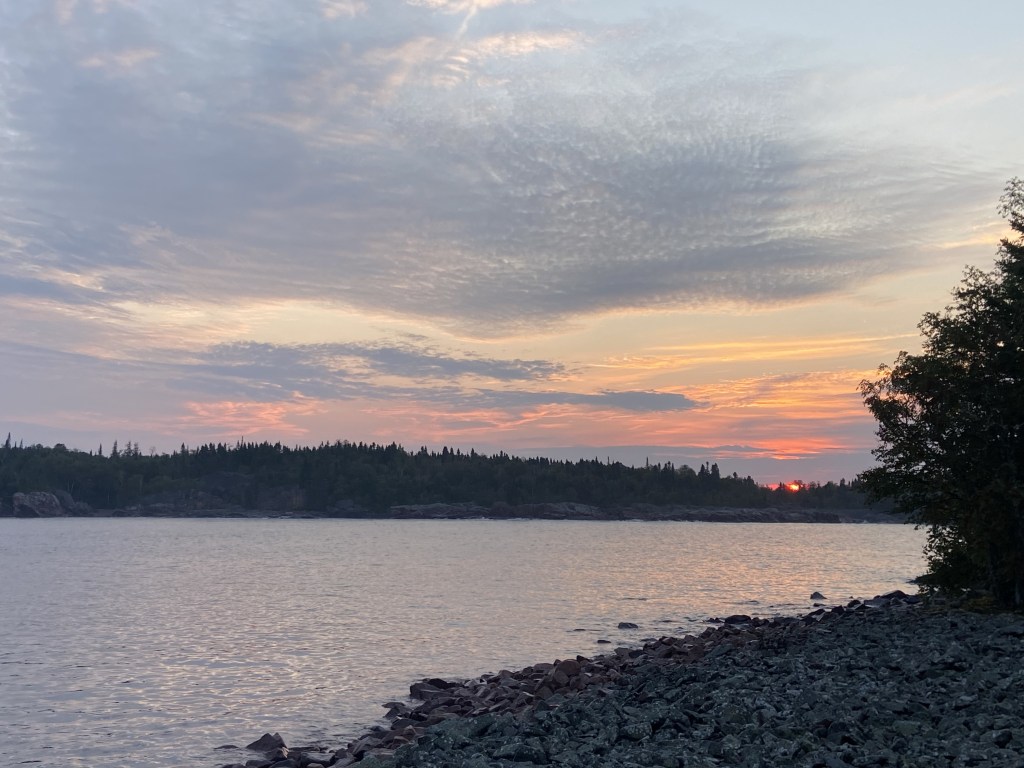
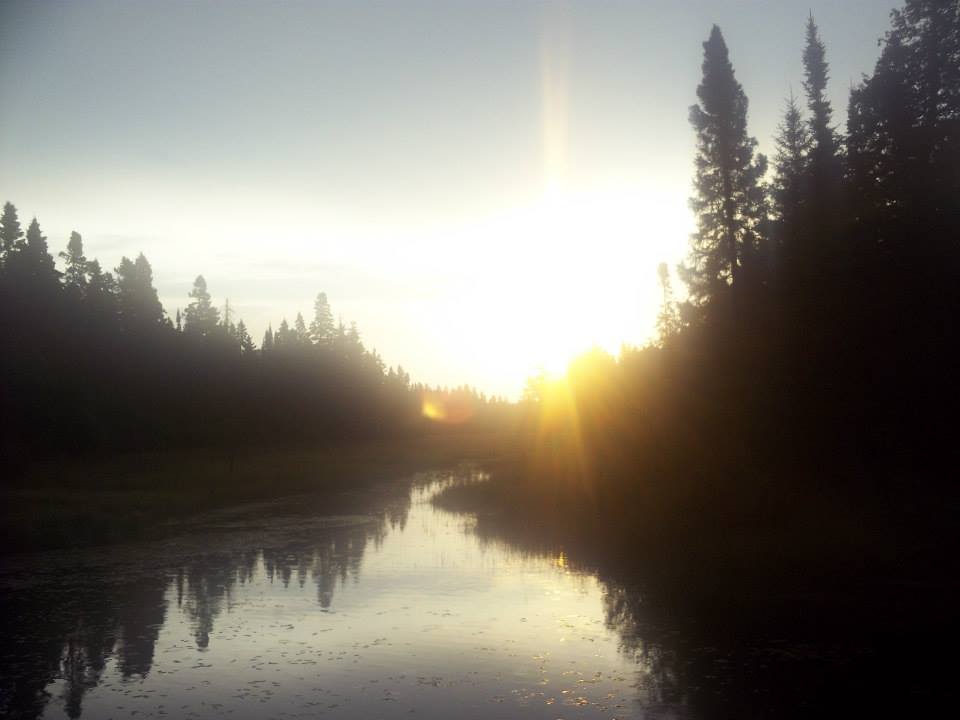
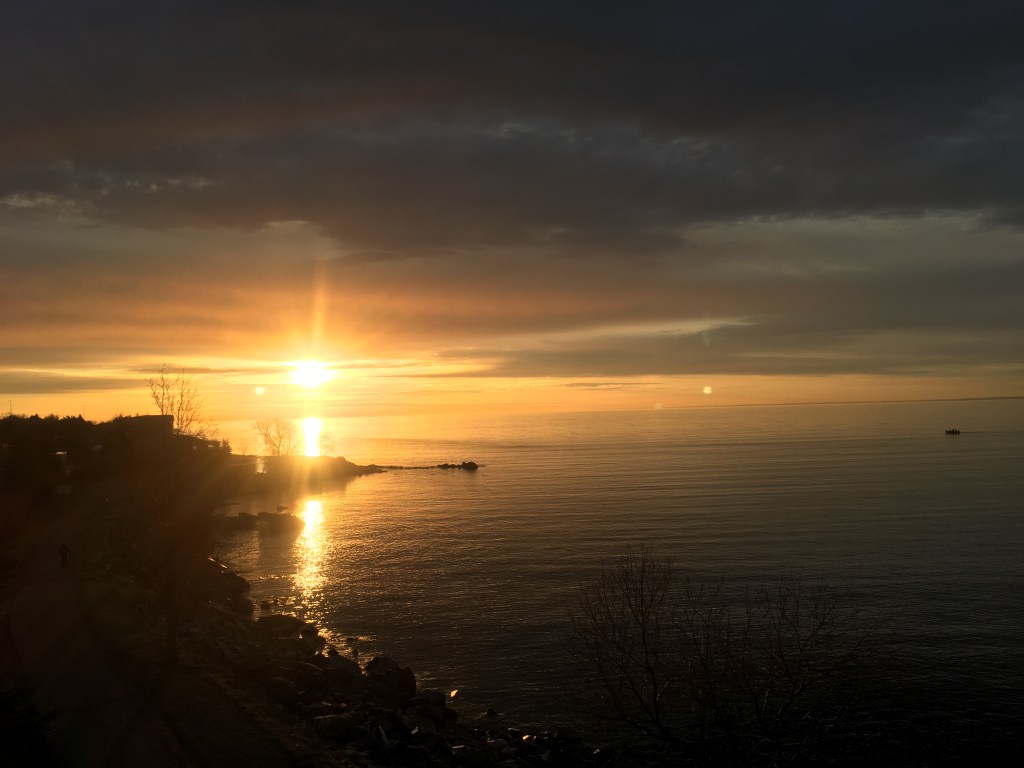
The ruggedness of the trail, the scrambles, and the elevation change meant that the trail itself took more time than we initially planned. Since we hadn’t made it as far as we hoped by the end of the second day, we ended up strategically splitting up, with me hiking on ahead to collect the car, with the plans of driving back up and picking up my friend the following day at an earlier trailhead. So, while we camped together for the first two nights, our last night was spent on our own. I woke before the sun was up on the last day to hike out to the car as the sun rose, and it was gorgeous. The car was at the southern terminus just as it was supposed to be and I was able to easily drive back up and rendezvous with Jo, just as planned. It’s nice when things work out! Then we made the long journey home.
This trip was wonderful in a lot of ways for me – I loved the physicality of it and how humbling it was for only being 33 miles long. The varied terrain, gorgeous views, time with a friend, and also time solo really rounded out a fabulous trip, even if it didn’t go as initially planned.
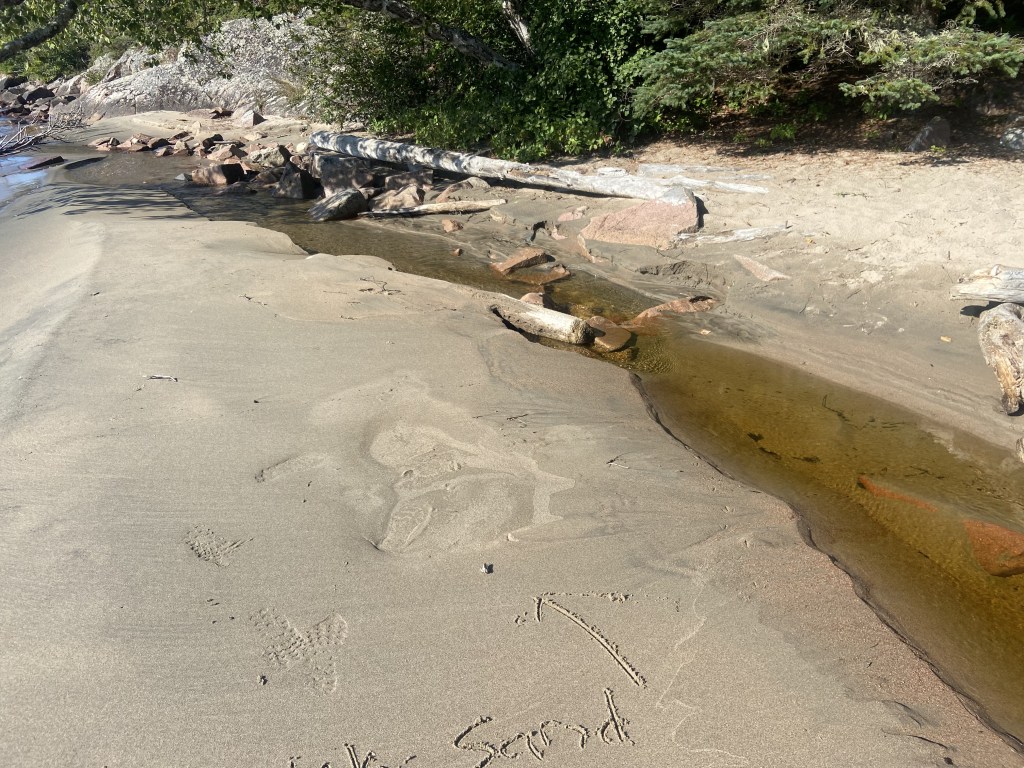
I would definitely hike this trail again, but if I did so I would make sure it was dry conditions (for the boggy sections and the sketchy scrambles), I would leave more time for hanging out at beaches and swimming, and I would probably lump it into more adventures in the area (it can be quite a long drive to get there). If you’re looking to hike this trail, I’d make sure you’re feeling confident with your rock scrambling skills, I’d reach out to the The Casque Isle Hiking Club for opportunities and information, and I’d pick up some maps by becoming a member of the Voyageur Trail Association.
]]>2exploringedgeshttps://exploringedges.wordpress.com<![CDATA[Thru Hiking the Superior Hiking Trail: Ten Years Later]]>http://exploringedges.com/?p=20212023-05-05T16:52:46Z2023-05-05T16:49:02Z“It is so lovely out this evening. There is a wonderful cool breeze coming in through the tent door. I watched the sunset from the comfort of my bug-free zone…I hope the breeze continues. The sound through the pines is wonderfully soothing. Every once in a while on this trip I have gotten a whiff of fall – this is one of those times. Perhaps it is because I’m inches from the ground, but I can smell autumn leaves.” – Anna, last night of SHT Thru Hike, 2013
Recently I was going through some old things and I came across the journal that I kept while attempting my first solo long-distance trail: The 300 ish mile Superior Hiking Trail (SHT) here in Minnesota. For those who might not know, thru hiking (or through hiking) is when a person hikes from one end of a trail to the other, all in one continuous trip.
The SHT had been on my “maybe I’ll do this someday” list for years, but it wasn’t until I found myself at the Nantahala Outdoor Center in North Carolina early in the summer of 2013 that I finally decided to do it. The Appalachian Trail runs through that area, and as I hung out there for the week I saw hiker upon hiker walk through on their trips towards Maine. It was romantic to think of travel like that, to only have the gear on your back and just relying on your own two feet to get you to a far away destination, so when I got home I started crunching the numbers and preparing for my own “little” thru hike on our prime local trail.
I didn’t really know what I was doing, but I was determined to figure it out. I read quite a bit about gear, nutrition, reducing pack weight, and physically preparing. I came up with a plan for resupply and packed boxes to mail to myself via general delivery. I assessed my gear and decided it was “good enough” (even though now I’m a little in awe of the heavy-ish gear I carried that whole way). To train I walked loops with my pack around the bluff trail in my home town. I experimented with making my own stoves – after a “twiggy” stove I tried to make out of some cans wasn’t working, I settled on an alcohol stove I made out of some pop cans.
Finally, I was as ready as I would ever be. I mailed my two resupply boxes with the estimated arrival dates to a couple of towns along the way and drove up to Duluth. The Superior Hiking Trail at the time started a bit south of Duluth before heading through the town itself and then the rest of the way up the north shore of Lake Superior to an overlook with Canada. Duluth posed a logistical challenge – at that time there was very few camping options within the city, so my plan was to camp at the one paid campground and just hike the rest of the way out of town (25+ miles) … and just figure it out.
To add complication to this whole project was the fact I needed to leave my car somewhere. I had planned to park it at the state park that was the southern terminus at the time, since I had left my car at the state parks many times for shorter trips. When I checked in with the rangers and asked them where I should park it they balked – wait, how long? Three weeks? No, you can’t park here that long.
This was the day before I planned to start hiking.
Instead, they sent me to the local sheriff’s department to ask them what I should do. Long story short, a couple hours later I had parked my car at a park-and-ride off the freeway and had six miles of road walking to get myself back to the state park. My adventure was not quite starting as planned.
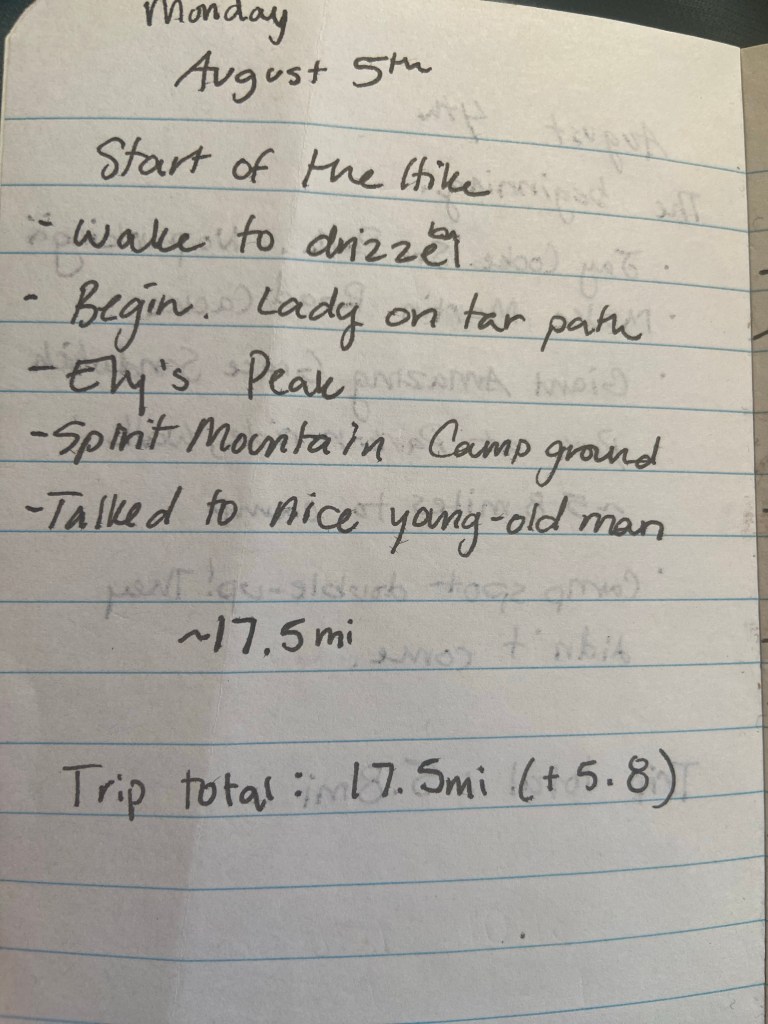
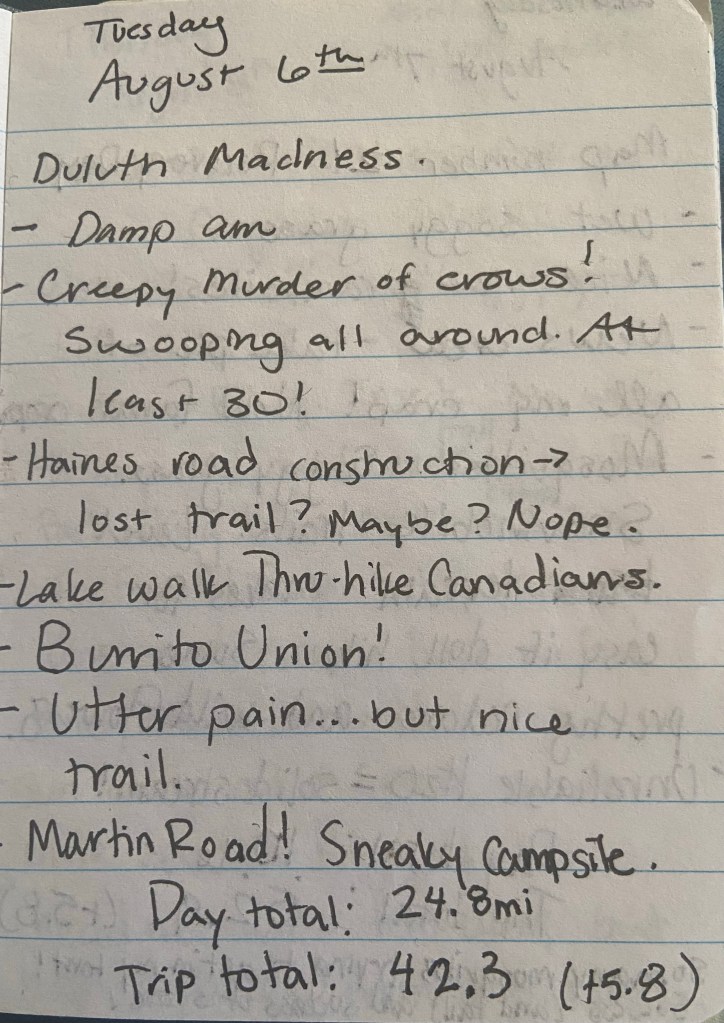
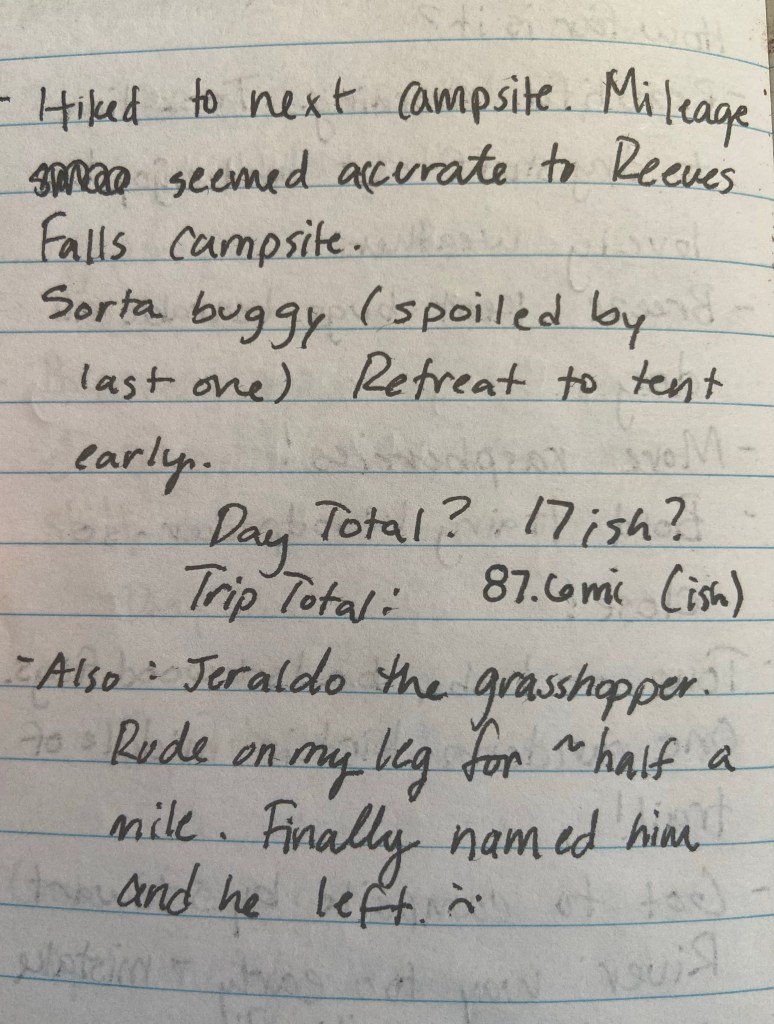
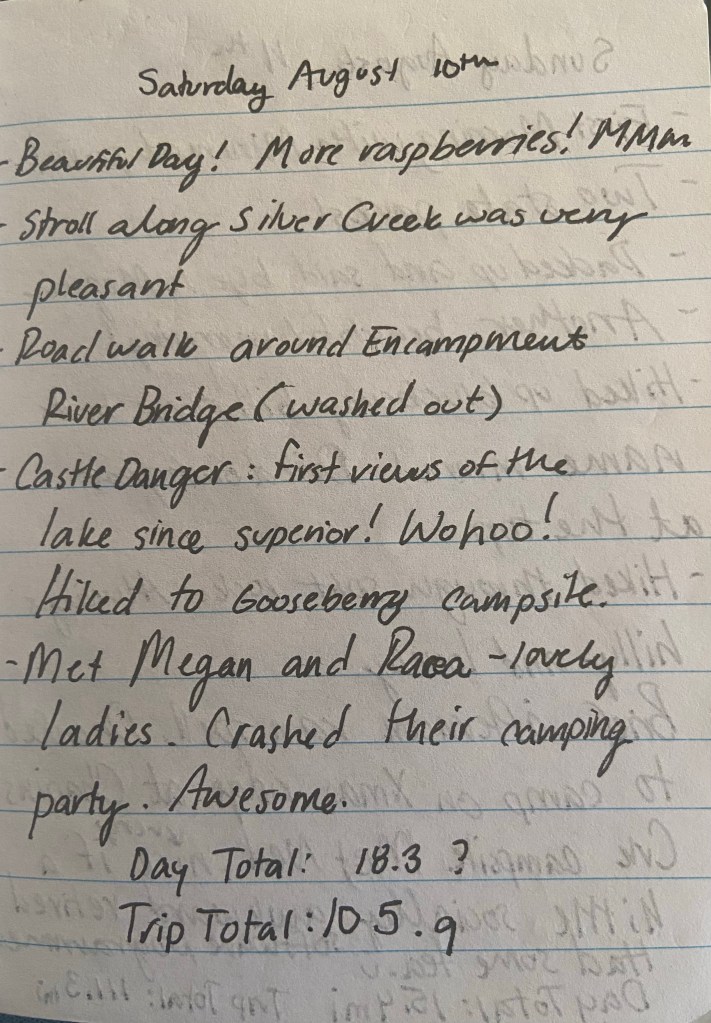
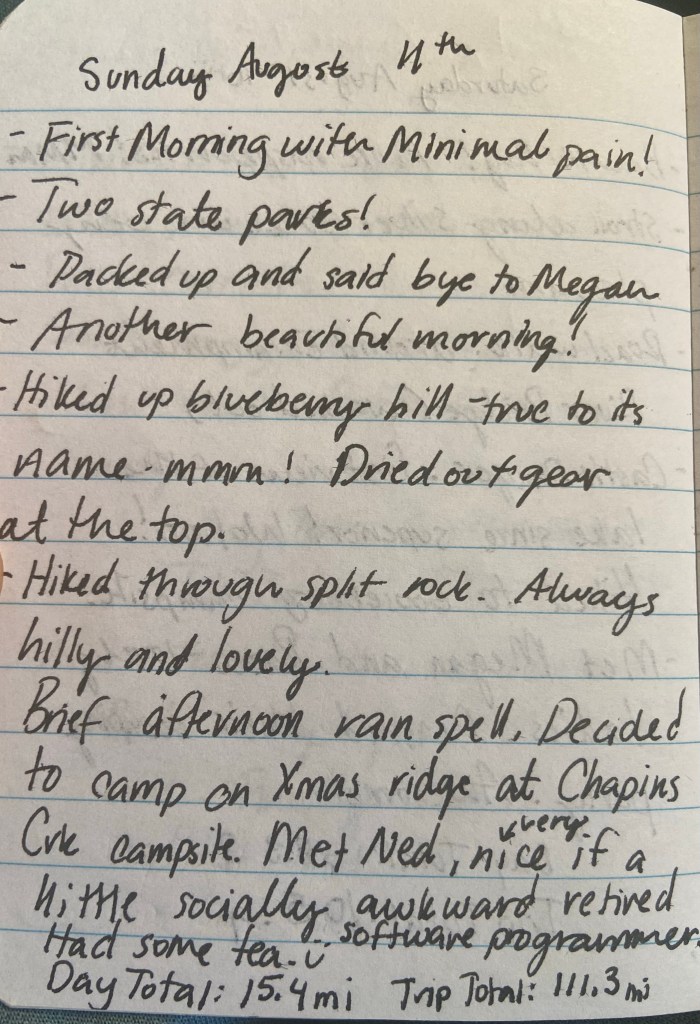
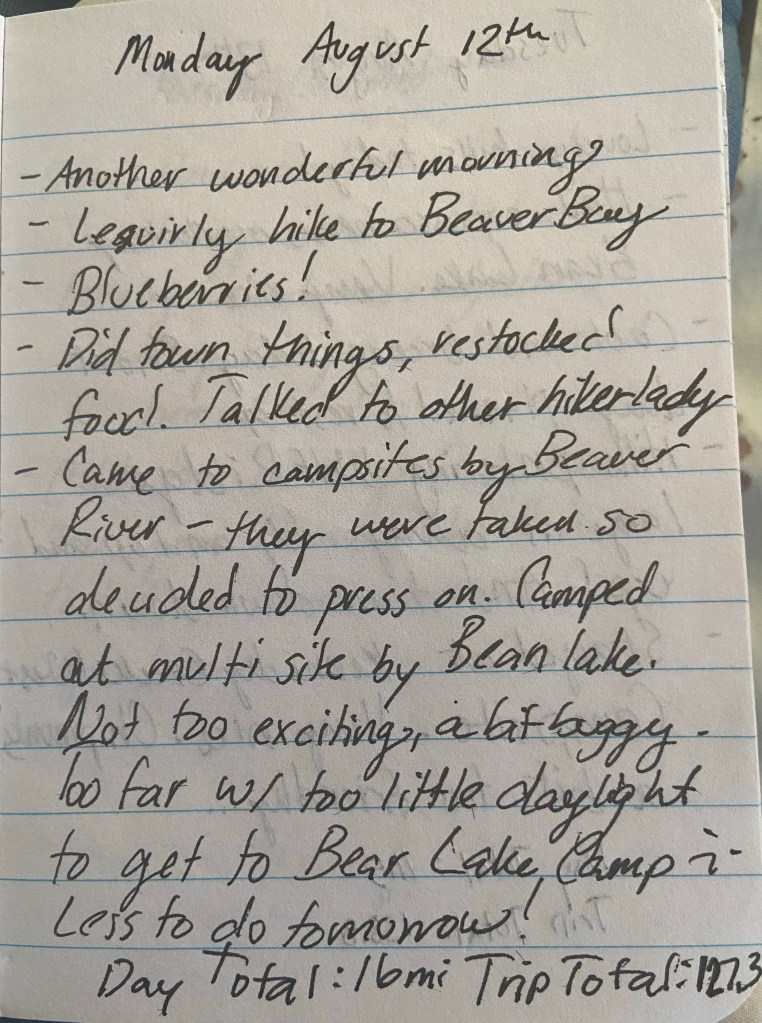
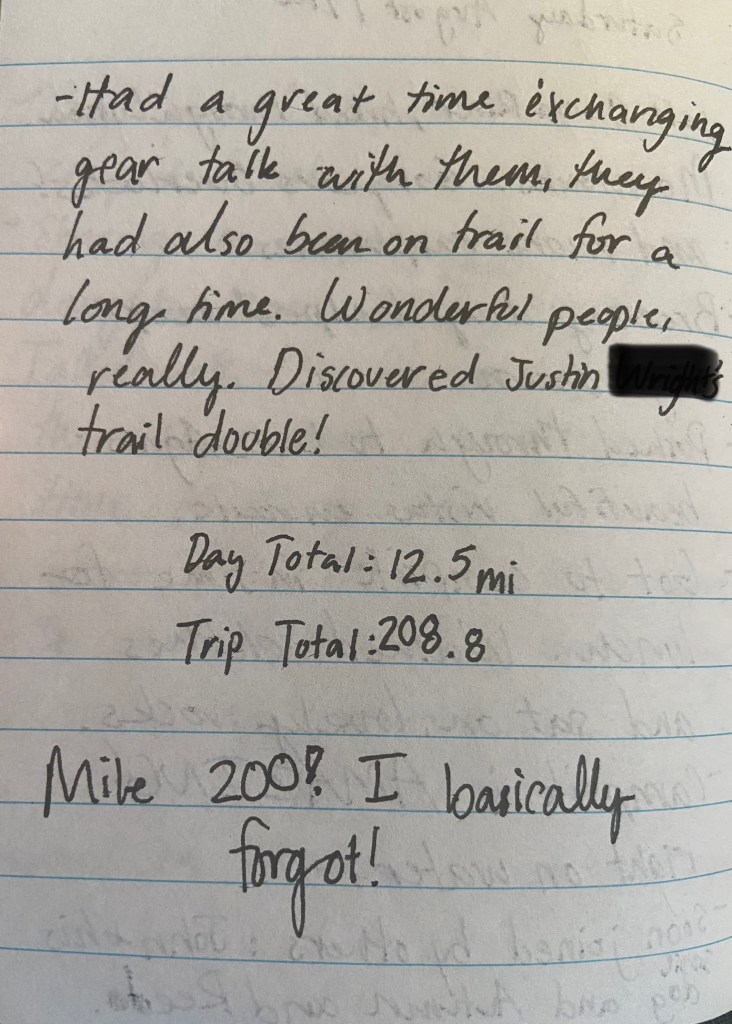
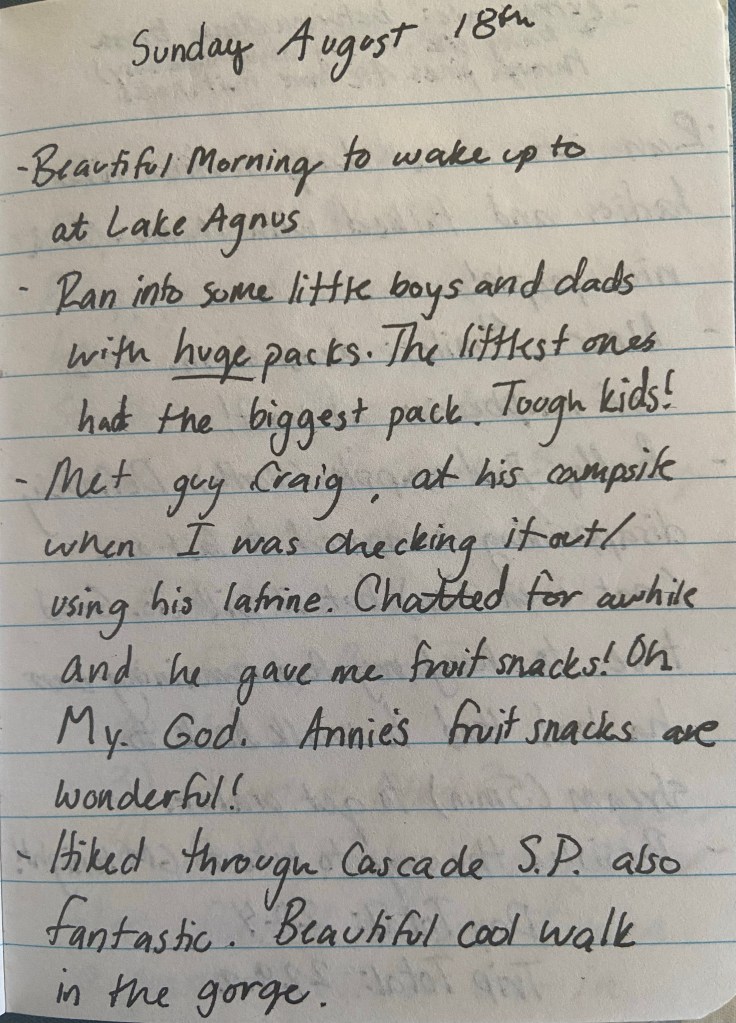
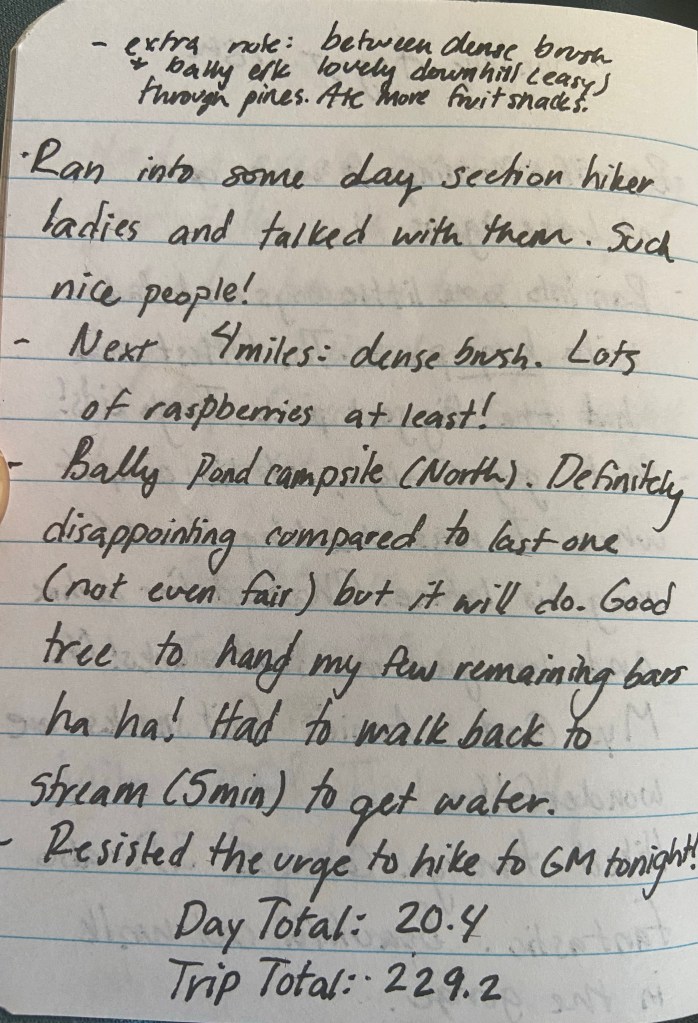
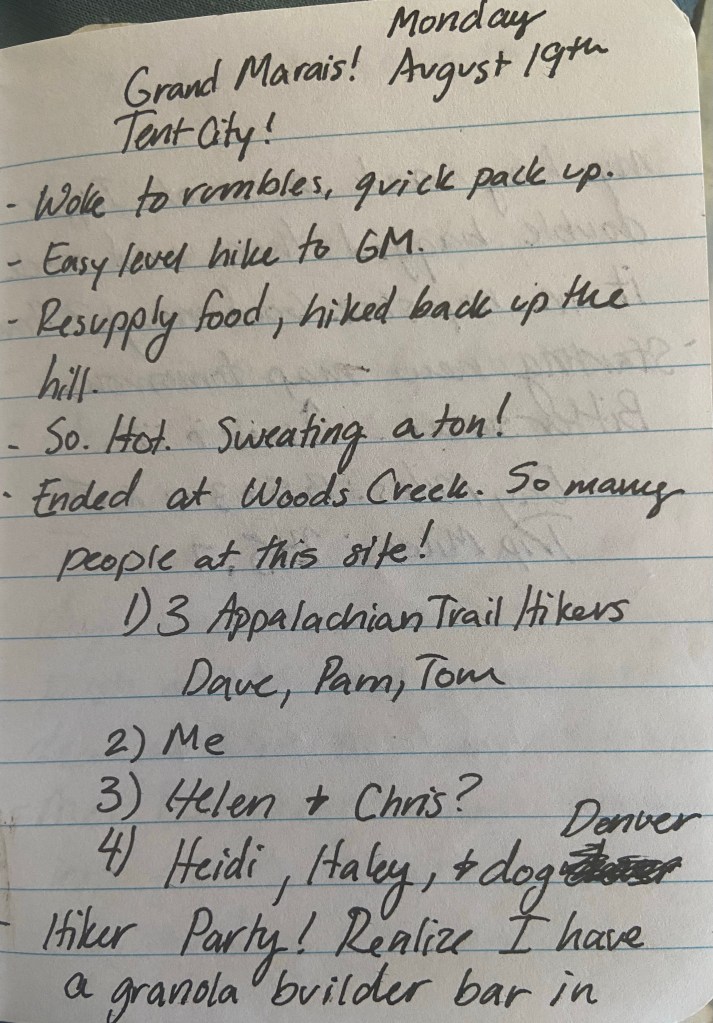
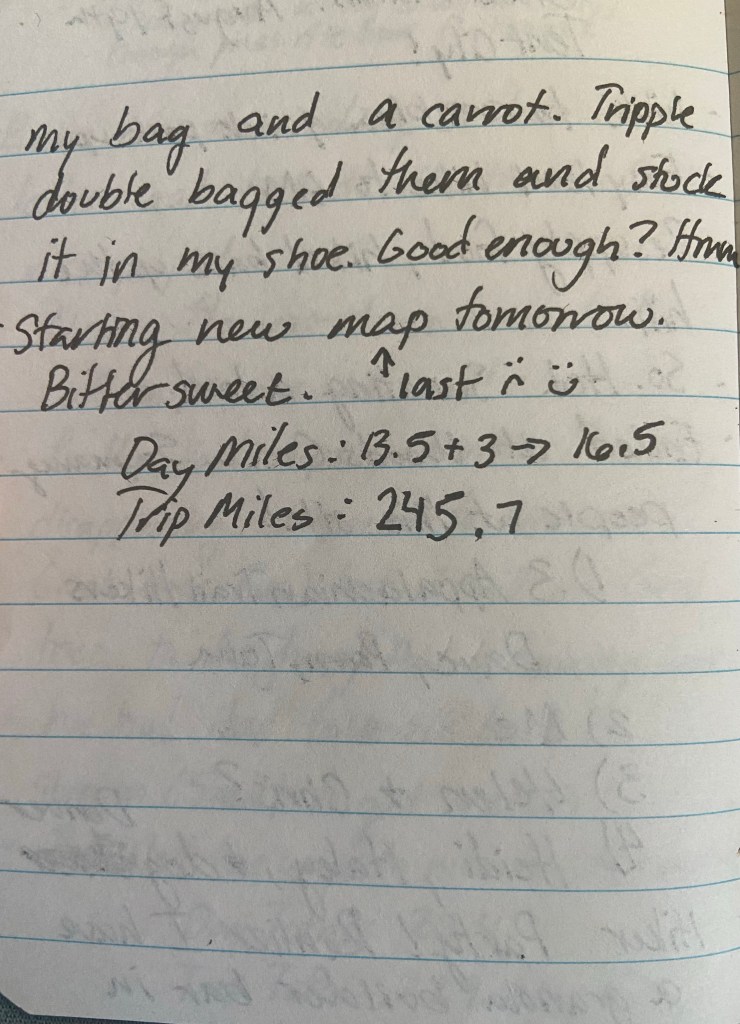
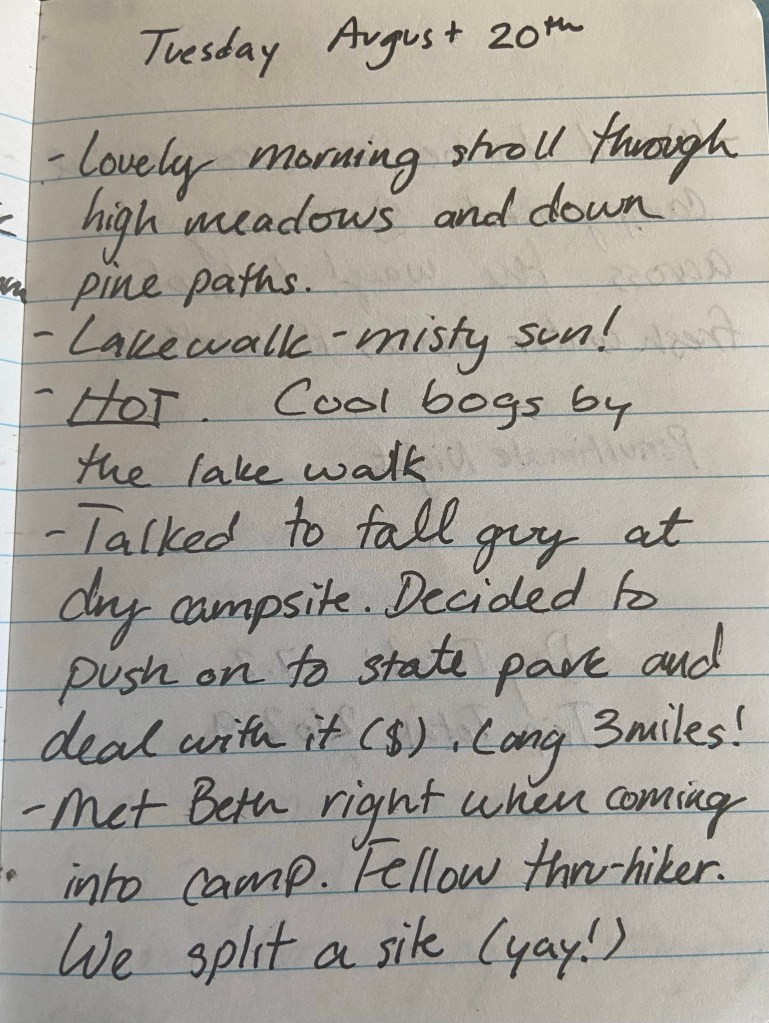
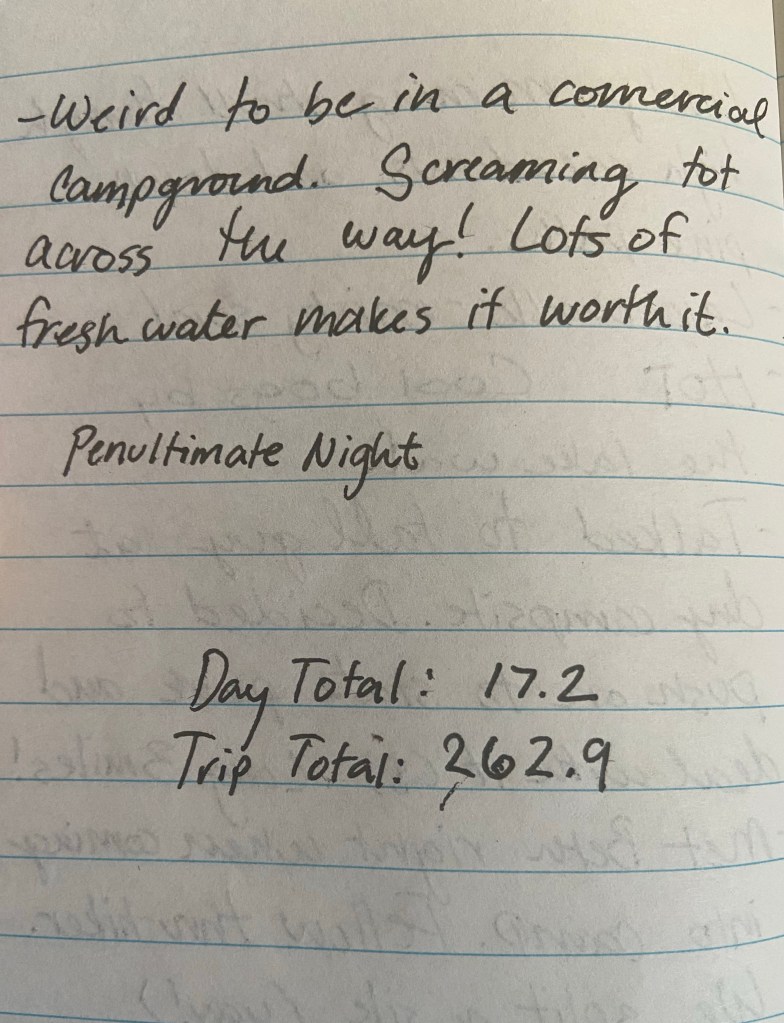
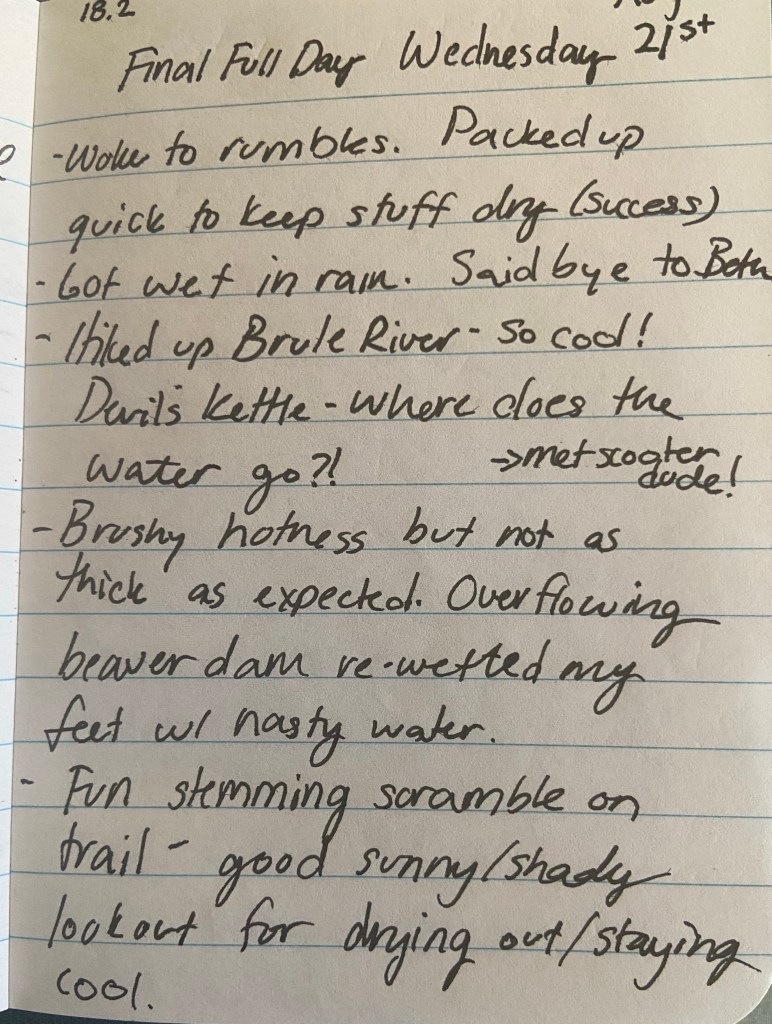
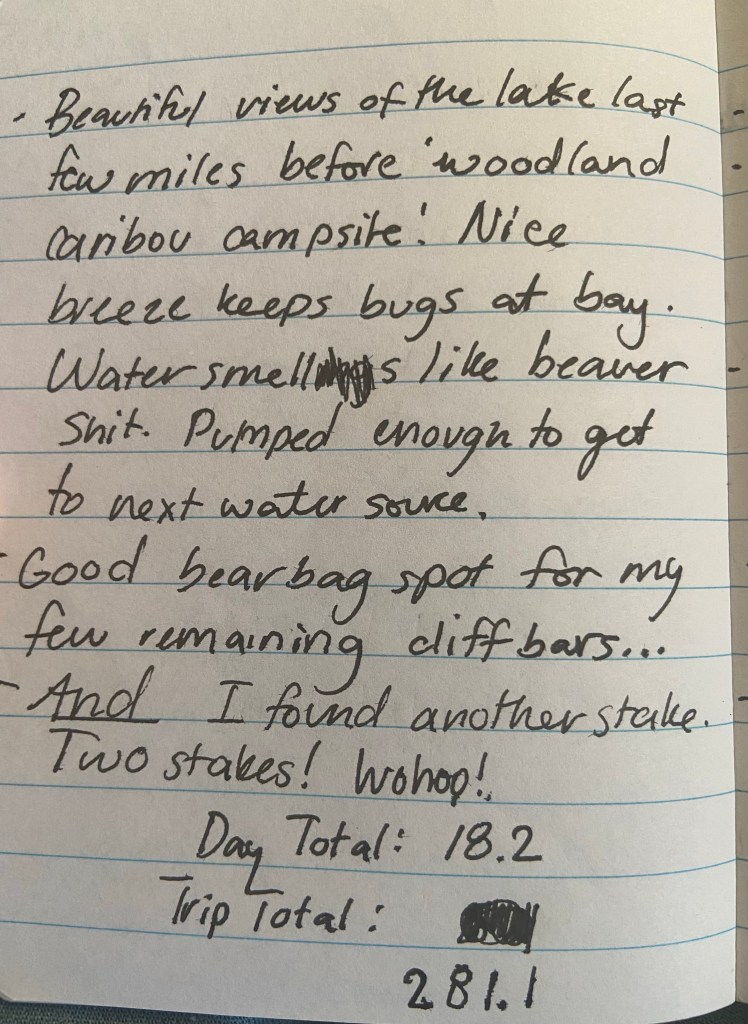
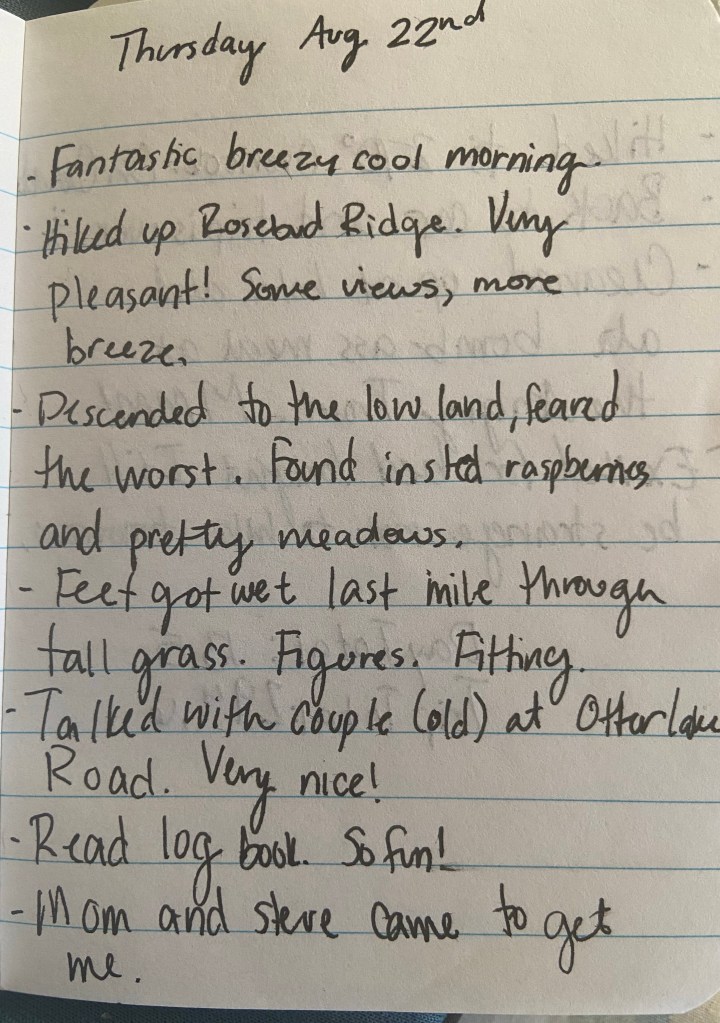
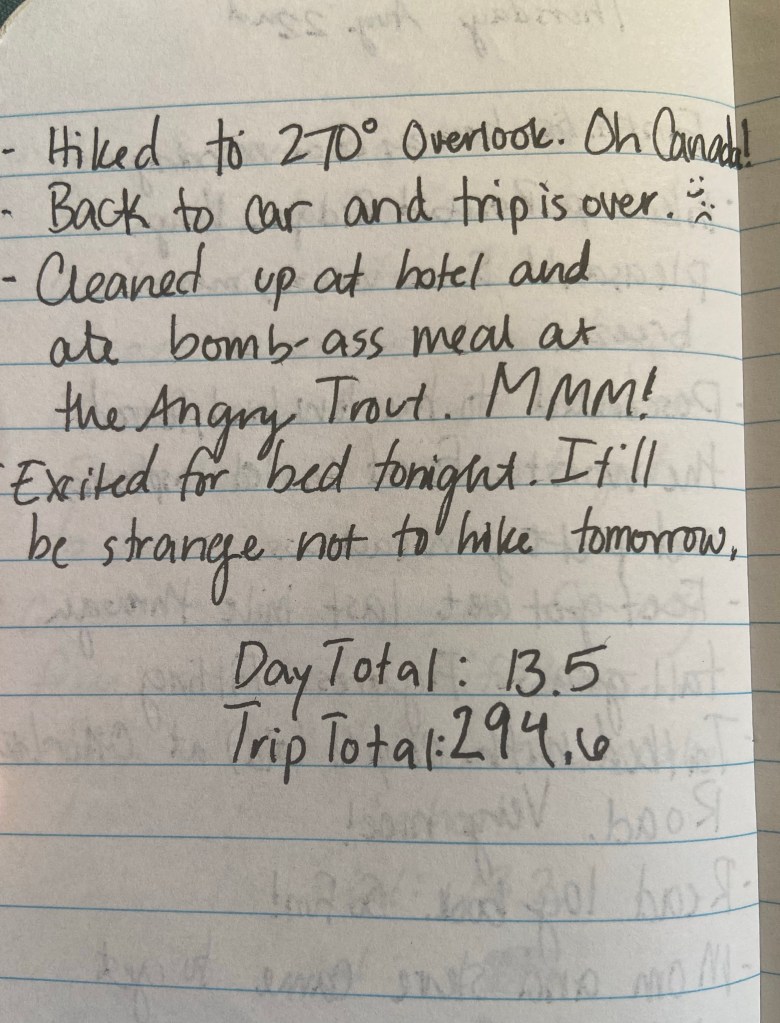
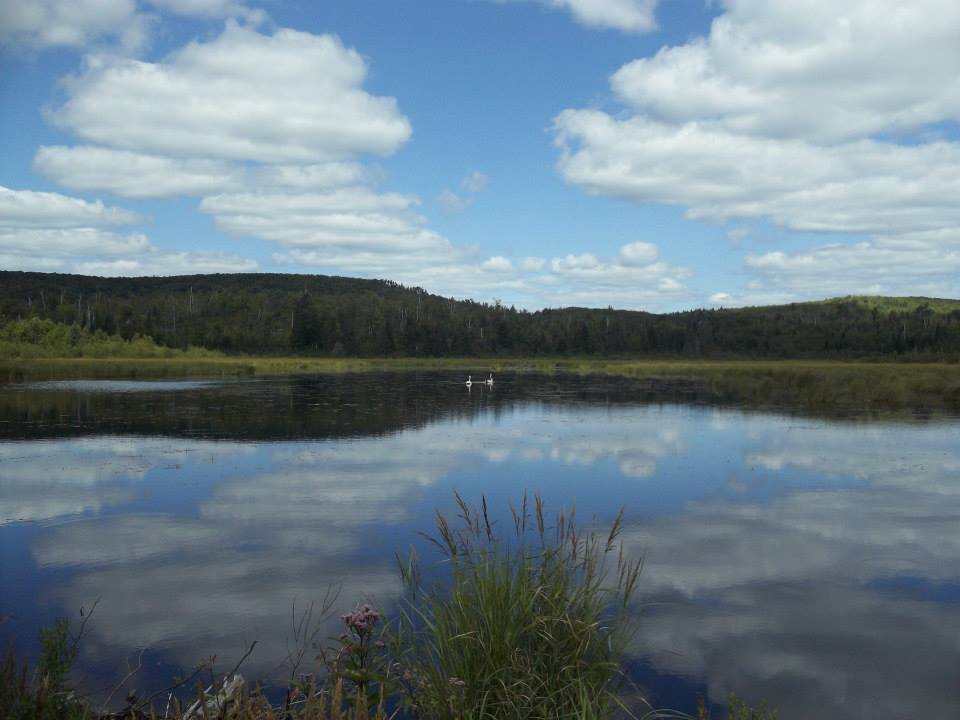
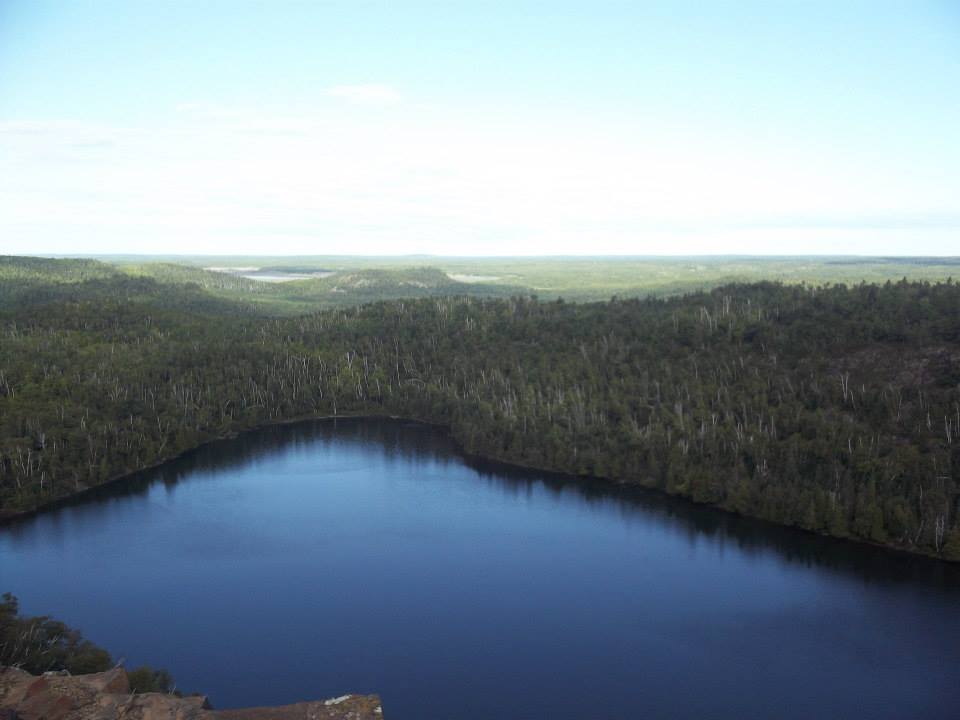
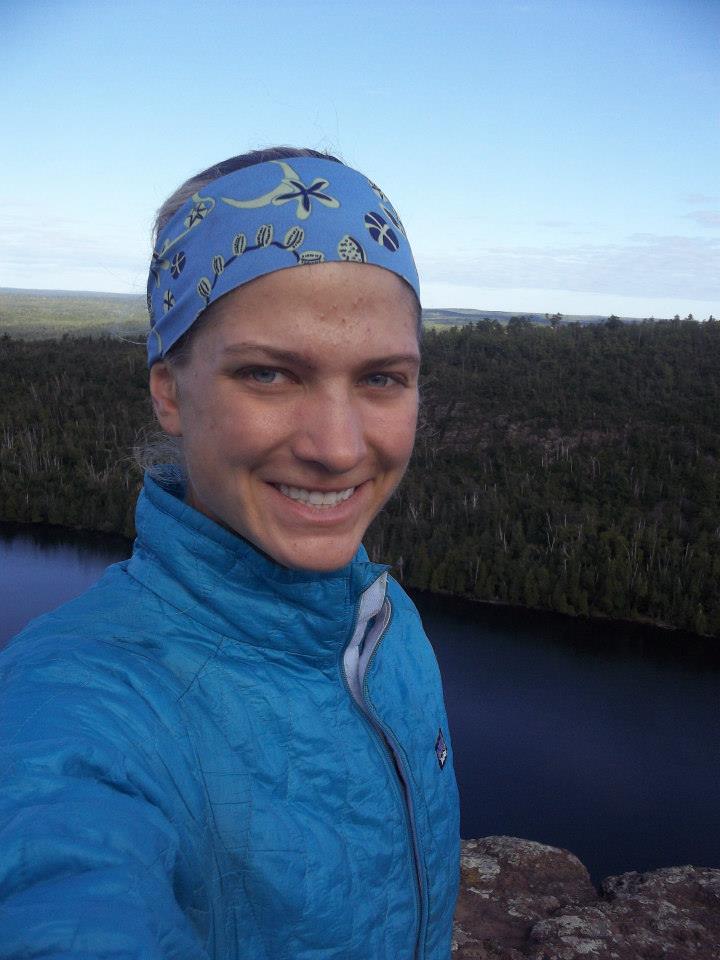
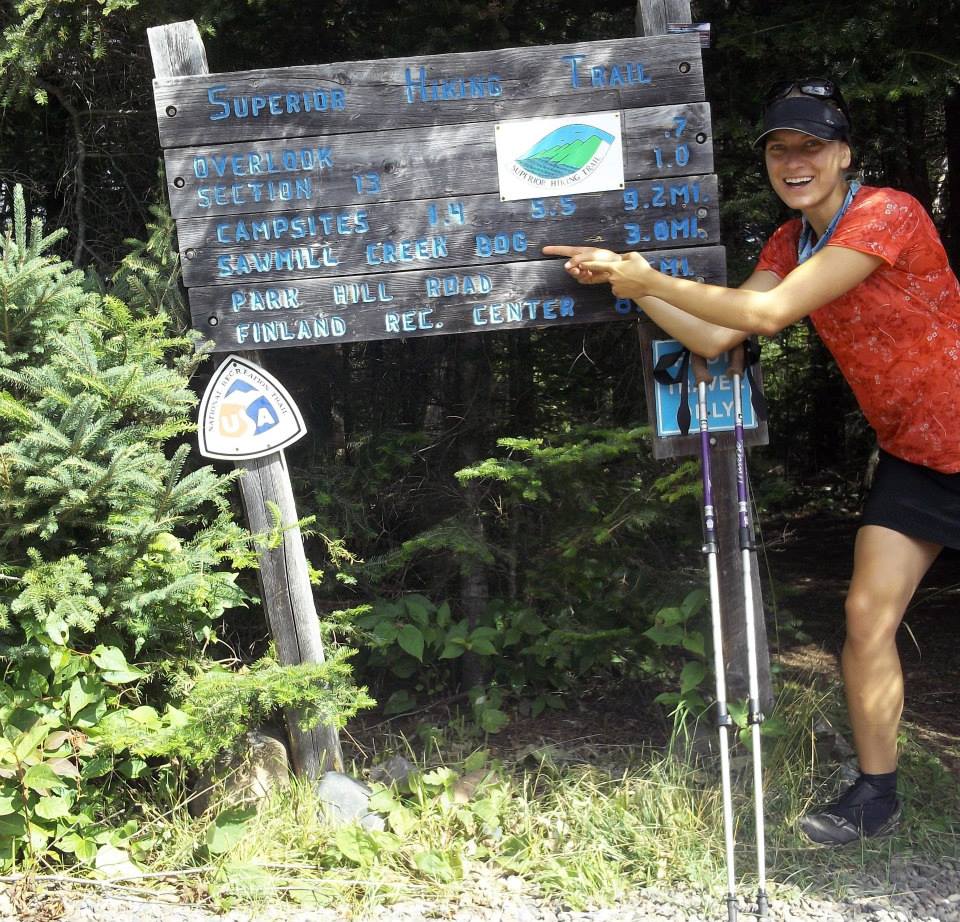
Following are some shots of my journal of my adventure – I included alternate texts if the photos aren’t clear. My journal for this trip was more a list of happenings (also content warning, there is the occasional swear word). Many entries probably don’t make a whole lot of sense to anyone but me, but I certainly had a good time reading them as I put this together! If you don’t have time to flip through, I’ve included a summary of the trip below.
Some key points about my experience: the first week was really rough. It was physically and mentally challenging. Not only were a couple of the days really long mileage-wise, but I also got pretty soaked and eaten alive by mosquitoes and biting flies every day. However, my trip took a major upswing after I got to Castle Danger/Gooseberry, and while I still was nearly at my limit physically and mentally, I found my stride after that point.
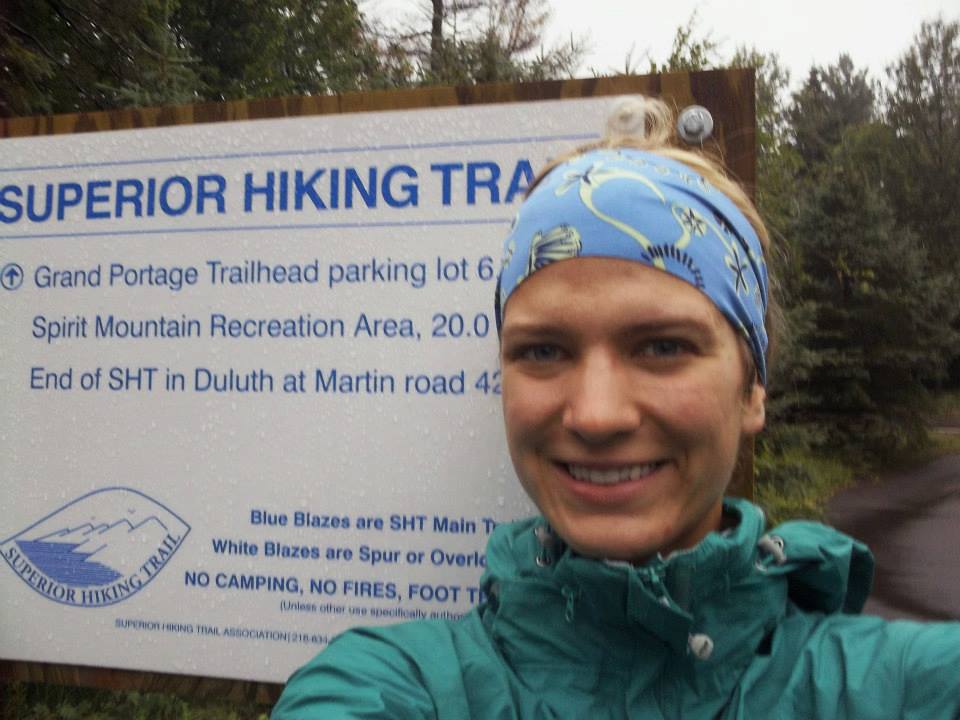
Here are pictures of my journey. They are mostly in order. Apologies in advance for the low picture quality!
On my last night camping, I wrote a bit of a reflection about my experience. In addition to the quote that started this blog, here are some more snippets:
“Last night ponderings: It is so strange that this is the last night. In some ways it seems as though I’ve just gotten started. In other ways, this adventure has been going on for what seems like forever. I’m really not sure what I expected from this trip. I figured pain and bugs, but never counted on or even really thought about people that I would meet along the journey and how much of an influence they would have on my experience. It seems strange to come on such a physical adventure in such a beautiful place and say that the random people I met along the way were part of the coolest things, but they were…I’m glad I wrote them down so as not to forget [them]. It was fun to hear people’s stories. Why they were on the trail, where they were coming from…so many people were so passionate about the SHT… Though the people have really made this trip spectacular, one cannot hike this area without a sense of awe and wonder at how f*ing amazing Minnesota is. I’ve hiked through so many ecosystems! … Last but not least, I’ve been impressed with how my body has held up. I’ve put this poor thing through the wringer and she’s still kickin’ … My legs feel strong powering up hills and I don’t feel like a weakling when I pump my water…
When I think back to the adventures that I’ve had between this trip and now, I can see many instances where I have applied things that I learned on this trip to my “regular” life and future adventures. While this thru-hike wasn’t my first big adventure, it definitely pushed me to my limits and redefined what I was capable of.
I’ve had folks ask if I’d ever embark on this again, or what I’d do differently if I did. The short answer – yes, I’d love to hike the trail in its entirety again! If I did it again, I would take some zero days (rest days). When I hiked this I had some shorter “rest” days but I didn’t ever actually REST. I’ve gotten wiser now! And, even though I got away with it when I was younger, I probably wouldn’t be able to now. My experiences out west on the Pacific Northwest Trail also solidified the value of taking rest days – a valuable lesson that can be applied to life as well.
I now know folks in the Duluth area (and live there myself) so I wouldn’t try to hike a hilly marathon and tackle that whole Duluth section of trail in one day, so I wouldn’t end up having to bend rules that are actually pretty important to follow. Additionally, while I still use a lot of the same gear you’ll see in those pictures, I’ve also been able to upgrade to some lighter options. I’d carry less water and fill up more often. So, in short, if I did it again I’d try to do things to make it easier on myself!
While a repeat trip isn’t likely to happen within the next couple of years, if (when) I do embark on it, I’ll be sure to share my experience. Until then, thanks for allowing me to reminisce! Feel free to reach out if you are planning a similar trip and have questions, or if you have your own stories to share. Happy Trails!
]]>6exploringedgeshttps://exploringedges.wordpress.com<![CDATA[A Tale of Two Trips]]>http://exploringedges.com/?p=16472022-11-22T02:48:07Z2022-11-22T02:48:07ZNow that we’ve made it to the dark month of November, I’m starting to catch up on a few things from last summer. While I didn’t spend as much time as I would have liked to in the mountains, I was lucky to make two trips into our local Boundary Waters Canoe Area. The trips were so different from each other and they illustrate how there is no “one” or “best” way to enjoy the wilderness.
Before continuing to share these trips with you, I want to acknowledge that the area called the Boundary Waters Canoe Area Wilderness is the homeland of the Anishinaabe people and has been for generations. I appreciate being able to access this protected area of land and I want to recognize the cultural importance of this area and the sovereignty of the tribes. I truly am a visitor there, and since I am part of the oppressing culture, I don’t take my presence there lightly. A few sources that I found helpful in working to educate myself so I can be a better advocate are here: Native Land Digital, 1854 Treaty Authority, and Save the Boundary Waters.
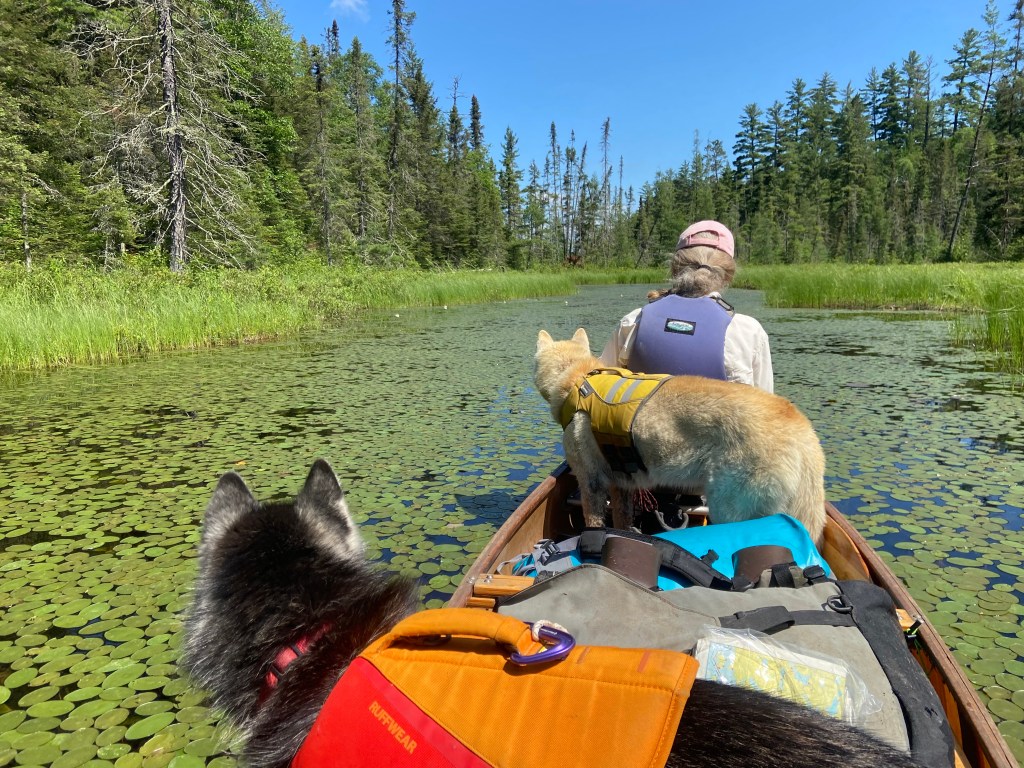
On the first trip, I went with a dear 72-year-old friend and her two huskies. We spent four nights and five days traveling approximately forty miles. For those of you who haven’t been on a wilderness canoe trip, in addition to paddling, one also portages boats and gear from one lake to another. On this trip we were able to make a lot of the portages in one or 1.5 trips – with me being the main gear, paddles, and dog wrangler and my friend often taking the boat.
Unfortunately I don’t have any pictures of me loaded up with a pack on both my front and my back, the dogs hitched to a waist belt, paddles in hand, with a bug net over my head. I’m sure I looked pretty silly! I was a slow wide load moving down the portage trails. Since the trails often are rooty and rocky and sometimes steep and slippery I was extra careful with every step (as careful as I really could be while so loaded down).
For this trip, I made a bit of an audio journal. Fell free to take a listen if you want! Some pictures from the trip are shared below.
This trip is listed second merely because it happened later in the summer, but it was not less spectacular. Again I was lucky to share it with really wonderful people. We had a group of four: me, two people who are very dear to me, and one new friend who I actually just met when we were in the parking lot ready to put in! It was truly a time of a lot of trust. I trusted my friend that her guest was going to be great. I was even more impressed by our newest member: that she was ready to hop off a plane in Minnesota (her first trip here) and drive straight up and enter the wilderness with strangers, all in the same day. And she had never canoed before! She jumped in feet first, all rooted in the trust she held for our mutual friend. Fortunately our mutual friend is awesome and incredibly trustworthy! It was such a fun and competent group.
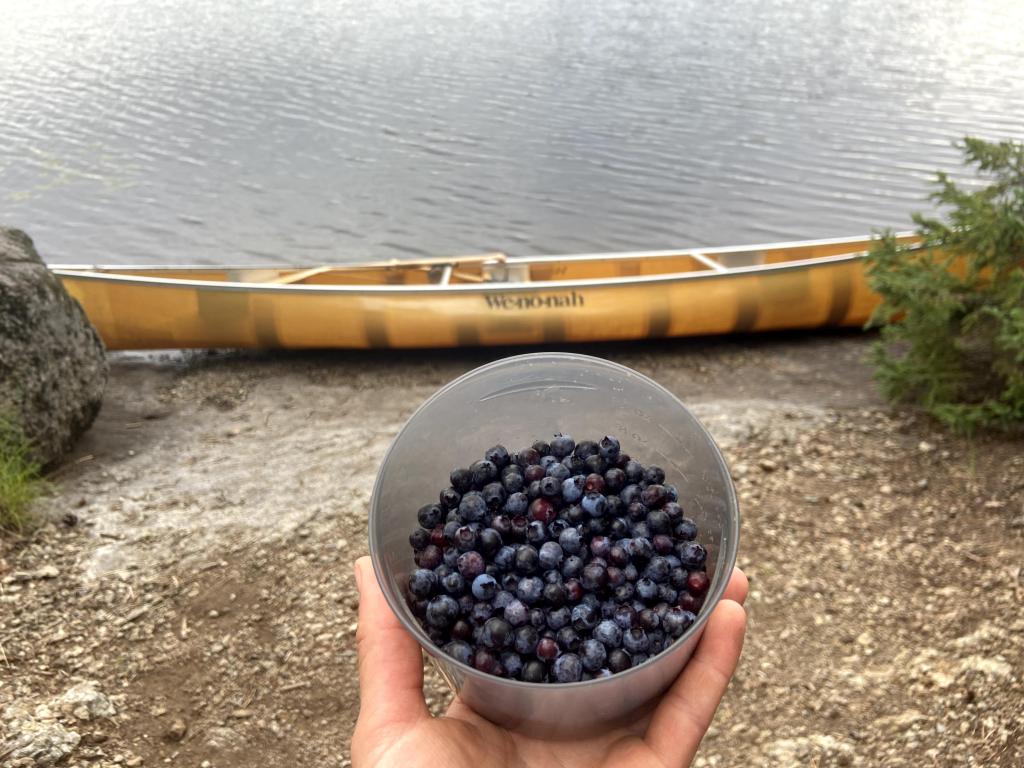
On this three night trip we covered less ground but covered it more completely. Rather than moving camp every night, we took two days to paddle into our “final” campsite where we stayed for two nights before paddling all the back way out the last morning. We fought the wind on those first two days, so it actually wasn’t too long of a paddle on that final morning when it was calm and the wind was behind us! Our layover day involved swimming, berry picking, and a read aloud of a bit of a silly novel.
Wind. This trip had a lot of it, which played a role in our decision to keep our mileage lower. We also had the random, intense, short-lived cloud bursts that sometimes catch paddlers on the water. It was a little bit higher adventure than I’d prefer for someone’s first canoe trip! But, despite the weather, our small flotilla managed it well and we had incredibly lucky timing, sometimes managing to land our canoes right before the heavens opened up!
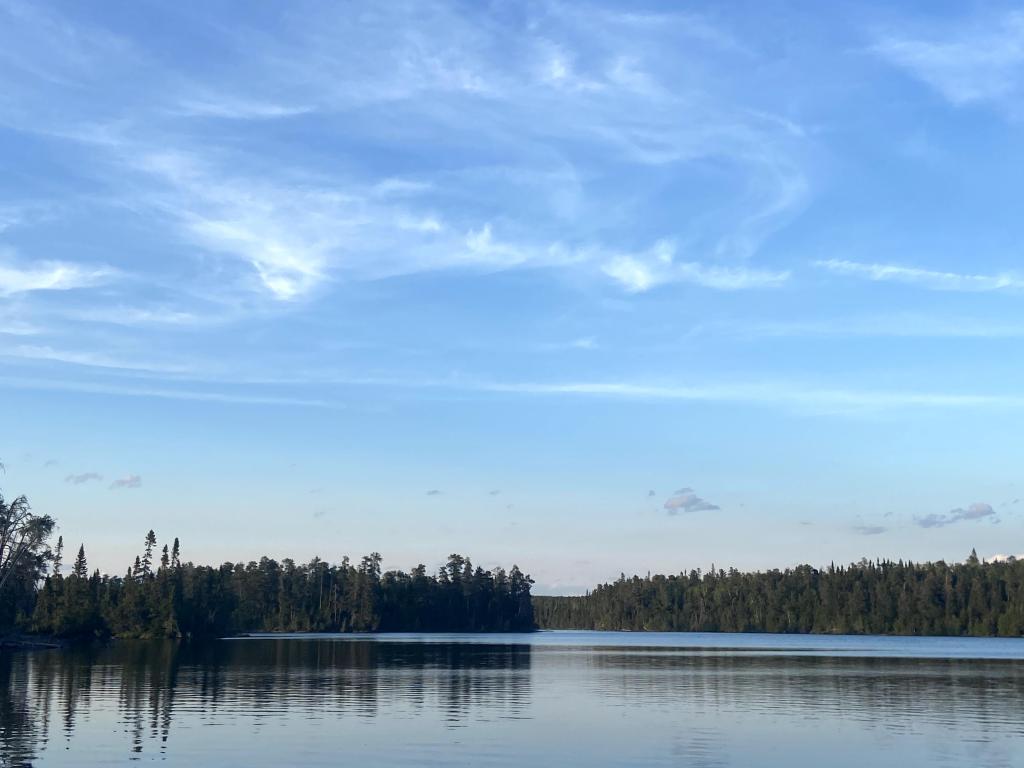
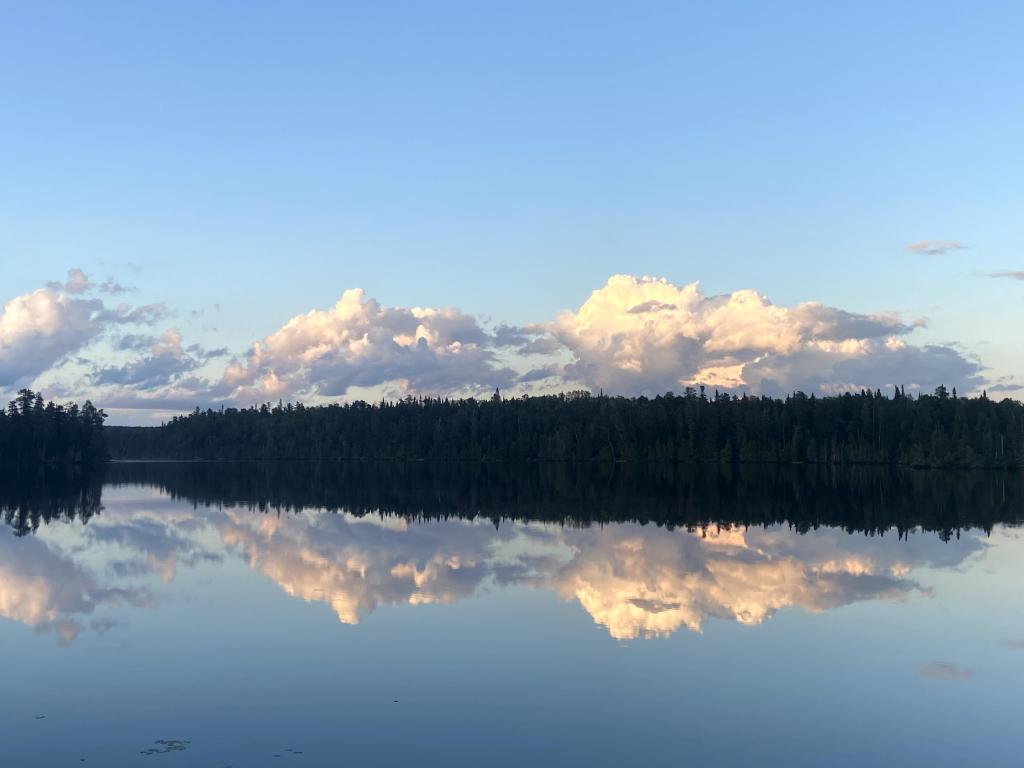
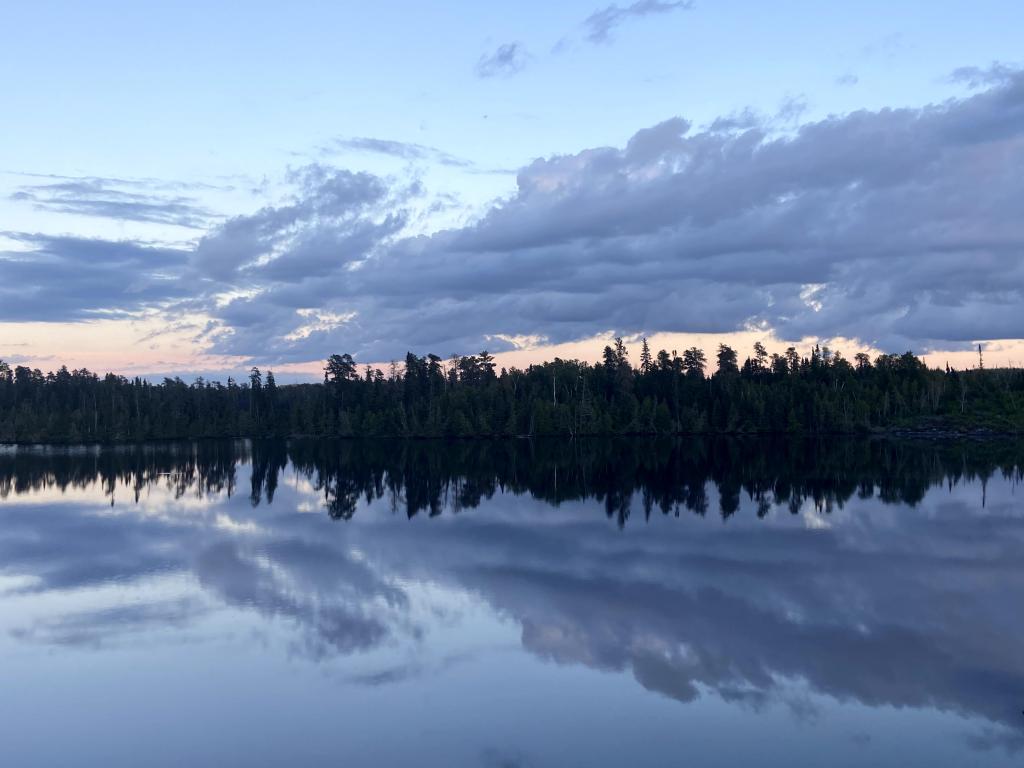
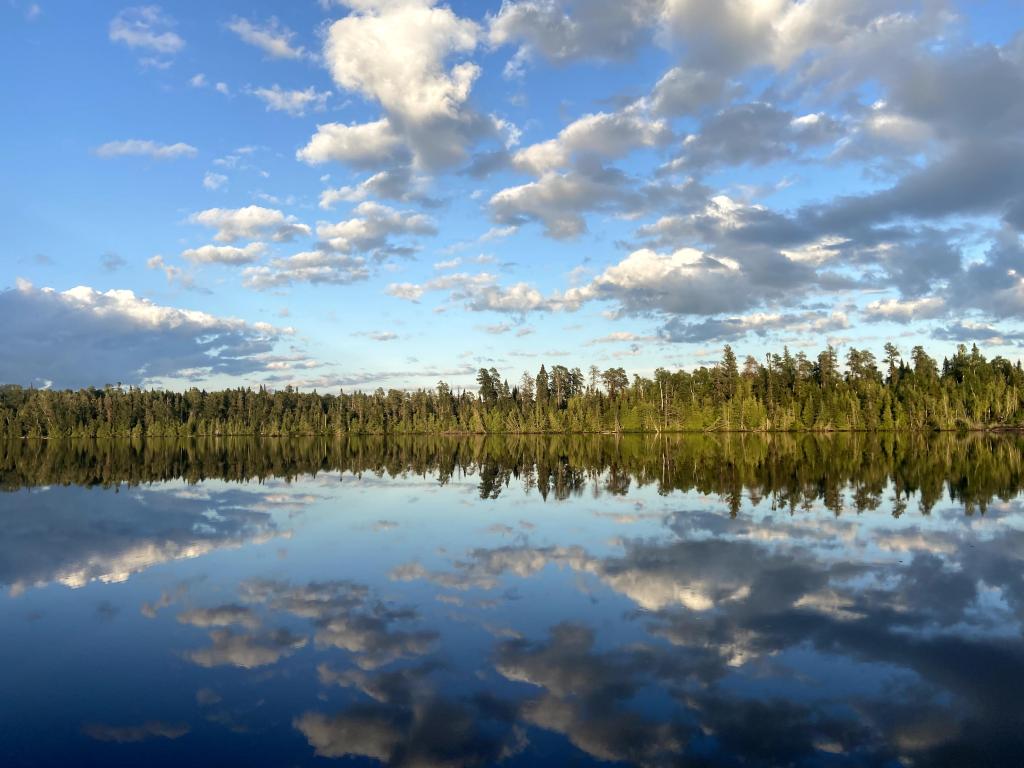
This trip really highlighted why the Anishinaabe people called Minnesota Mni sota Makoce (Land where the water reflects the sky). It was just magical! Here are some picture of our adventure. Unfortunately there aren’t too many from our time on the water – it was just too windy!
Mni sota Makoce (Land where the water reflects the sky)
Once again, I want to express my gratitude of being able to go on these two trips and share these experiences with wonderful people. Even though these trips couldn’t have been more different as far as the itinerary, personalities, weather, and pace, both were lovely in their own right. Next summer is a long way off (after all, our Minnesota nights are still growing longer at this point) but my mind is already wandering to next year’s paddling possibilities.
]]>4exploringedgeshttps://exploringedges.wordpress.com<![CDATA[The World is My Classroom]]>http://exploringedges.com/?p=2902022-09-17T18:53:40Z2022-09-17T18:53:40ZHere we are again, at another year since Molly has been gone. As I remember this great mentor, I’ll reshare this blog from September 18th, 2017. It’s as true now as it was then, and I find myself remembering her, using the things she taught me, and missing her still.
On being human: In memory of a great teacher
Recently I was packing up my room (in the processes of moving to Duluth, which is a story we’ll save for another day). I came across a writing that I did last winter, when I was preparing to go to Nepal. Now that it has been just about a year since Molly passed away, I feel it is appropriate to share just a little bit of what she meant to me with all of you. Molly was a friend and a mentor, a confidant as well as the best boss I ever had. The following is a snippet of my thoughts from last winter:
Today I had an overwhelming wave of sadness at the loss of Molly. All day I was met by things that she had said or done, memories of the past, and gifts she had given me: talking about birding, a friend’s wedding she had officiated, the ‘Mid Winter’s Mix’ cd she had given us, the map on the wall she had given me before I went on my first travels, the knitting needles and yarn (another gift). So many books on my shelf were gifts from her – another way she showed her love and love of learning. So many tangible and intangible gifts she gave me. She has impacted nearly every corner of my life, sometimes greatly, sometime minutely. It was her capacity to love, I think, and to make people feel that love. Whether by providing a listening ear, a thank you note in your mailbox, or a kick in the pants when she could tell you were slacking off – she showered those around her with love.
The human condition is so complex. It is incredible the visceral, physiological reactions we have to grief. I remember when I got the news of her unexpected passing and had to relay the news on to my loved ones, I was numb down to the core of myself. Both shaking and still at the same time. On the verge of vomiting, but without the ability to do so. And I was not even one of her inner circle. I cannot even imagine the experience of those truly close to her.
I feel like today my pain is selfish – I am so sad because I want to tell her things – to ask her advice, to seek her support and guidance.
“What advice would Molly give to me in this situation?”
“If Mol was in my position, what would she do?”
“I can’t wait to tell Mol about this.”
I feel so thankful for the people Mol brought into my life. Some of my most near and dear friends, who have also played an instrumental role in who I am today were introduced to me by Molly. She had a knack for seeing the true you and matching you with others. I have had so much more joy and adventures in my life as a result. These people (and Molly) have pushed me to be a better version of myself, to continually push past my comfort zones, and to always reassess what is important in life. I would not be the person I am today without these people.
A continuing theme through some of my writing has been the feeling of being needed in the world, but also unneeded. To feel as though you fill an indispensable niche, that only you can fill, but also that you are just a small segment of something greater. A reminder that you are just a blip in the larger scheme of things. That life will continue onward if you are not there.
This need to feel as if you are a part of something greater than yourself is arguably part of being human too. Throughout history religion has been some people’s answer. But I think it is much more complex (or maybe more simple) than that. Molly was a force that created so much joy in the world. The sheer number of folks who were touched by her love and then are currently spreading it to everyone that they meet is exponential. One person, fulfilling her niche, many niches. Being part of something greater than herself. Being needed as an individual, but impacting the world in such a way that the impact continues even when she is gone.
I will strive to touch people’s lives with the love that Molly showed me. To continue to look for the love in the world – and also to remember that, to quote her, “The world is my classroom.” I have many things to teach others, and they have many things to teach me. I have lessons to teach the world, and the world has infinite lessons for me to learn.
The world is my classroom. A mantra to live by. Share your truth with others, and be open to the truths that they share with you. I aspire to share my truth as Molly did, and continues to do. Thank you Molly, for being such a friend, role model, and positive force in the world.
]]>8exploringedgeshttps://exploringedges.wordpress.com<![CDATA[To the Sea.]]>http://exploringedges.com/?p=13022022-01-04T21:09:03Z2022-01-04T21:09:03ZWe awoke in Port Angeles and had a leisurely morning sorting out our gear, taking stock of our food, buying and repackaging our resupply, and finding our way down to the transit center. To stay on schedule we planned to take the bus to Forks, WA and then find our way to the coast the following day.
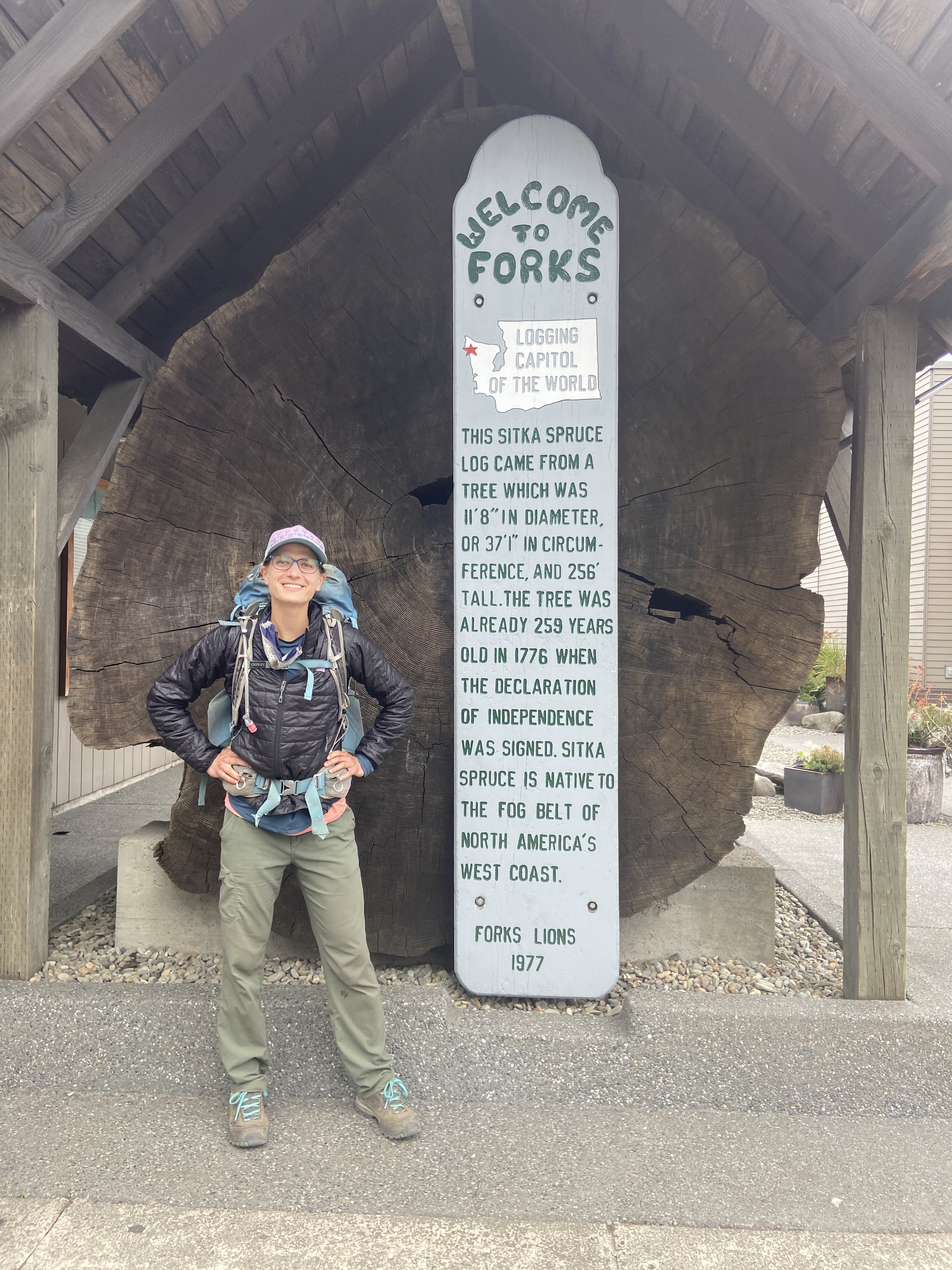
Right on schedule we hopped on the bus to Forks, a little over an hour ride. Forks is a small town with a vast logging history and more is recently known as the town that author Stephanie Meyer used as a setting for her Twilight books. A lot of the town was quiet when we were there – a recommended burger joint “Sully’s Burgers” was closed, much to our disappointment. However, the Twilight museum was a happening place, with a line stretching outside the door! The Twilight museum was of little interest to us, so we called around until we found somewhere to camp and walked ourselves to our home for the night.
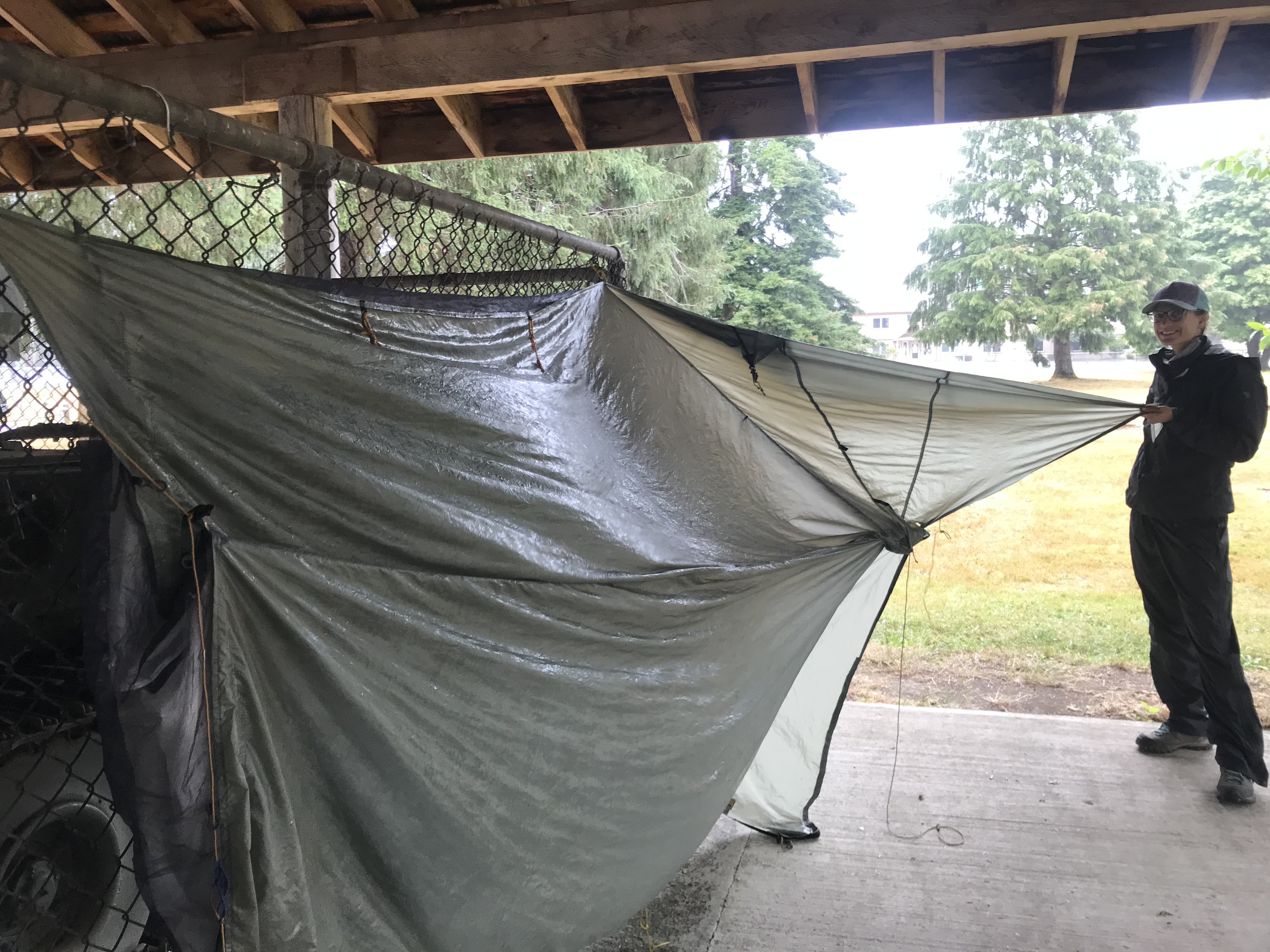
Overnight rain moved in and we woke to the gentle pitter patter on our tents. It didn’t appear to be letting up, so we packed up our wet gear and walked our way back into town. We made quick stop at the laundromat to try to dry out, but found it rather inhospitable so we didn’t spend any more time there than necessary. We found our way to a café to have some breakfast and charge our phones and found ourselves sharing an alcove with other folks from Minnesota! It really is a small world.
We had some time before our afternoon bus out of town so we spent some time at the library and then at a local park letting our gear drip off. It seemed like a lost cause, but each little droplet off the tents was one less in our packs! Finally it was time for our bus out of town. We were the only people on it, and the youth who was the driver agreed that he could let us off at the intersection of Oil City Road. Our plan was to hike/hitch the last 11 miles or so to the ocean from there.
We took off on the bus (it is the best way to describe it, he drove very fast, clearly having the twists and turns of the very curvy road memorized). Shortly after swerving around an emergency vehicle, our driver pulled into our drop-off point. Thankfully it was a short bus ride – I think we were both feeling a little ill!
We started our way down Oil City Road. Our plan was to either walk all the way to the coast and then try to find somewhere to camp, or to stop about halfway down the road at a campground. Luckily, we had only walked about two miles when a couple picked us up and brought us all the way to the trailhead. What luck!
A short distance down the trail, we got our fist glimpse of the sea. Even though we hadn’t hiked every step of the trail between Glacier National Park and here, it was still a welcome sight. I can only imagine the feeling of accomplishment those who do hike the whole trail must have when they finally reach the ocean.
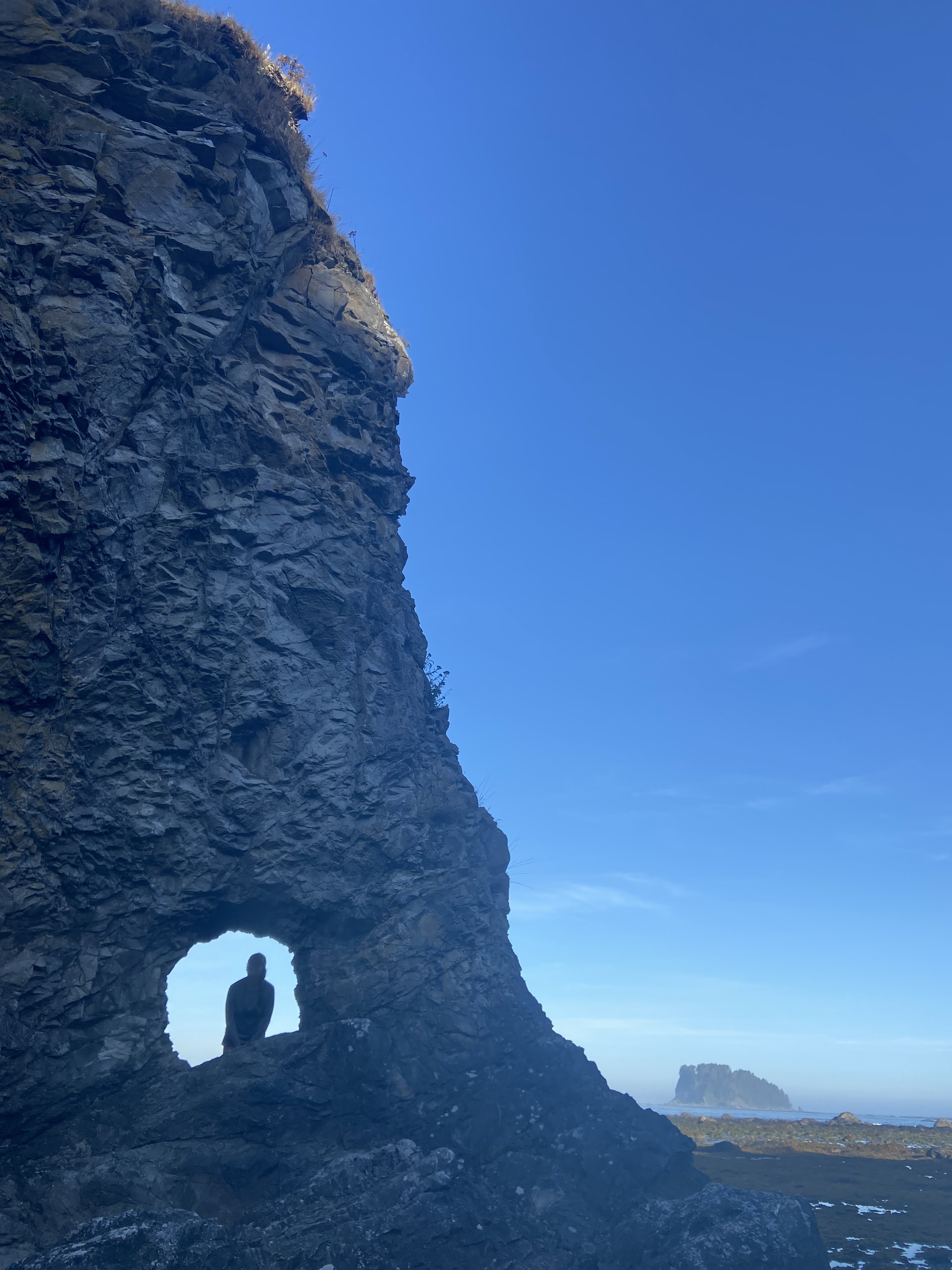
We had made much better time than expected, so we had to wait a bit for the evening low tide before we’d be able to make it around a rocky point and then to the campsite we planned to stay at. We reached the point and decided the waves lapping over the slippery rocks were too high. We could wait another hour for true low tide, but we also found a passageway through the rocks – a hole we could clamber through and then pass our packs through, cutting off our wait and the sketchy rounding of the corner.
We were feeling pretty clever – we had made it past the first pinch point! Then we discovered what the guidebook meant by its “rope ladders” into the highlands. Thick fixed lines with sketchy, sometimes busted wooden boards stretched from the beach into the rainforest. Hand over hand we clawed our way up through the slippery mud and up into the humid forest. I found myself thinking “I hope these ropes are connected to something up there…” before trusting all of my body weight to them. Our campsite for night one was a flat area cut into what I describe as “the jungle” in my journal.
We were tucked into our beds that first night and darkness had fallen. There was great crashing through the woods and we called out…was it a bear? Something else? Two hikers came stumbling through, looking for their group they had gotten separated from. We hadn’t seen anyone and offered they could camp with us if they didn’t connect with them, and they thanked us and stumbled on. We never heard anything more on this, so we assumed everything worked out!
Over the next few days, our adventure took us through dense forest, up and down slippery fixed lines, on sandy beaches, and scrambling over rocky ones. There were a surprising number of other groups out – some with small children. While navigation was fairly easy, it seemed an intense section of trail for little ones!
Sometimes we were able to camp up in the woods, but often camping happened along the beach. Many of the designated campgrounds had been impacted by a storm a few years back. We heard a lot of, “well, there used to be a campsite there, but then a storm came through and dropped a bunch of trees on it.”
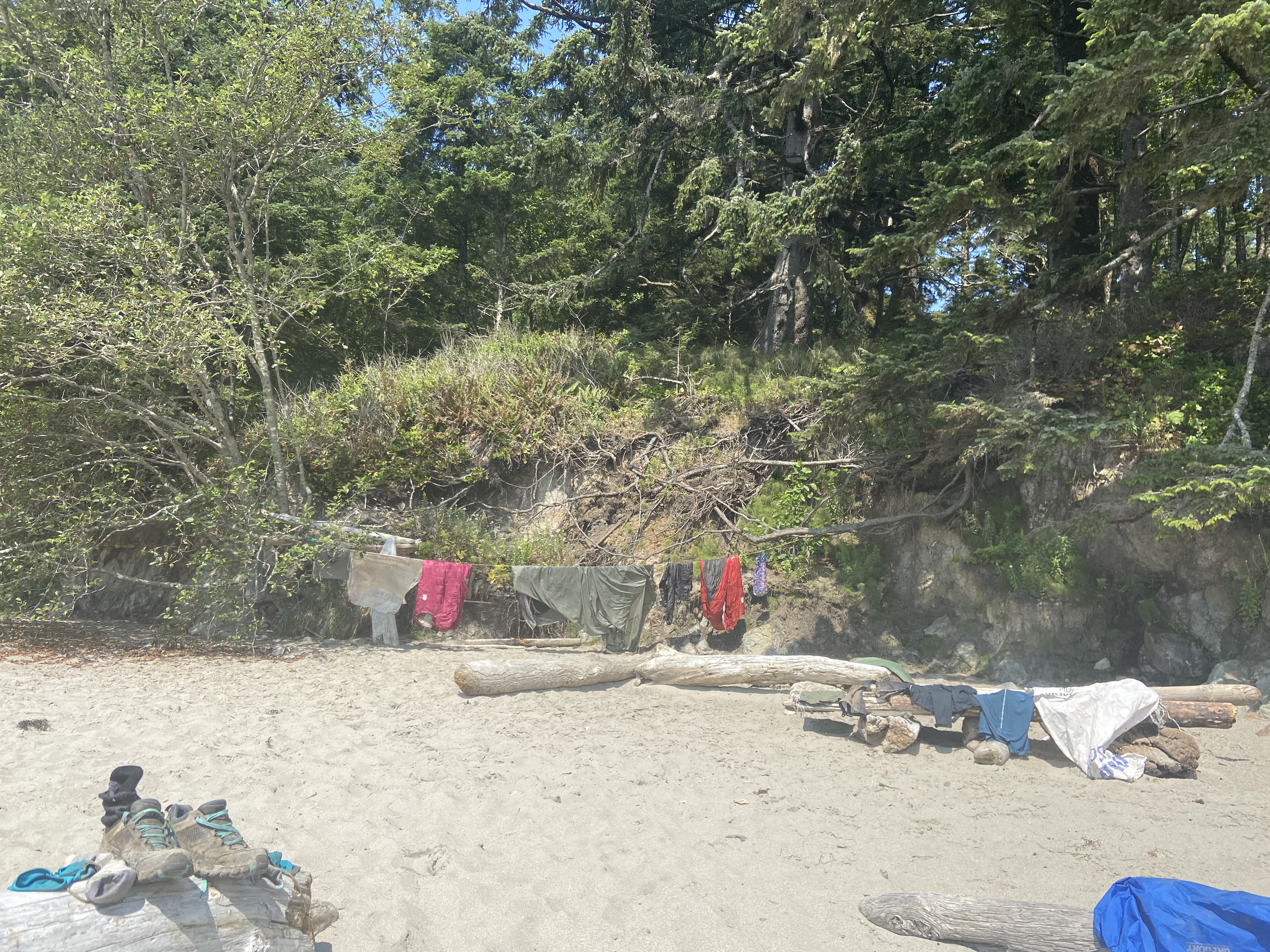
Luckily, beach camping worked well enough since there were ample rocks to help us put up our tents. We were also fortunate enough to get some afternoon sunshine most days so we had a chance to dry out our gear dampened from the sea breezes.
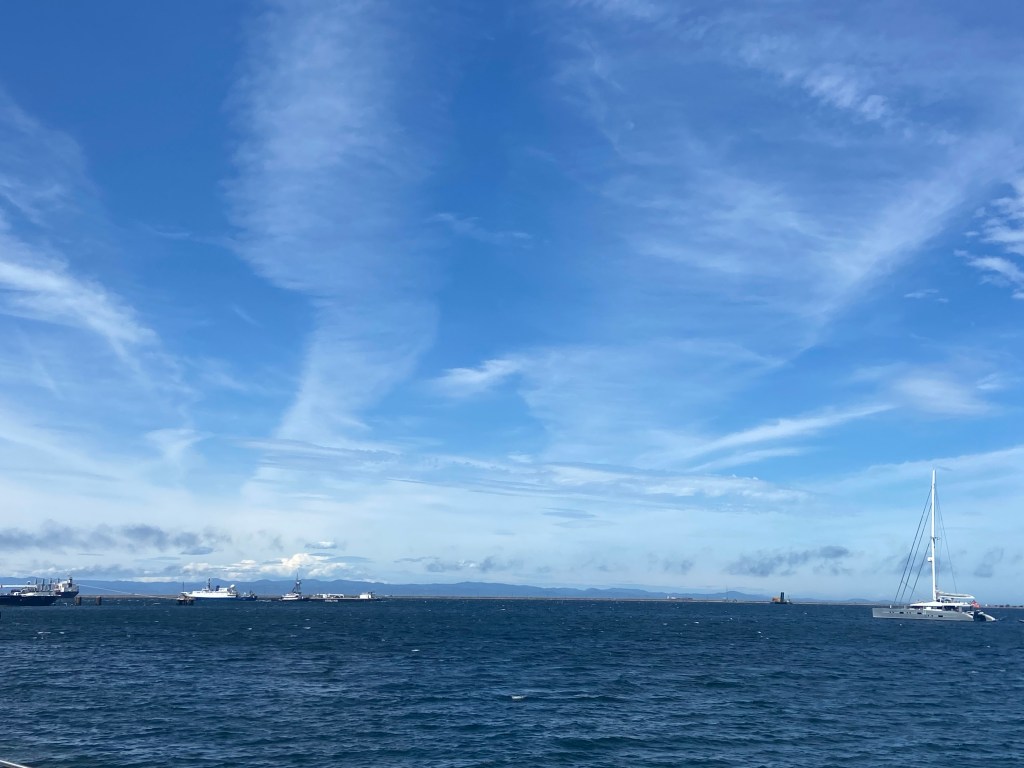
About halfway through our beach adventure we needed to cross the Quillayute River at the town of La Push, WA. It’s a big river, so our guidebook gave the options of spending the better part of a day walking the road up to a bridge that crosses the river or finding someone to hire to give you a boat ride across.
We walked into the town of La Push, WA, to opt for the second option. Hiring a local to take us across seemed a much better option, or at least a lot more fun than a road walk.
When we got the the harbor, there was no one in sight. Our guidebook made it sound so simple – just find the harbormaster and have them help you hire a fishing boat. However, it was unclear where one would find the harbormaster – there were no signs anywhere.
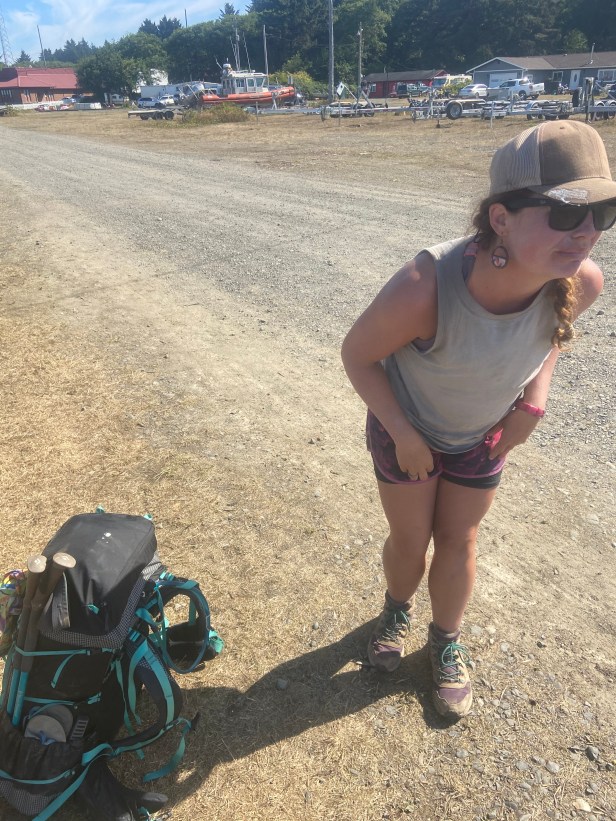
Sometime around now a bird pooped right on Jen’s head (see the photo below).
Then we saw two people and a dog walking our way from the docks. Humans! With a boat! Maybe they know where the harbormaster is!
Unfortunately they were looking for the same information – they wanted to rent a slip in the harbor. They headed over to a building they thought might be the location of the harbormaster. I remembered that we were in a town, so I could look up stuff on my phone (what a novel thought), and I found a number to call.
The conversation went something like this:
“Hi, my name is Anna and my hiking partner and I are hiking on the Pacific Northwest Trail. We are looking to hire a fisherman or any boat to take us across the river. Can you help us with this?”
(crickets)
“Um. What?”
(I repeat the same information in different words)
“Um…no…I don’t know what you mean. All of the fishing boats are out for the day and they are too big anyway. My friend has a kayak you might be able to use…?”
“Well, we’re only looking to go one direction across the river and we have backpacks, so I’m not sure how we’d make a kayak work. But thanks for trying to help!”
“Yeah, ok.”
Hanging up, it looked like we were going to be stuck with taking the road around. I started to look up the bus schedule to at least get us back up the road we had already walked down.
Around now, the other two people were walking back from the harbormaster’s office. They too hadn’t been able to get their question answered (the main harbormaster was out, so there was someone else covering the office). We commiserated with them about our bad luck. However, when we told what we were trying to do, they were like “Well, we could bring you across the river.”
What luck! With one challenge: the shallowest their boat could go was into three feet of water, so we were going to have to be a little creative. They looked at the satellite view of our location to try to see what the shoreline would be like – it looked to be pretty uniformly rocky, but no big hidden boulders under the surface. The plan unfolded – they’d take us across and get us as close as possible to the far shore, and we’d hop off into the river and wade the rest of the way. Fool proof!
We hopped on the boat with the couple and their dog and they drove us the short distance across the river. They refused the money we tried to give them for their trouble and gas. They backed up the boat as close as possible to shore, using a paddle to fend off the rocks and keep us in deep enough water. Then, it was go time!
Quickly, Jen and I piled off of the back of the boat, splashing into the thigh/waist deep river. We slogged our way up onto the shore, laughing and yelling our thanks to our new friends. We had made it across the river, one of the biggest logistical challenges of our coastal trip solved!
While we’ve caught a lot of rides from strangers (aka new friends), this is the first one on a boat. It was incredible how quickly our situation changed – from looking at spending the rest of the day busing/road walking around the river to making a human connection and suddenly being on the other side. I hope our new friends know what a positive impact they had on our day and our trip! I can only hope that they were left with a fun story to tell their friends about these crazy women they helped across the river.
We walked for a ways along our new beach, eventually finding somewhere that we could change out of our wet clothes. Over the following days, we fell into a pattern of wake up, hike/climb/scramble until mid afternoon’s high tide, sit tight for a couple hours for the tide to go back down, and then continue on the last little jaunt until camp. It was so different than all other backpacking I’ve done; normally I’m a proponent of hiking pretty steadily to camp and then enjoying a leisurely evening. But, who can argue with the ocean’s timetable? No one.
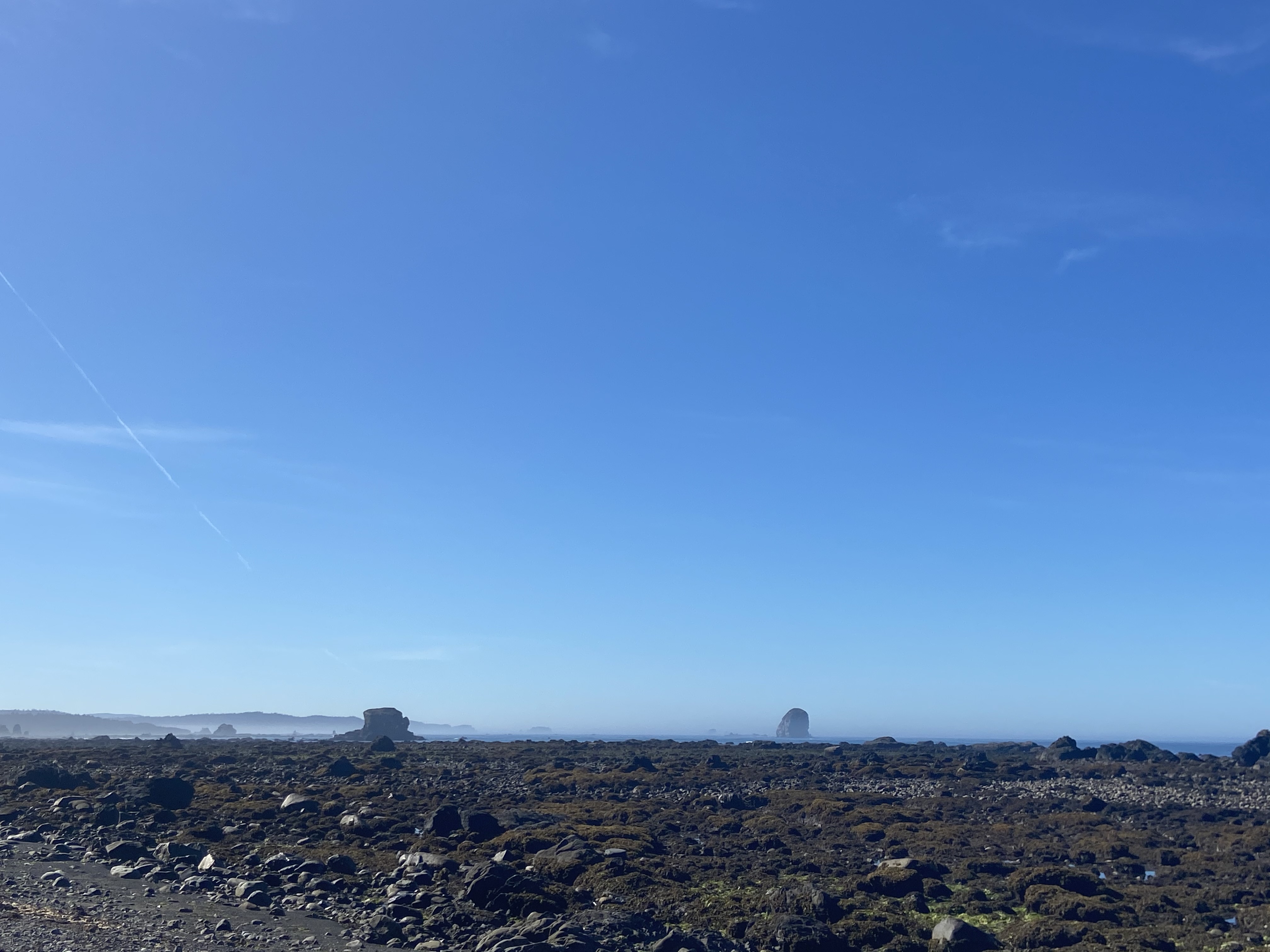
The ocean and the trail kept us on our toes, with something new around nearly every corner. During many of the sections of trail, I’ve experienced the distinct feeling that this place is not for us, that we are visitors here. This was especially true on this section. I could feel the magic that is this coast and I’m so grateful I was able to pass through.
In a juxtaposition with the natural beauty there was tons of trash and thousands of buoys washed up on the beach. We picked up some to pack out with us, but there simply was too much to be able to carry it all out. Many folks traveling before us had gotten creative, building large structures out of beach logs and decorating them with buoys and other finds. Some were even artistic, but it was saddening that this was a “wilderness coast” with so much impact from humanity. Again, I was distinctly aware of the role I play, being a part of the humanity that creates this plastic waste.
We continued up the coast until we reached Cape Alava and the end of the PNT. On par with the rest of the PNT, there was no sign or trail marker to indicate that we had made it, or even what trail we were supposed to take out to the trailhead. Our biggest indicator that we had made it was the “Beach Closed Beyond This Point” sign that was stapled to some beach logs – we knew the area north of Cape Alava was closed, so this must be it!
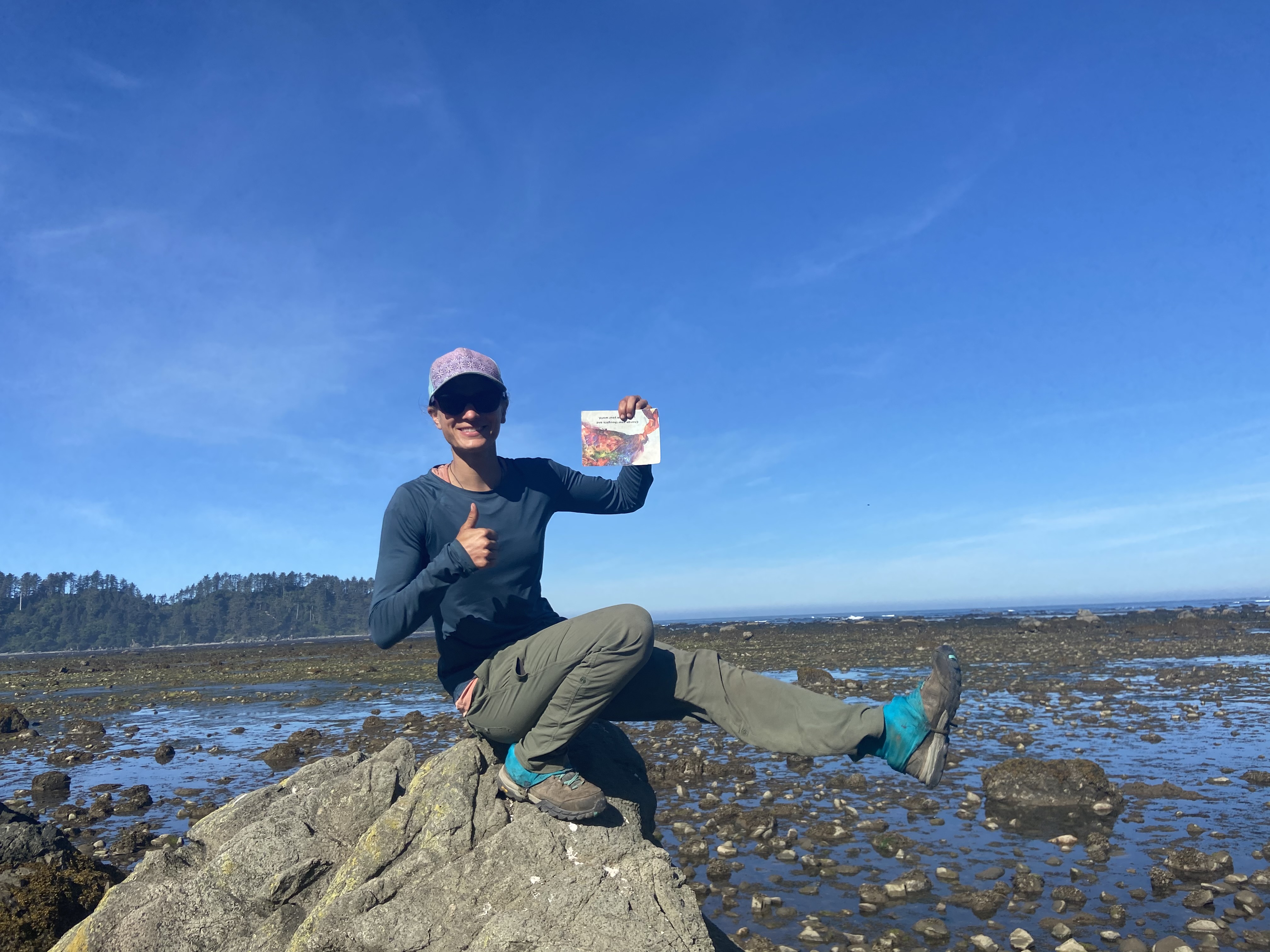
We took some “we made it!” pictures near what must have been the end of the PNT, listening to the barking of sea lions somewhere out on the distant rocks. Then, as it was still morning, we backtracked to what we thought might be our trail out to civilization (we were right) and hiked the three miles out.
The trail heading out was pleasant, but also very full of day hikers. It was interesting to me how few of them would step aside on some of the narrower sections to let those of us with packs come through (we ended up hopping off the trail a lot as playing chicken with them seemed like it would end in disaster)…it seemed like they were sure in a hurry to get to the beach! I feel lucky that we were able to spend so many days out there so as to not be in such a rush.
One exciting part of this trail was seeing a banana slug that actually looked very much like a banana! Pure magic.
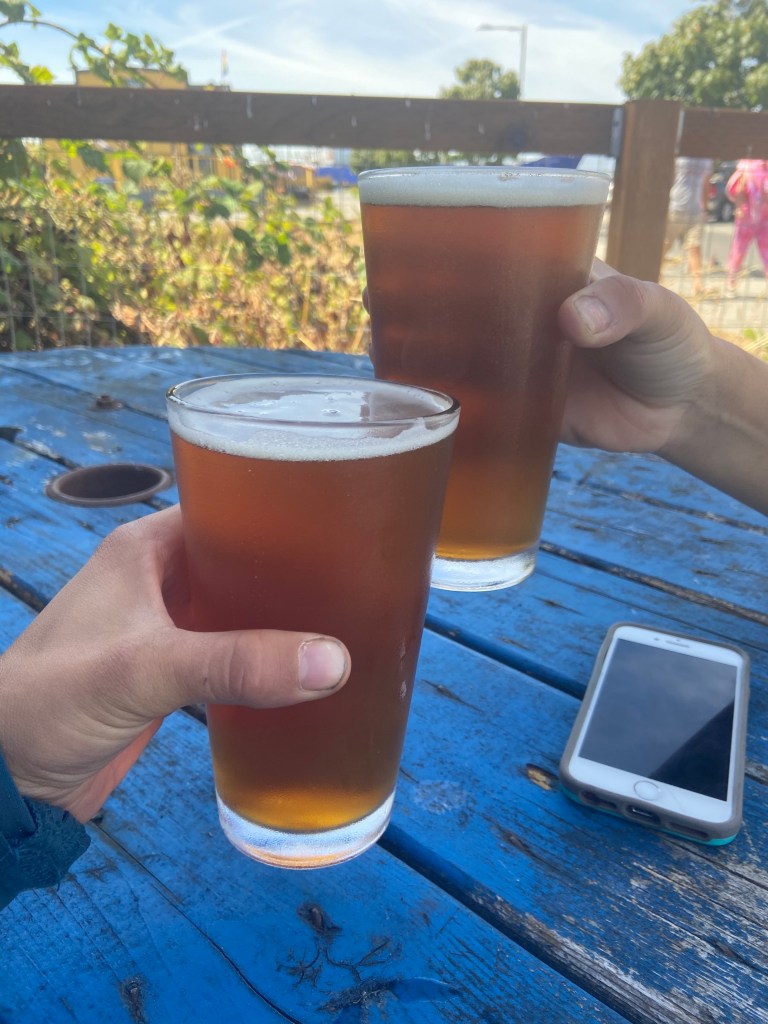
When we got out to the trailhead, we walked our way down the road a bit to a campground. There was ample campsites for us an a general store that not only gave access to showers but also a nice selection of beer! We split three to toast the completion of our trip and even got to use frosty mugs.
The next morning we caught a ride all the way back to Port Angeles with a family from Portland. They had planned to go to Forks, but changed their minds and went to Port Angeles instead, just to make out trip easier. They undoubtedly had more restaurant options (their main goal) in Port Angeles than they did in Forks, but their kindness was very appreciated.
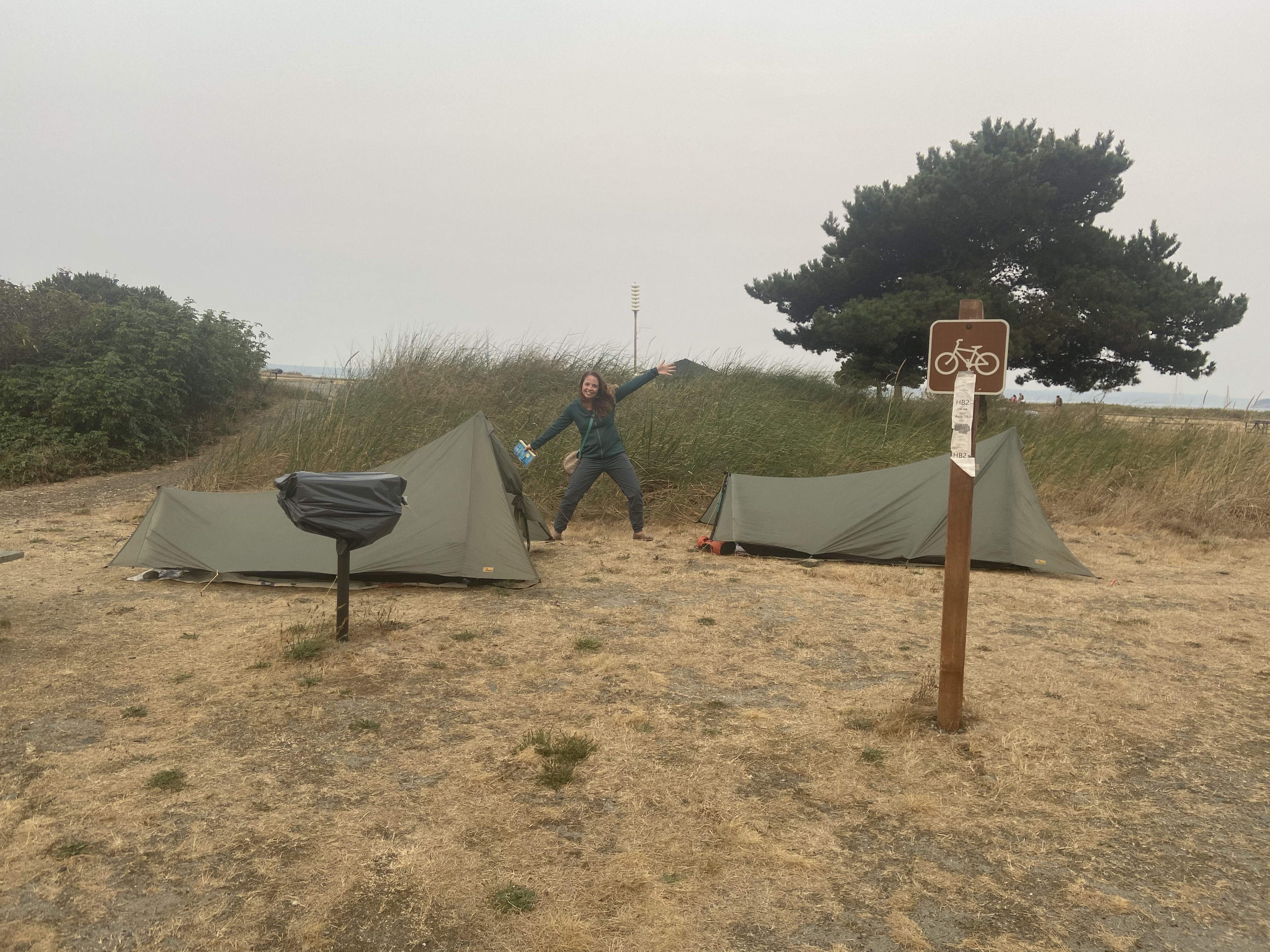
To finish off our trip, we made our way to Port Townsend over the next couple of days via public transit and met up with our friend Jared at Fort Worden State Park (See Losing the Trail and Finding Friends as well as many other posts from earlier sections of the trail for background on our friendship). Jen and I were able to get a spot at the hiker/biker site (after some confusion with a double booking). We even met a couple who was biking from Alaska to South America over the next two years!
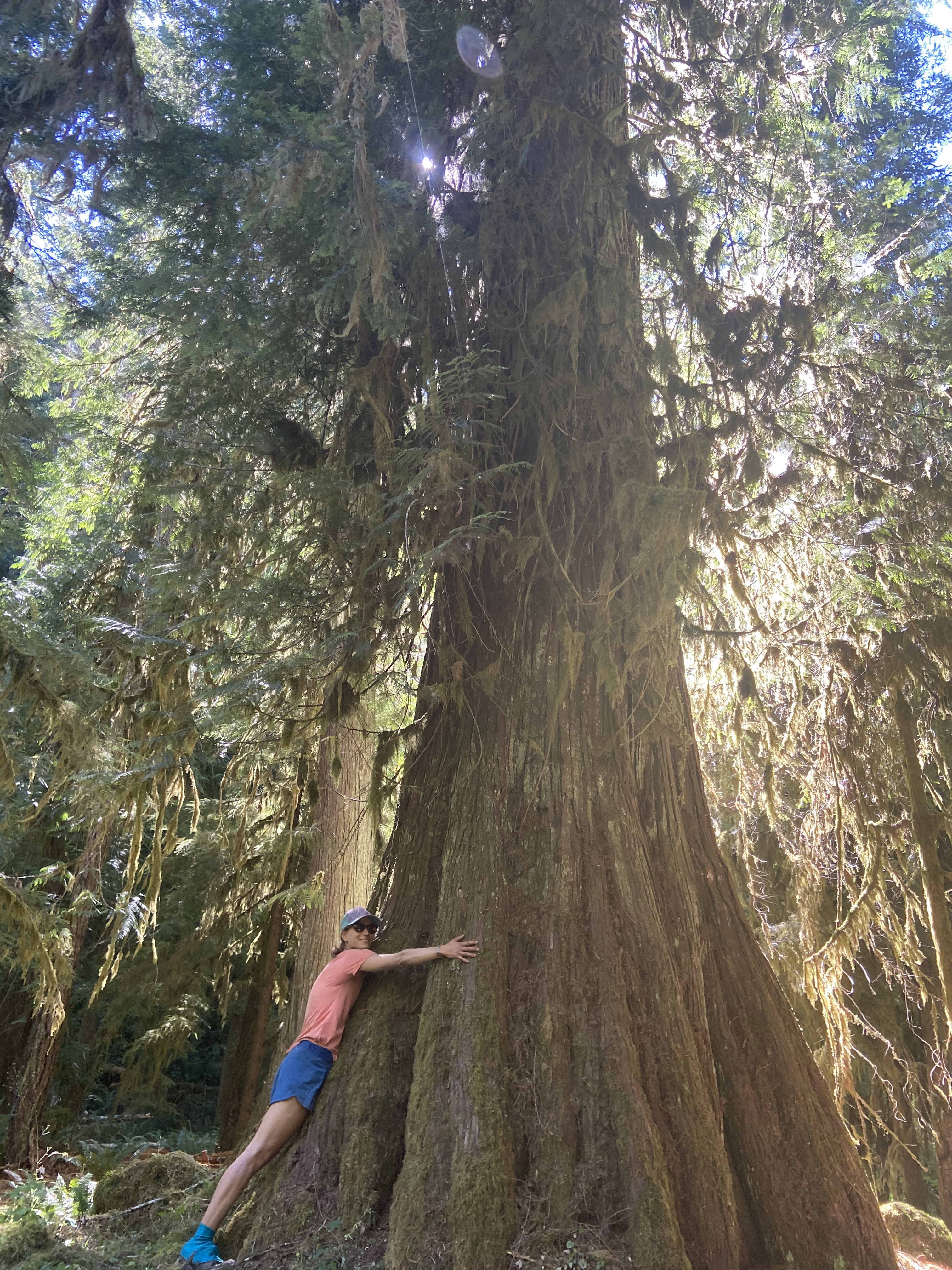
Jared provided a car (what a novel thought) and this meant that we could get pretty much anywhere we wanted to! We had a great time on a mini road trip around the Olympic Peninsula with him, looking for big trees and car camping. Unfortunately the big cedar we spent quite a while looking for had fallen down, but we found her remains! Finally Jared dropped us at our airport motel and we said our goodbyes. It was a very nice way to end this year’s Washington adventure.
While this marks the end of our PNT project, it certainly connected us with good people and fantastic lands. Grateful does not even begin to describe my feelings as I think about all that happened along this trail. I’m especially thankful that Jen bought into the crazy idea that was this project. I couldn’t ask for a better adventure partner, and she stuck with me through the good and the bad days.
My friendship with Jen, the countless people who helped us out along the way, the friends that were made, and the lands that we had the privilege to pass through really have made this an adventure for the books. Though I’m sad that this adventure is over, I look forward to many more!
]]>3exploringedgeshttps://exploringedges.wordpress.com<![CDATA[From the Mountains…]]>http://exploringedges.com/?p=11802021-11-11T20:54:28Z2021-11-11T20:54:28ZI’ve been stuck at the “writing” part of this blog post for a while. I think that this section is best told through pictures, so I’ll share a bunch and explain our adventure with minimal words! I took most of these pictures, but Jen took the ones of me and Katherine took a couple too!
To bring us all back up to speed, after hitting pause on our trek on the Pacific Northwest Trail during 2020, this summer brought us back to Washington to complete the last big section of trail. For those of you who have followed the whole story, you’ll remember that we haven’t actually hiked the WHOLE PNT, as purists might define it, as we’ve skipped large sections of road walk. We have, however, tried to make sure to hit most of the sections that are trail.
Our adventure this year started with Jen, my hiking buddy, driving out with her husband and me flying out to meet them. They picked me up from the airport and we made our way to the Buckhorn Wilderness, where we would start this leg of our adventure. Once we made it to the parking area, we had some lunch, repackaged some food, and made sure that all of our gear was in order. We were back to using bear canisters and all the fun that comes with them (mostly just that our packs aren’t as svelte as they could be without a large cylinder to pack around).
Right about when we were ready to say goodbye to our wonderful driver (my friend’s husband) so he could drive all the way back to Minnesota, our friend Katherine met us. She would camp with us the first night and hike with us day one! See more about how delightful she is in Losing the Trail and Finding Friends, Golden people, golden lands, and When one adventure ends, another begins. It was so fun to have her company as we ended our adventure, since she had been around when it all began (See The Beginning: Glacier to Eureka, among others).
There was a dispersed campsite close to the parking area and we set up our tents. Since our actual first day of hiking would be the following day, it was nice to be able to just relax and catch up. So much had happened since we had last seen Katherine! It was a lovely, lazy afternoon. The next morning we packed up and headed out!
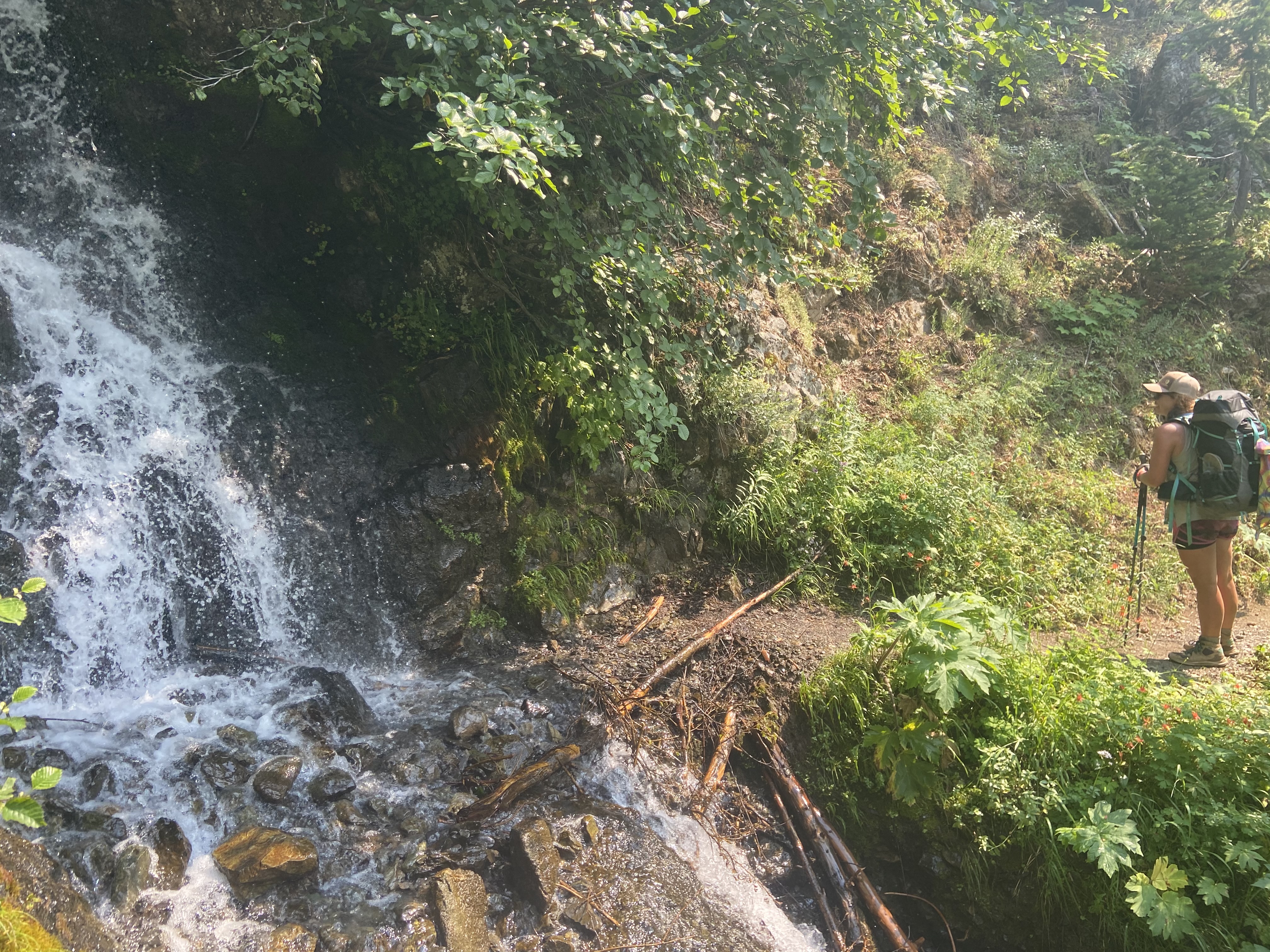
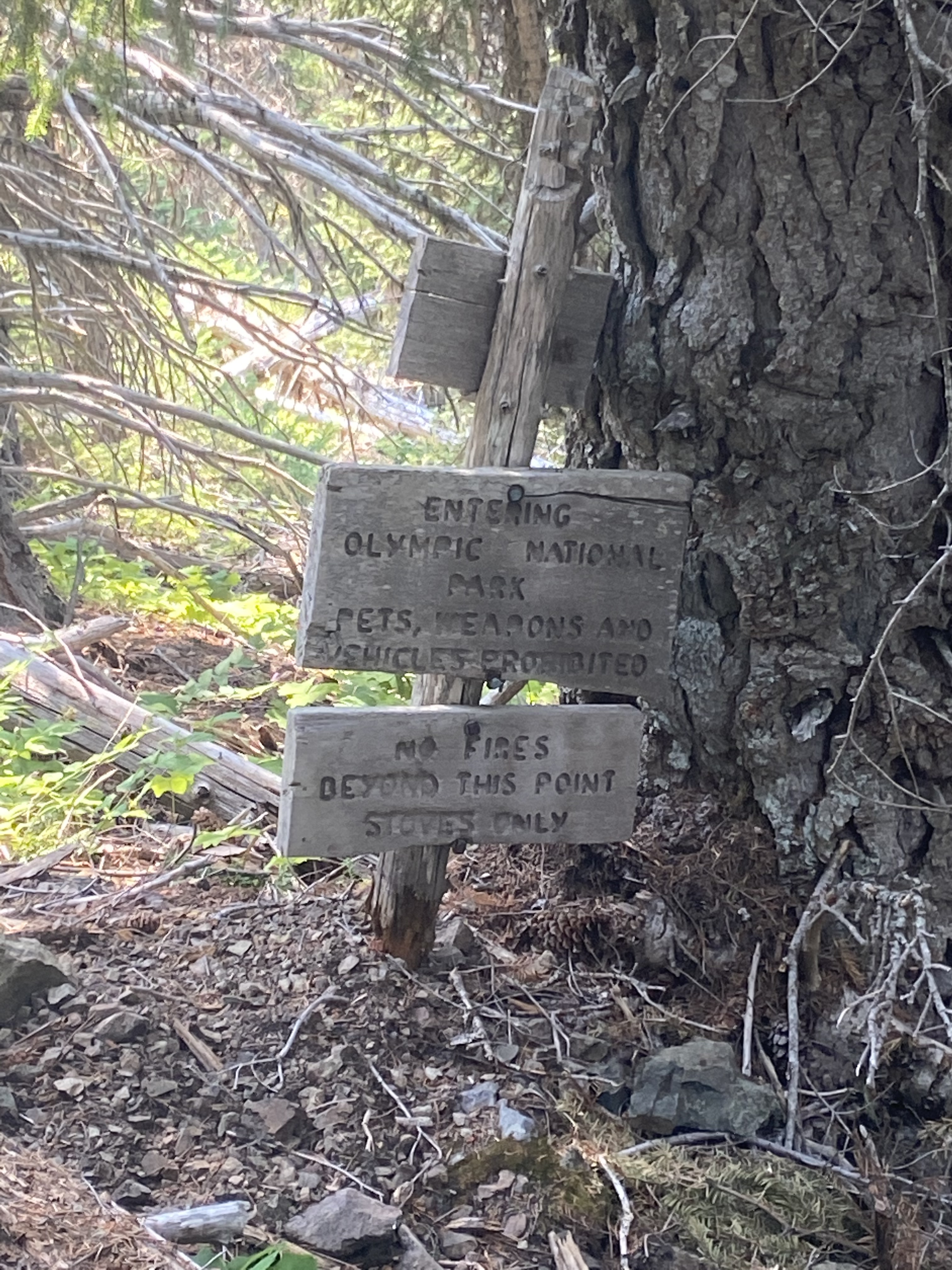
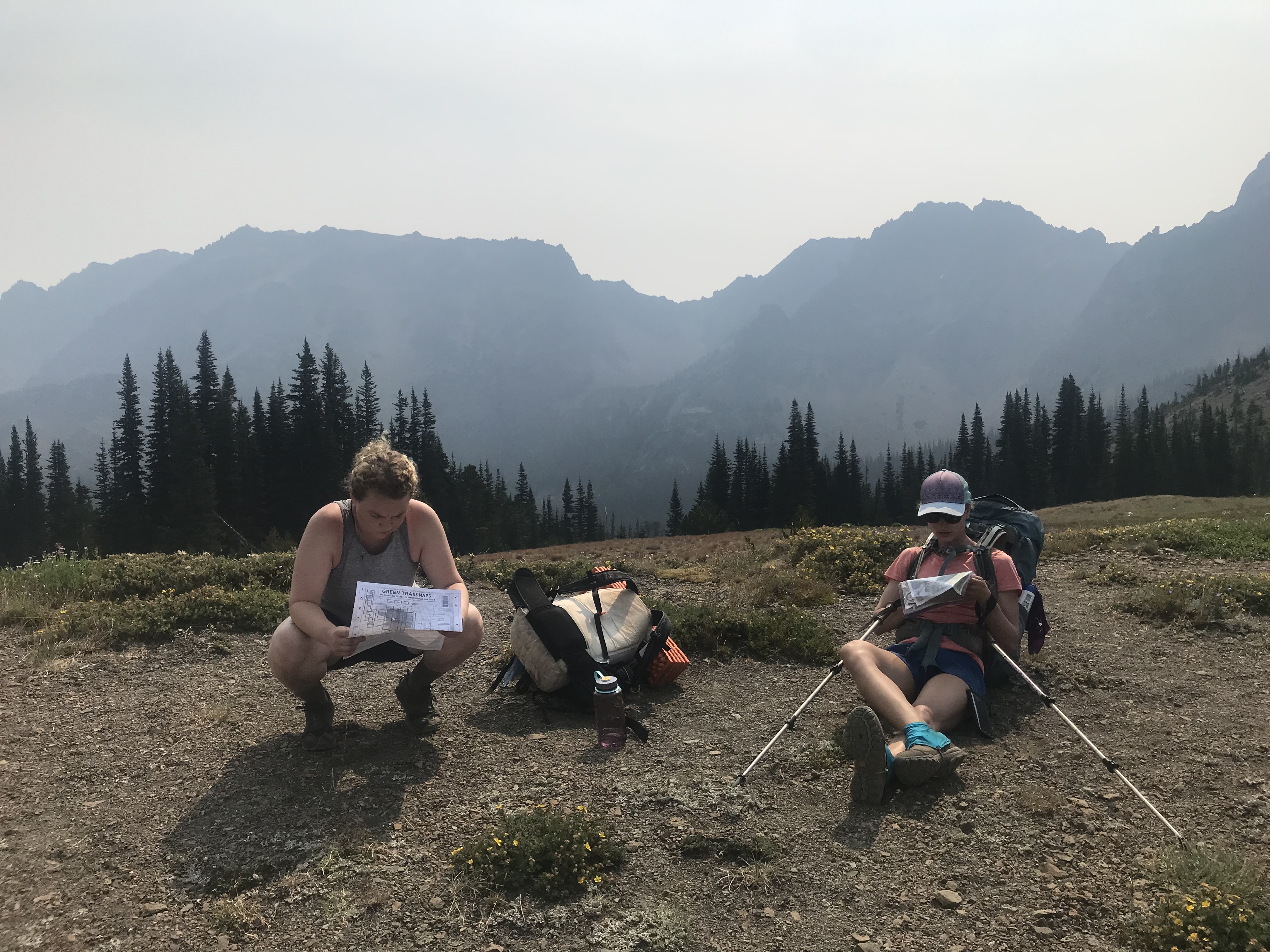
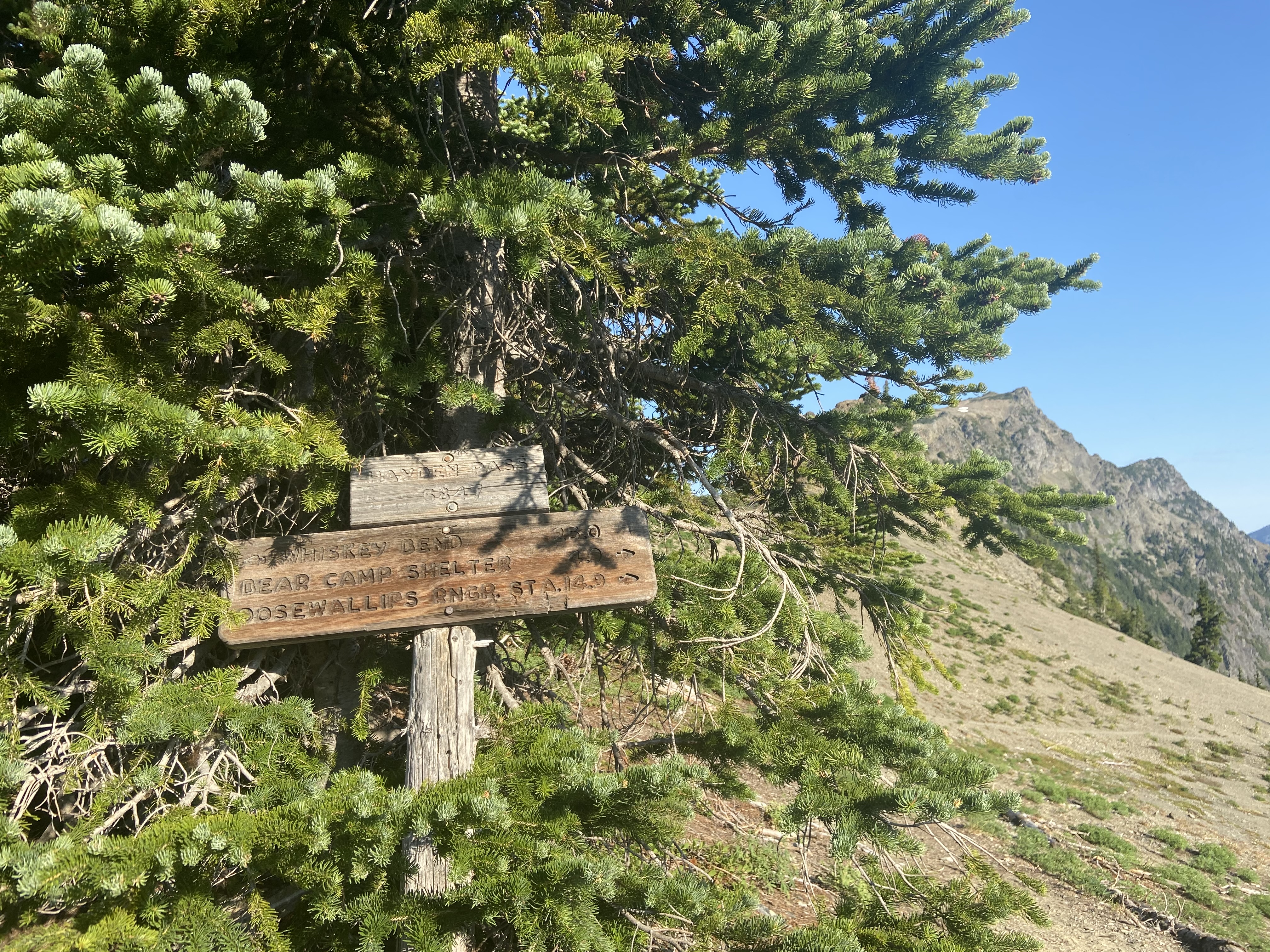
Of all of the PNT, these trails were wonderfully signed and maintained. Did we see any signs stating that we were on the PNT? Nope, but navigation was easy and the views were wonderful. Eventually we exited the Buckhorn Wilderness and entered Olympic National Park. Since Katherine needed to go to work the following day, after lunch she backtracked back to her car and we continued onwards. Our campsite was by a small alpine lake. A quick dip felt great after a hot climb!
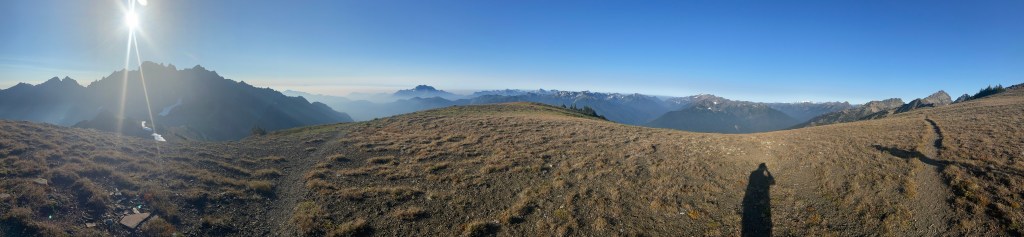
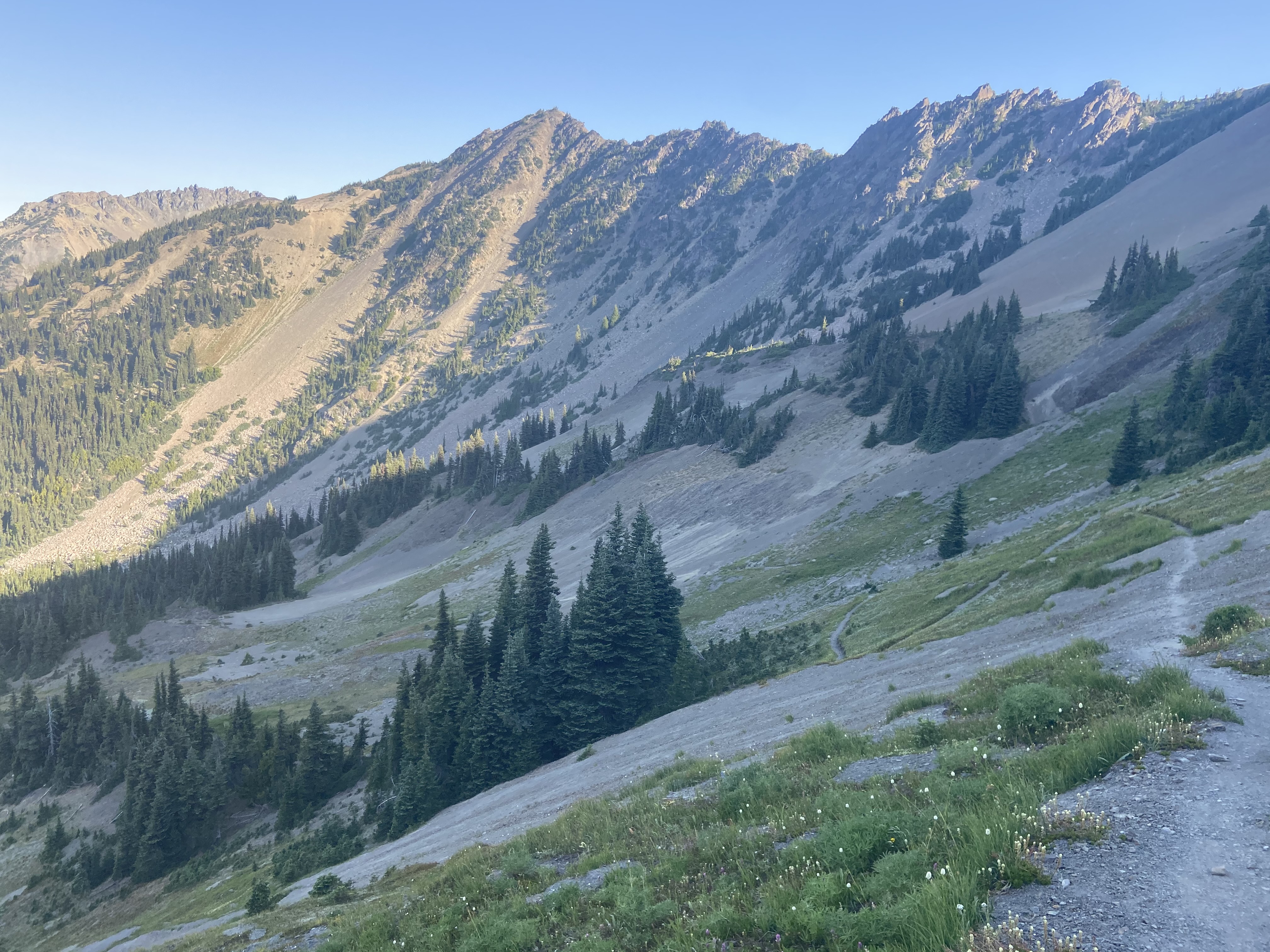
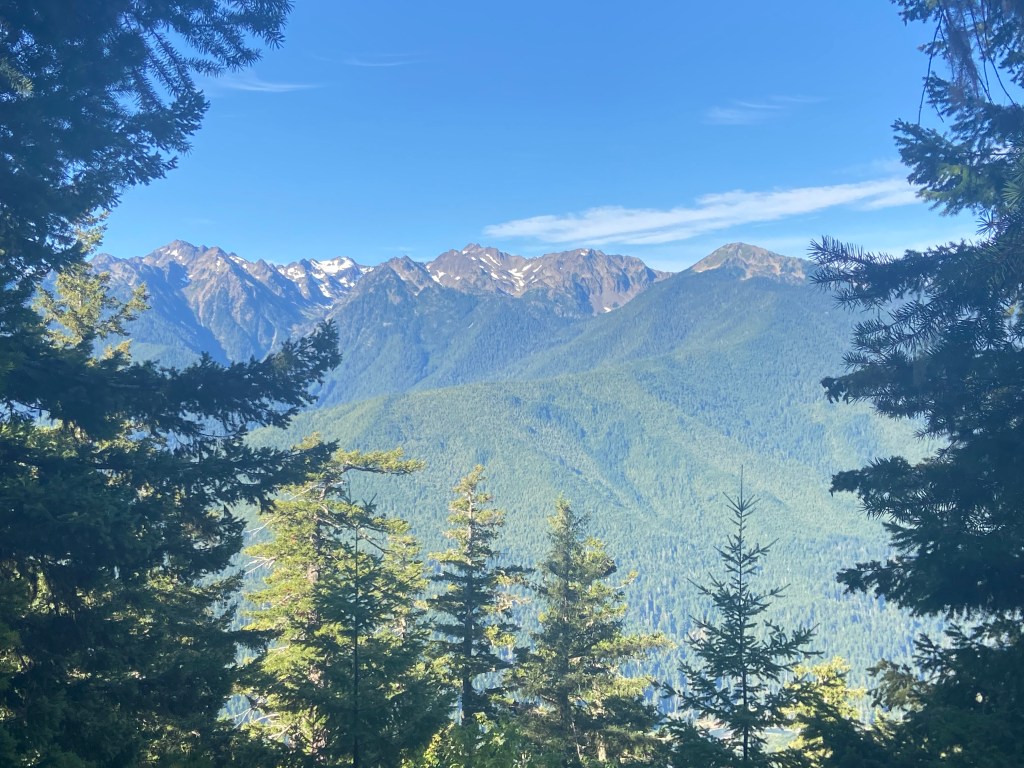
Over the couple of days, the trail brought us up and over multiple passes, with grand sweeping views in all directions. I certainly love starting a morning with a hike up a mountain. Hiking in the early morning light and getting great views is one of my highlights of most trips, and this one did not disappoint.
What goes up must come down. And down. And down. This section of the PNT had some wicked downhill sections. Switchback after switchback for miles!
After one particularly long day that had started with a brutal downhill we were still about two miles from our final destination. We took a short break at the campsite and the young woman there, trying to be friendly said, “Man, that was a tough climb to get here, right? We got here way earlier than we expected to!”
Inwardly my reaction was, “Must be nice to be at camp…we get to climb for two more miles, thank you very much.”
Outwardly I said, “Yup, sure is a climb!” with what I hoped was a smile, but might have come across as a grimace.
In my journal about this encounter I included: “Also she looked so clean. As they all did. Why are we always the dirtiest people, even before we start hiking? Mysteries.”
It was true. Most of the people we saw out there were not even close to as grimy as we were, despite hiking the same trails. How some of them could have shiny, clean, tangle-free locks in the middle of the wilderness is beyond me.
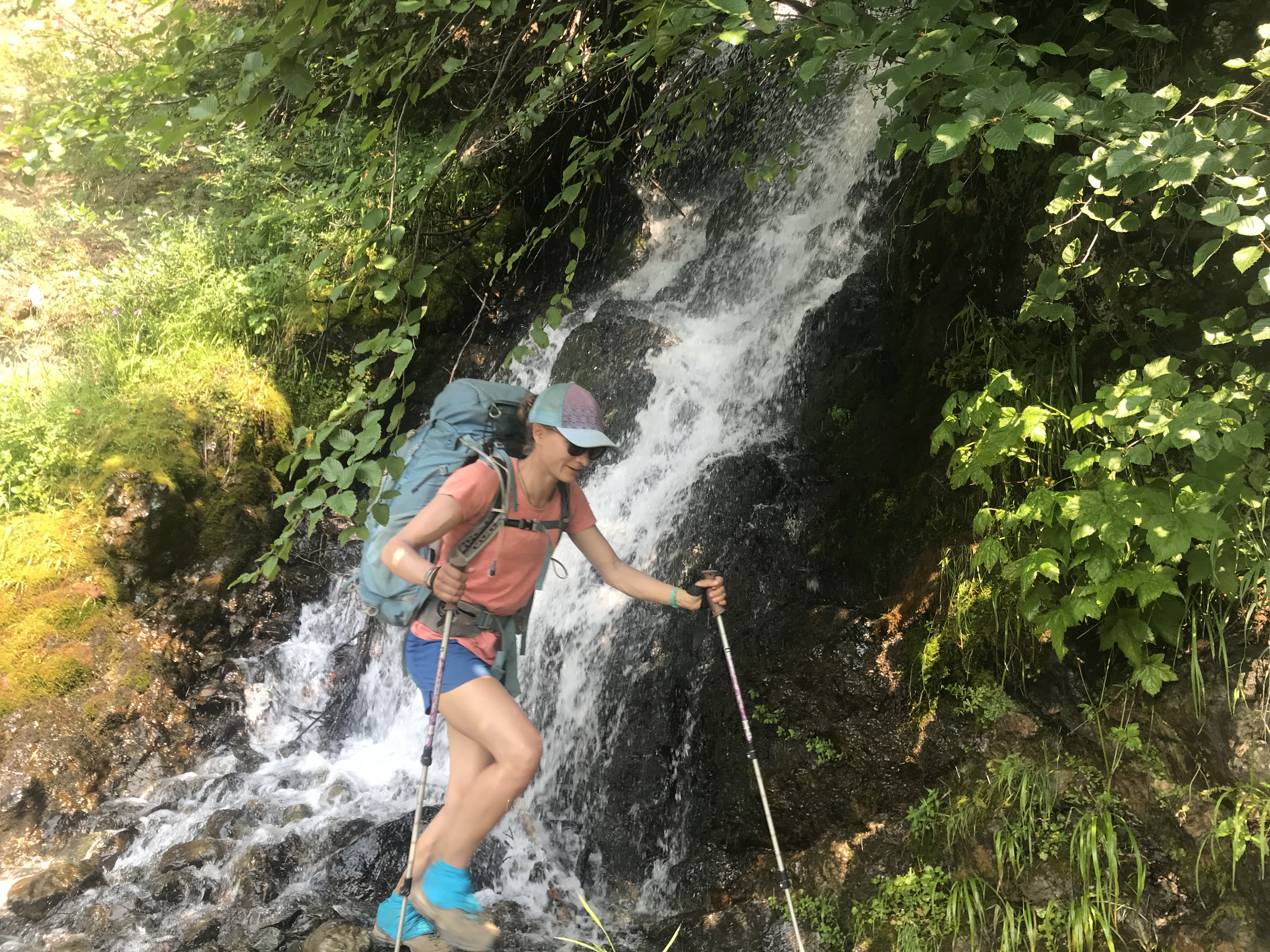
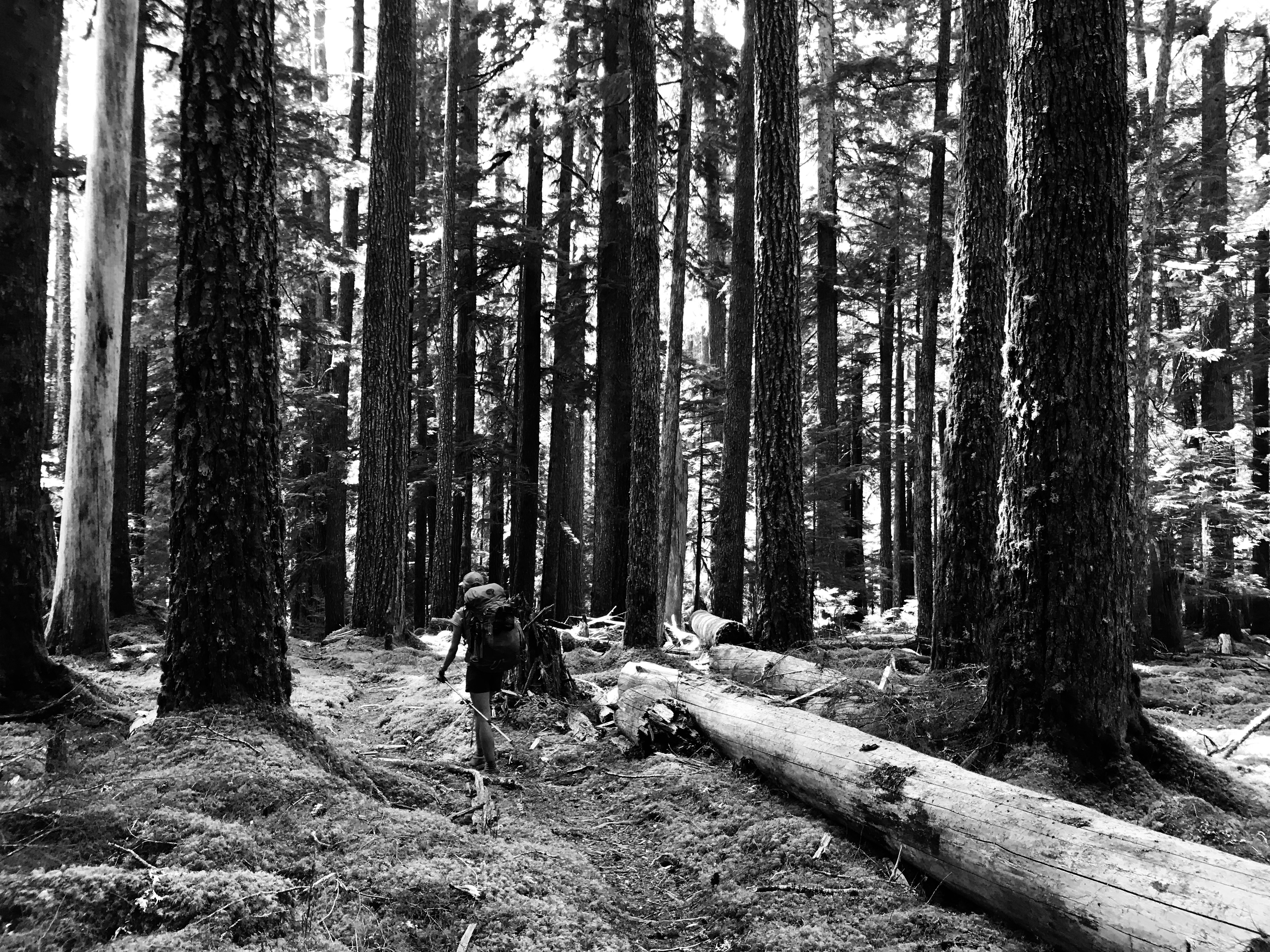
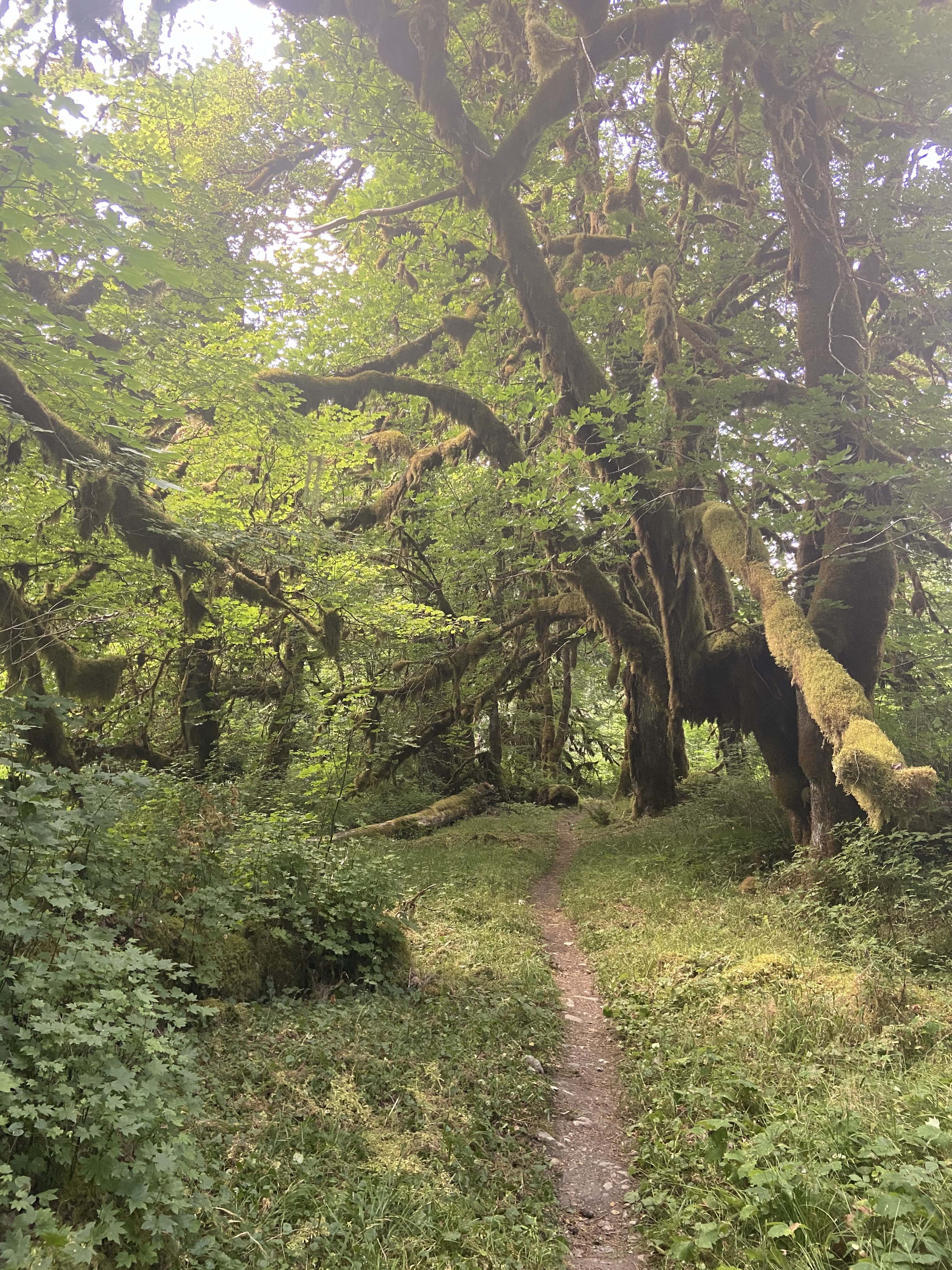
I much prefer the ups to the downs. However, the downs, despite my dislike of them in general, did bring us into the deep, mossy forest that Olympic National Park is known for. I was very excited about the big trees and waterfalls.
One of the campsites we stayed at deep in this forest seemed like it was forgotten by the rest of the world. To get to it one had to climb over a large downed tree, and the bear wire’s tree was also down. I looked around leerily, wondering, are those trees going to stay up? At this point of the evening after a long day, we were committed to sleeping here. The small site was very dark and both Jen and I agreed it was creepy (after we left of course – while we were there I think we both pretended it was “homey”).
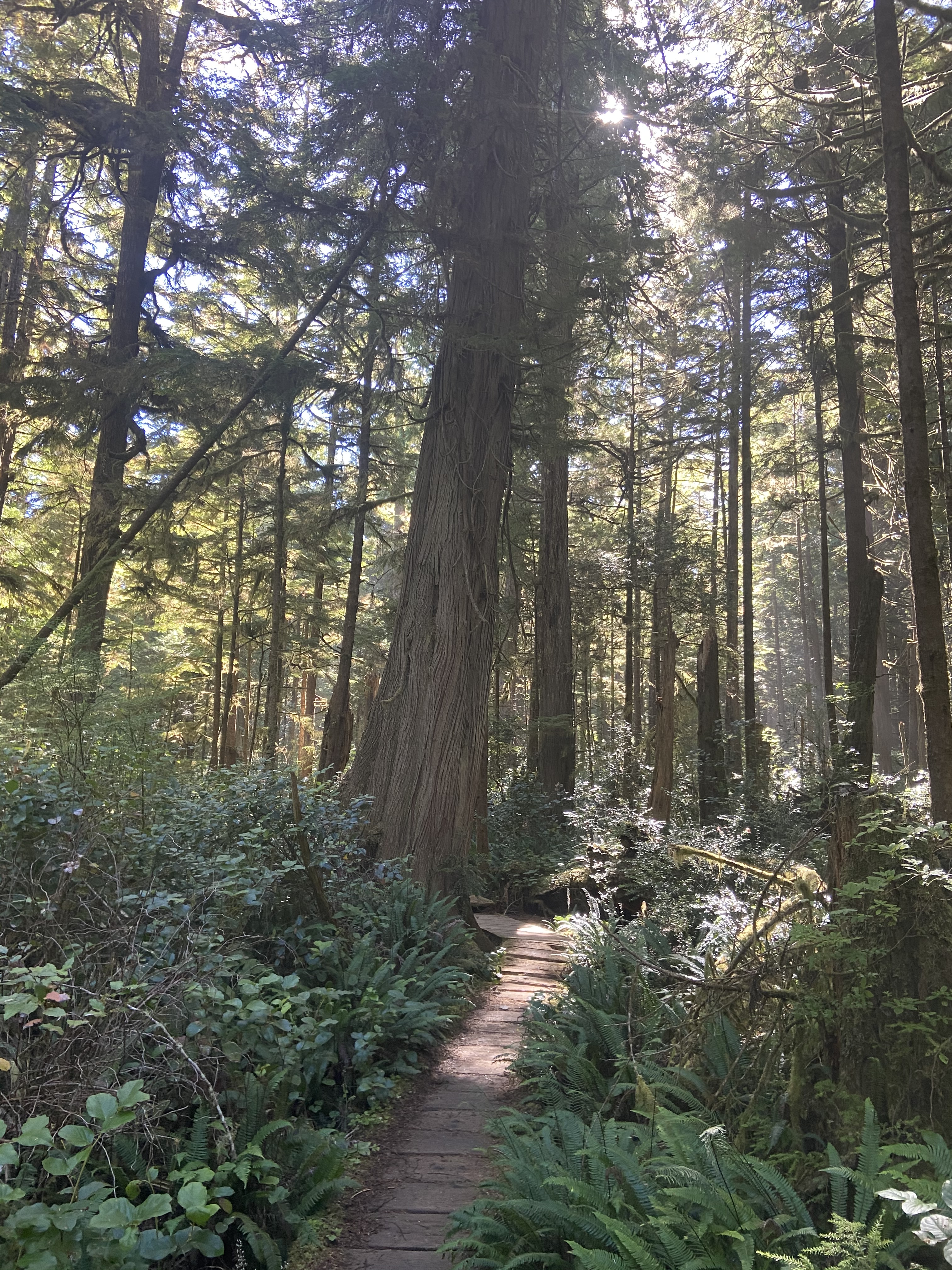
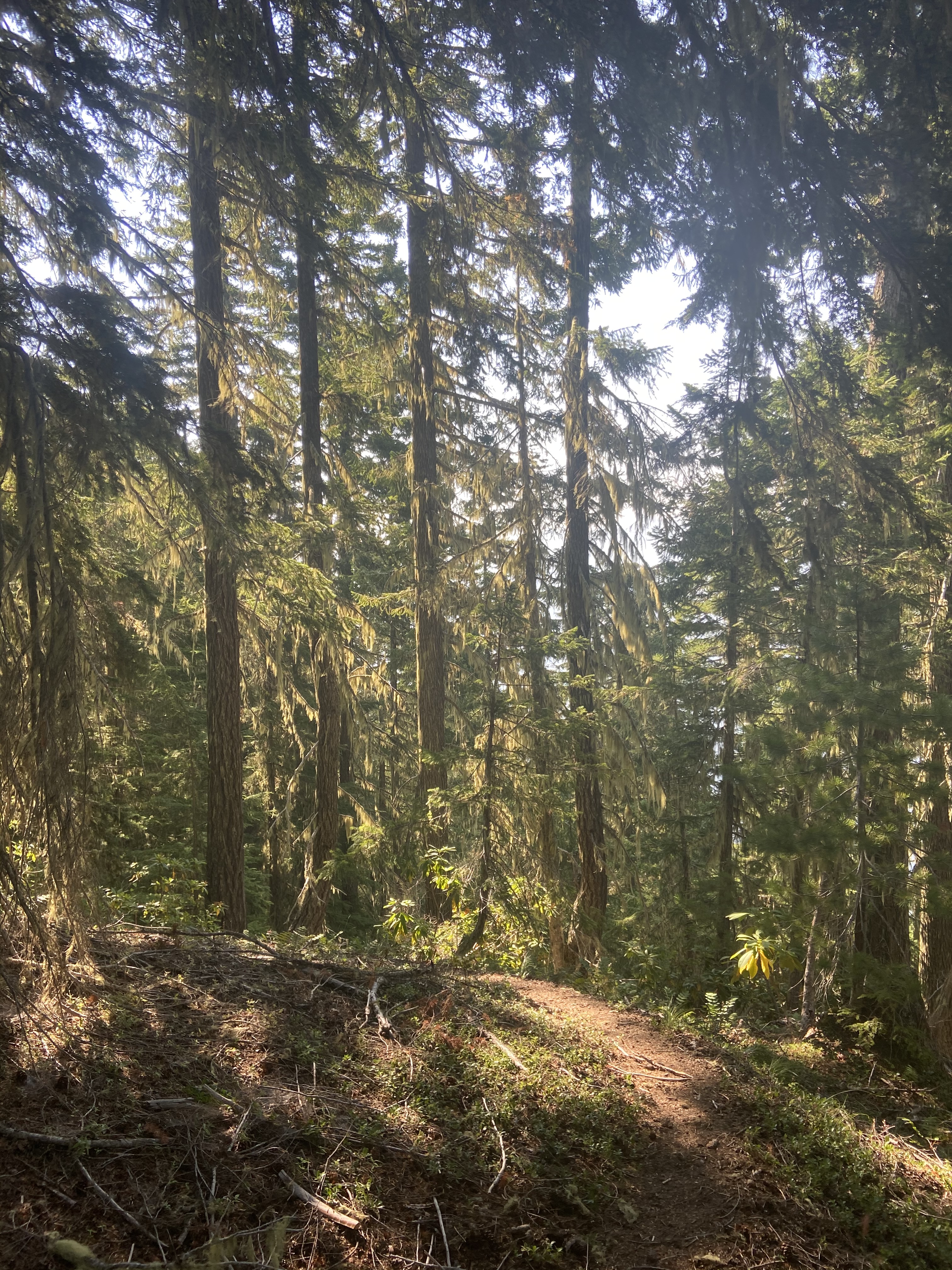
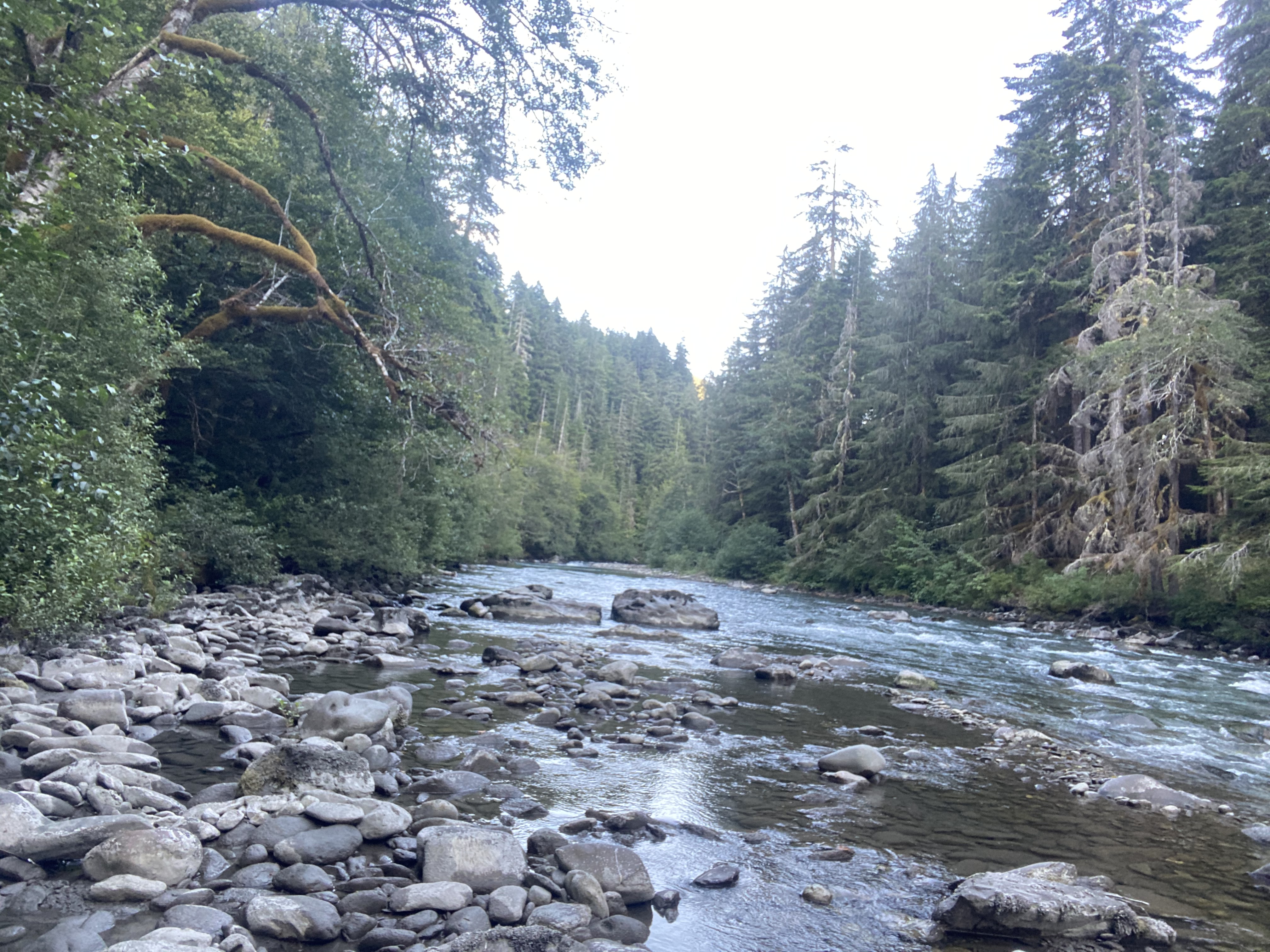
In general though, the campsites we passed and stayed at were lovely! They were among large trees with clear, rushing rivers and streams for water. It really was a wonderful stretch of trail.
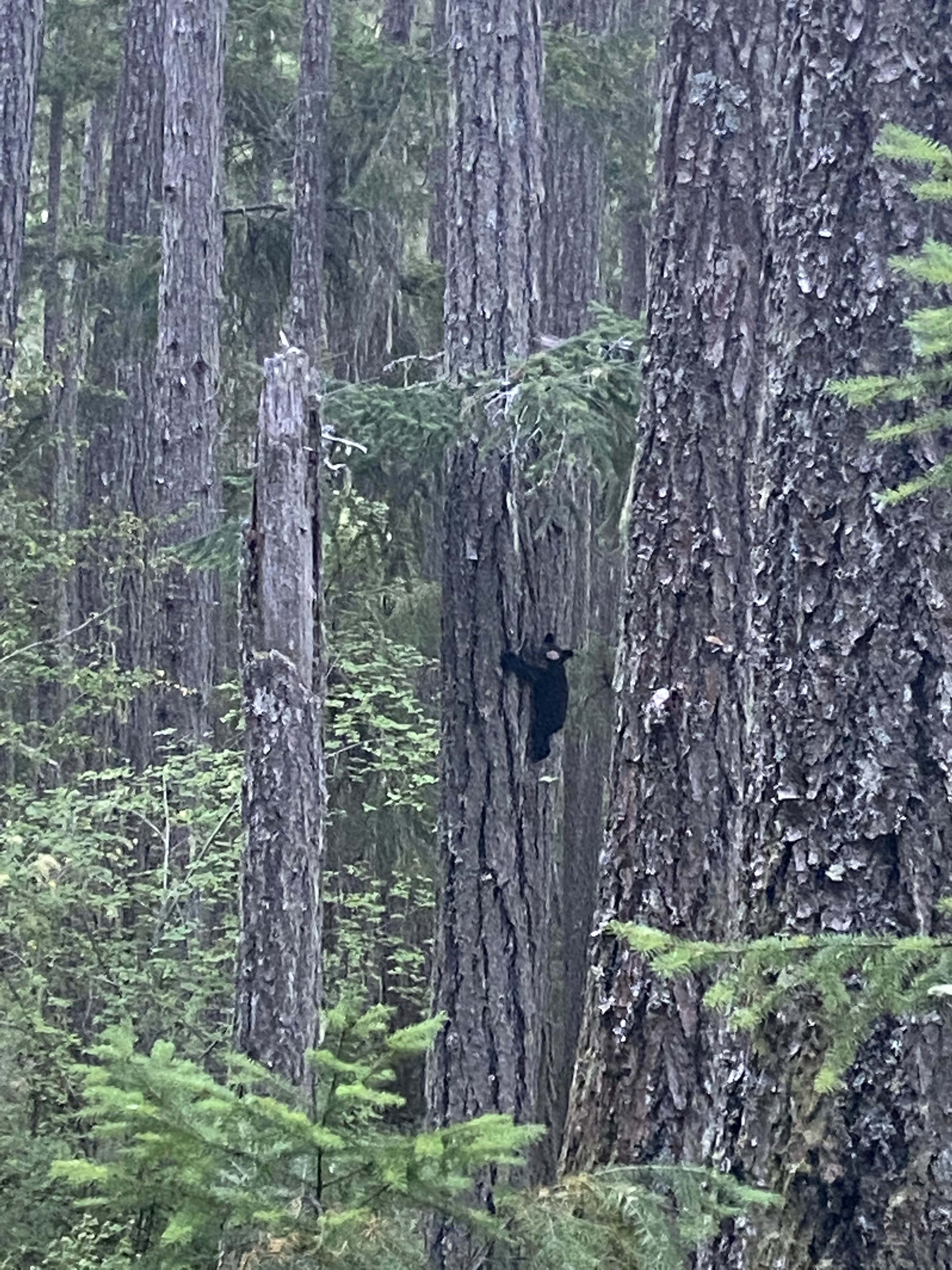
For a variety of reasons, we chose to take a spur trail to the alternate route up to Hurricane Ridge to resupply and take a rest day in Port Angeles. On the way up we saw a mama bear and two babies! Jen was hiking in front, and she saw a baby in a tree first. Immediately both of us stopped short and looked all over with a “wonder where mom is?” Thankfully mom was over by the baby, also on a tree. Then we saw baby number two! The babies skittered up the trees and mama kept an eye on us.
After admiring the furry inhabitants, we continued up the eight miles to the ridge. The views up on the ridge were fantastic! We caught a ride into town from a lovely couple with a very big truck – the very first vehicle leaving the parking lot. We couldn’t believe our luck!
In town, we grabbed some snacks at the grocery store, made some phone calls, and found our way to some beers on the waterfront while we figured out where we would sleep that night. Once that was settled, we cleaned up, had a nice dinner, and relaxed for the evening as we figured out the next logistics for the next leg of our journey. In the interest of time we decided to make our way more directly to the coast over the following days. Soon we’d get to backpack while taking into account tides – something that doesn’t occur in Minnesota, and something I think we were both excited about. On to the next stage of the adventure!
]]>6exploringedgeshttps://exploringedges.wordpress.com<![CDATA[Preparing for Adventures]]>http://exploringedges.com/?p=6222023-04-06T01:31:14Z2021-02-14T14:17:43ZHi all-
I actually wrote this post over a year and a half ago, but it’s just been sitting in my “drafts” folder all this time. With the current state of the pandemic, planning for adventures has taken a back burner. However, it’s still nice to consider a future where distant travel and adventures can take place safely. I think that, even though I’m keeping my adventures close to home right now, the thoughts here are still valid. I hope you enjoy!
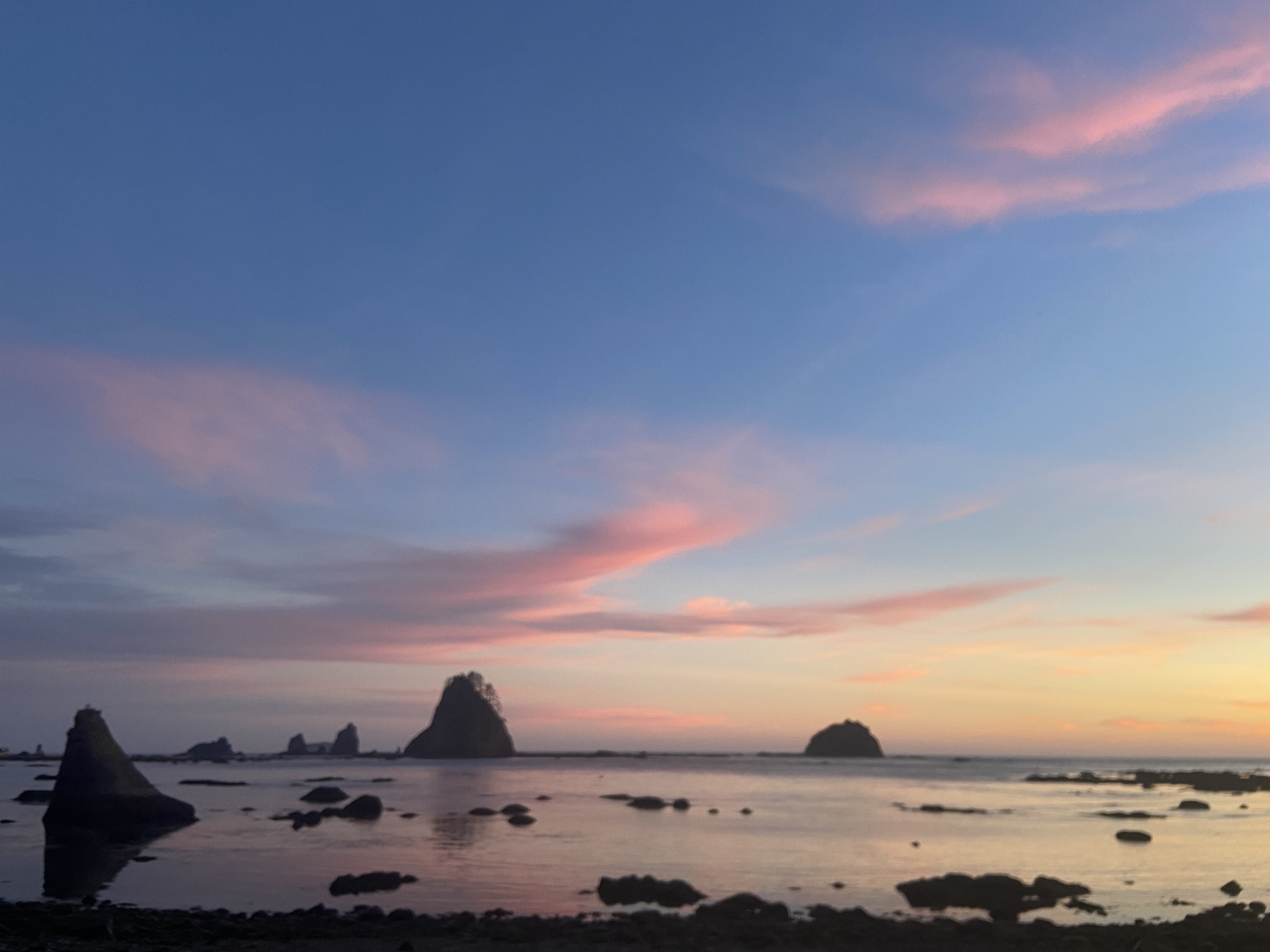
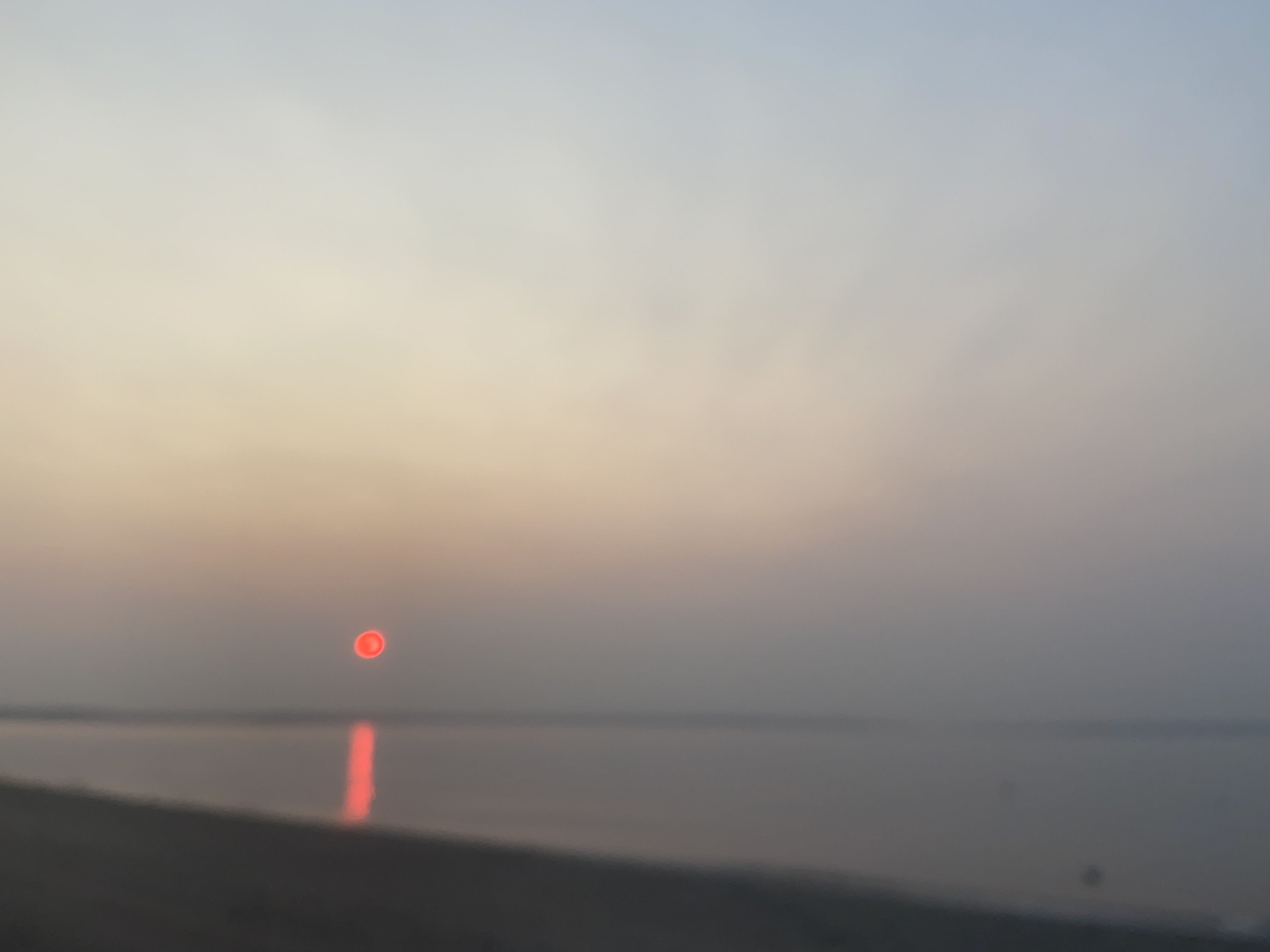
A smoke-filled sunset from the PNT.
When on trail one is met with situations that require immediate analysis and response – and the consequences are pretty immediate too. Should I go over this downed tree or under it? If I hop across this creek, is that stone going to shift under me, or will it give me a good landing? Can we make it another few miles, or is stopping here the better choice? Should I eat my snack now, or will I regret it later when I’m out of my allotted snacks?
Some decisions while hiking have consequences slightly farther in the future. Should I fill up at this stream or wait? Forget to look at the water sources (or lack thereof)? You might run out of water. Don’t hike enough miles today? You’ll have to go farther tomorrow or run out of food and time. However, if you push too far today, will your body hold up to do it again tomorrow?
Preparing for adventures, whether for a day, weeks, months, or years involves looking into the future and trying to guess what your future self will want and need, and what your future self will be capable of. With so many unknowns, it is enough to cause anyone analysis paralysis over the future. Am I making good decisions now for my future self?
When you add another (or others) into the mix, it gets even more challenging. The variables multiply – it becomes not only yourself who is left dealing with the consequences, but now someone else is too. This isn’t a bad thing – with companions and shared experience comes a different sort of joy. The positive consequences of a good decision can be celebrated, the negatives of poor decisions can be shared.
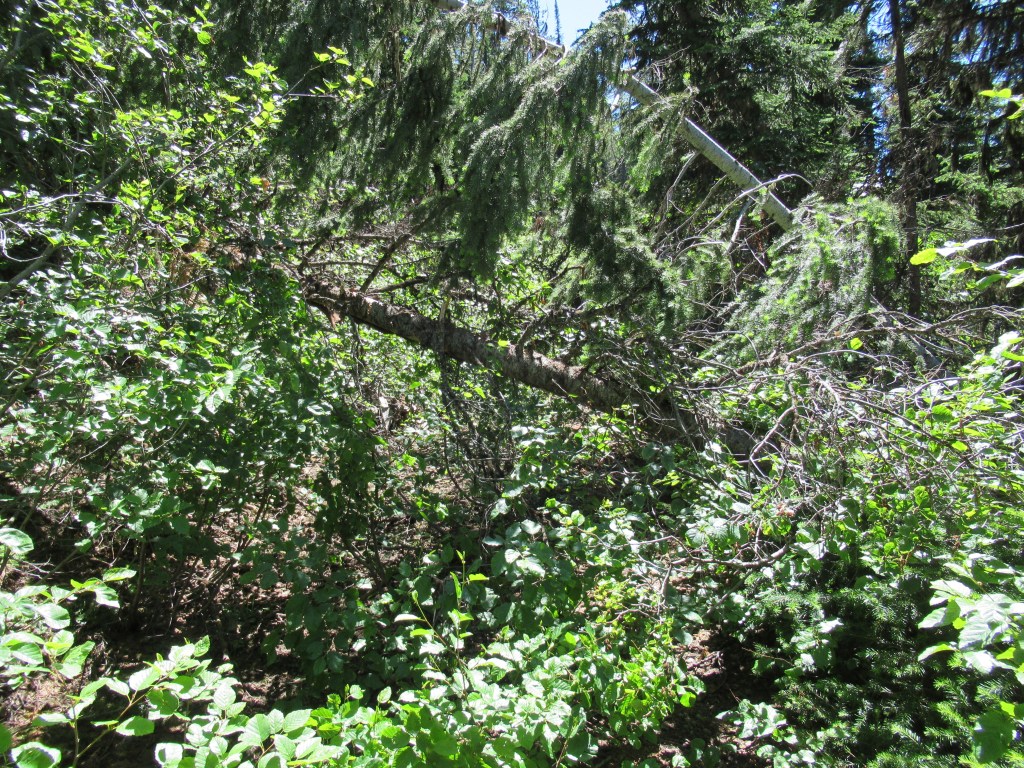
Something learned from previous adventures is the ability to problem solve and make things work. End up with a surprise additional 15 miles in a hiking section? I guess we’ll just have to hike farther each day and consider that we might have to ration the mac n cheese (thank goodness we didn’t have to do that). This whole section of trail is full of downed trees? I guess we just won’t make it as many miles today as we hoped, and I’ll let my friends have a snack before telling them any more bad news. The bus breaks down, the plane is delayed, the mosquitoes threaten to carry you away, the water source is dried up, the trail is on fire, the trail disappears, there’s weird noises in the woods, you end up with chafing somewhere you never expected – all sorts of challenges come up that must be dealt with. While many you can take precautions for, there is still plenty of room for challenges to come that are out of your control.
Sometime the trail might be full of brush and downed trees.
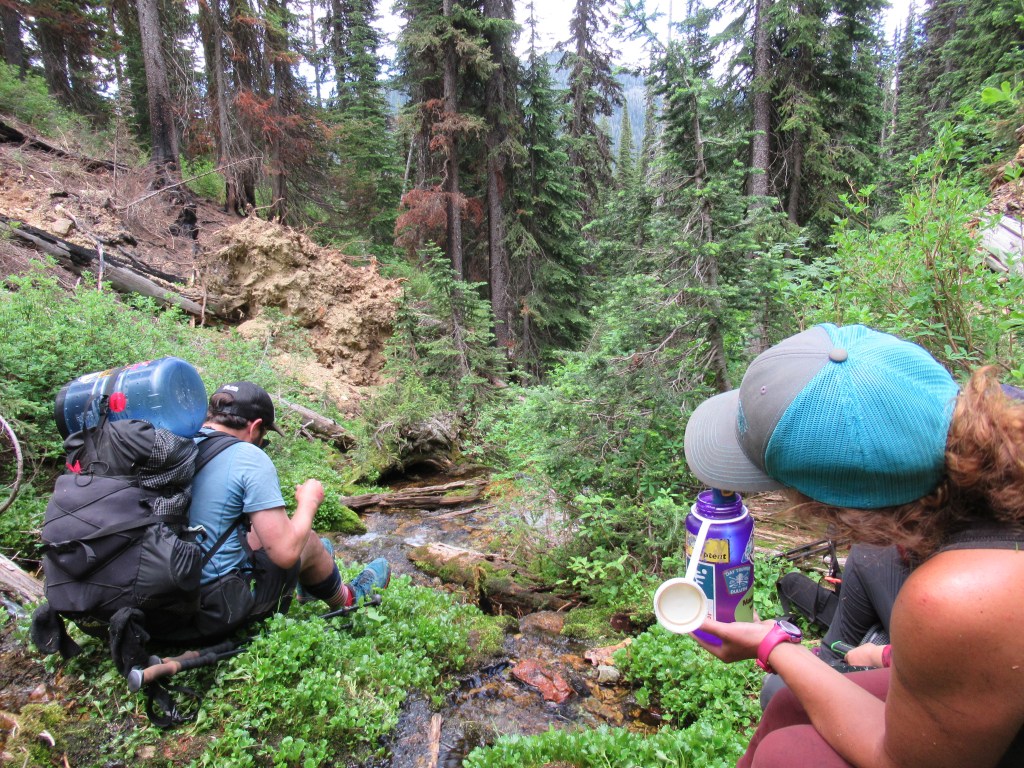
While this could cause crippling anxiety, one can also work towards accepting it. I feel so fortunate to have had a healthy dose of adversity in my previous travels to learn that even if things don’t go as planned, they’ll work out one way or another. Sometimes this means bailing out a side trail rather than continuing along the intended path – and embracing the new adventures that come your way. Sometimes it means asking for and accepting help from strangers (it turns out most people are thrilled to be able to help). Sometimes it means staying put for an extra day to rest.
Sometimes taking an alternate side trail brings a whole new type of magic to your adventure.
Frequently it comes with a healthy dose of forgiving yourself for past choices, especially if you were making the best ones (you thought) with the information at hand.
In this, preparing for adventures is analogous to making choices about anything in the future – when choosing an educational path, when choosing a career, choosing a partner – we are making choices for a person who does not yet exist. While we can guess what our future selves want and need, we don’t even know this person yet. No wonder sometimes we wake up and find ourselves somewhere that we never expected based on our decisions in the past.
All we can do is make the best decisions with the information we have available to us, trust in our abilities to fly by the seat of our pants, thank our past-selves for the good decisions we’ve made, and forgive our past-selves for our transgressions (and learn from them).
But wait. All this about past- and future-selves. What about our NOW-selves?
I think this is why I so enjoy when we finally lace up our boots, shoulder our packs, and start hiking. The research and planning is done, the food and permits are in hand, all that is left is to walk and respond to what is currently at hand, trusting in our ability to figure out the challenges that will undoubtedly come.
Traveling cross country on one of the bushwhacks of the PNT.
But, do we need to go on wilderness adventures to do this? No. I find similar feelings when I lace up to go on a long trail run, when I go walk on the beach by Lake Superior, or by just going for a paddle. When I do those things that I love it is easy to be immersed in the moment.
So, in short: Yes, make the best choices you can for the future with the information that you have available today (and it is your job to seek it out, so you can make informed choices). But, embrace the unknown, trust in your ability to figure it out, be kind to others, and especially, be kind to yourself.
]]>4exploringedgeshttps://exploringedges.wordpress.com<![CDATA[Gratitude and Solitude]]>http://exploringedges.com/?p=10832020-12-23T23:30:48Z2020-12-23T23:29:40ZAs I sit to write this post, a winter storm is bearing down. Outside the wind is howling, snow (or some sort of precipitation) is whizzing through the air, and the temperature is steadily falling. I am wrapped in a blanket, I’m wearing some cozy slippers, and I have some hot ginger tea by my side. I feel so, so fortunate to be able to enjoy this storm from a place of safety and warmth, and also for the gift of not having to try to get anywhere else.
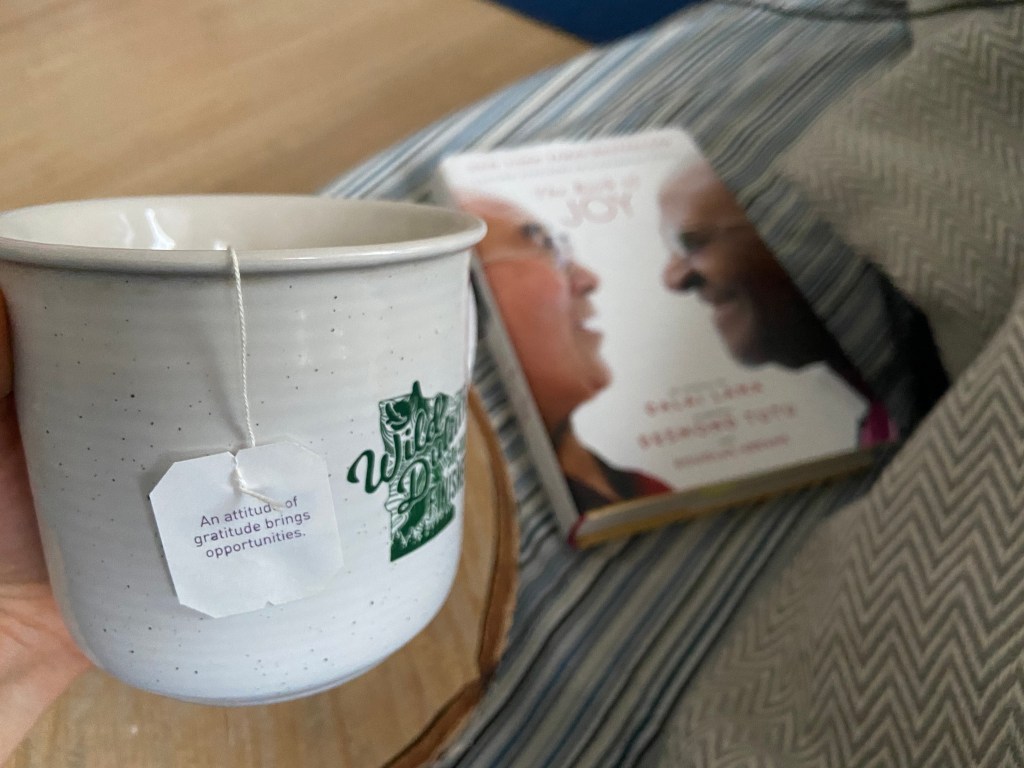
It was after I cozied myself into my writing nest that I noticed that the message from my tea bag was “An attitude of gratitude brings opportunities.” This connected to another quote I read this morning, from The Book of Joy, a wonderful book containing wisdom from His Holiness the Dalai Lama and Archbishop Desmond Tutu, with Douglas Abrams:
“Gratitude is the recognition of all that holds us in the web of life and all that has made it possible to have the life that we have and the moment that we are experiencing.” (p. 242). I like this quote as it not only reminds us to be grateful, but to also cherish the moments we are in.
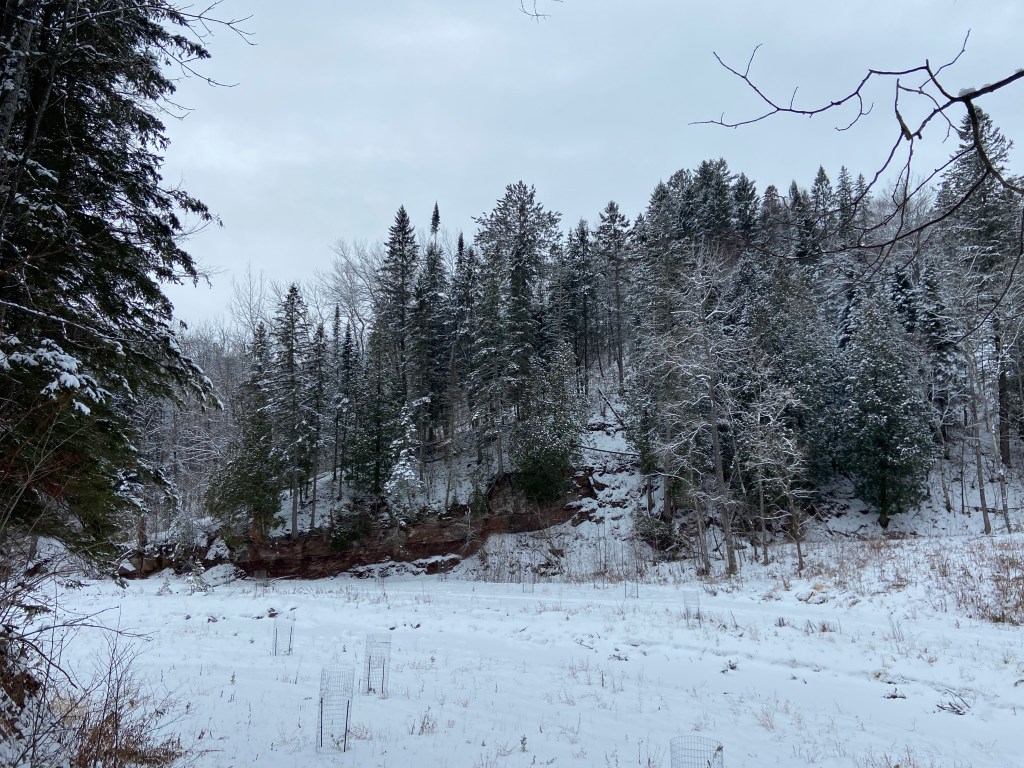
It is through this lens of gratitude that share with you a wonderful recent adventure. For this adventure, I opted to hike along one of my favorite sections of the southern Superior Hiking Trail. This spot is a favorite for multiple reasons: its proximity to my place, the dramatic “mountainy” feel (sometimes hard to find in Minnesota), and its general quietness (the trailhead is at the end of an unsigned, residential street). I planned to hike out and back for part of my time and to finish my hike with a small loop using a multi-use spur trail.
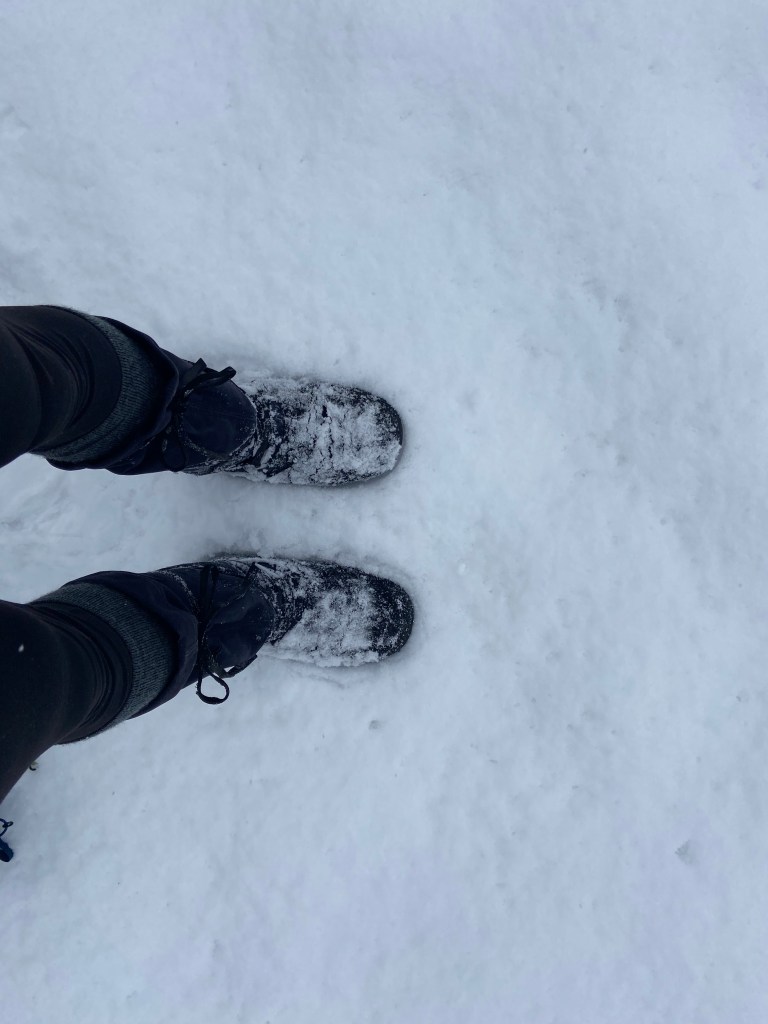
I’d like to pause here for a moment and acknowledge that the lands I explored on this particular hike, and on my other adventures in Minnesota and elsewhere, are the traditional, ancestral, and contemporary lands of indigenous people. In addition, the mukluks that I wore on this trip allowed me to benefit from indigenous technology and wisdom. I am eternally grateful.
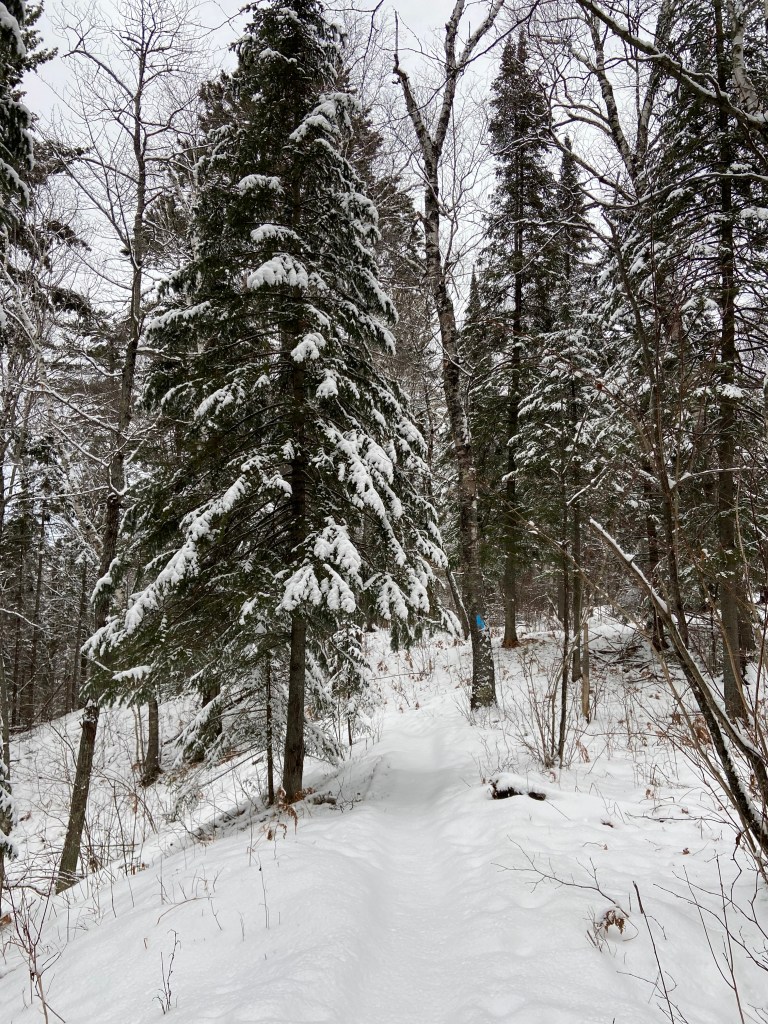
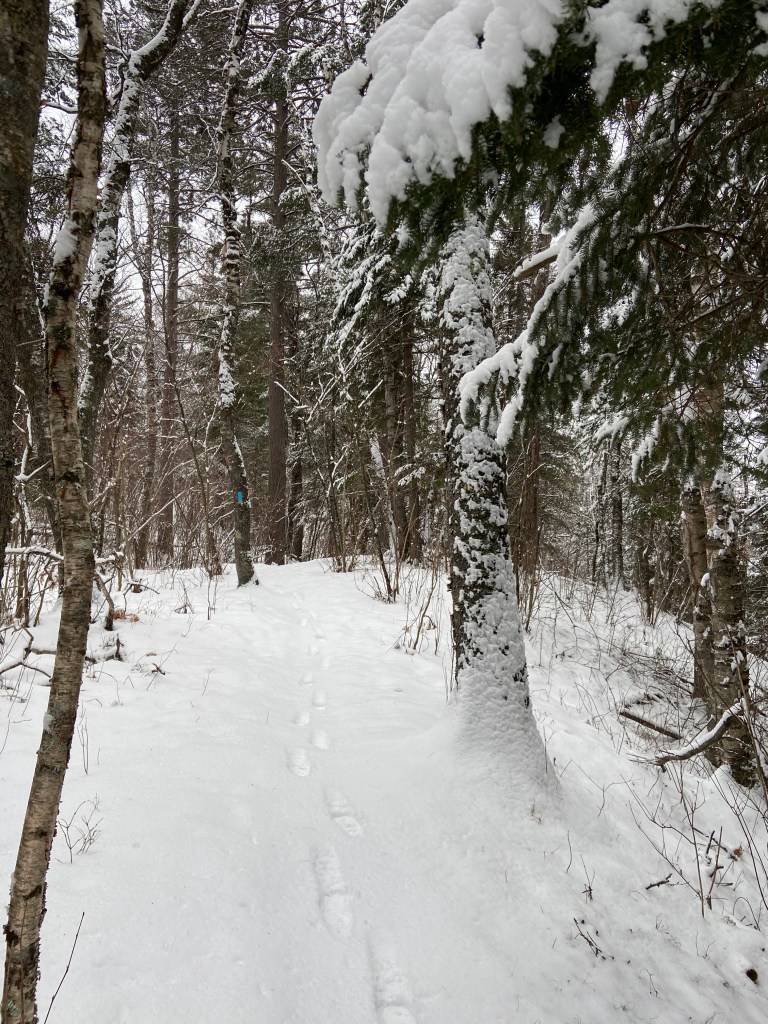
No humans have been here since it snowed!
These mukluks are great.
I am never disappointed when I hike or run in this area. Frequently, even if I start out in a mediocre mood, by the end I can’t help but grin. On more than one occasion I’ve ran into hikers experiencing it for the first time, some who have lived in Duluth for years without knowing it existed, who are in awe of the beauty and can’t help but share their delight. This day, however, I was alone. Not only was I alone, but once I got off of the main spur, I was the first human to travel the trail since the last snowfall.
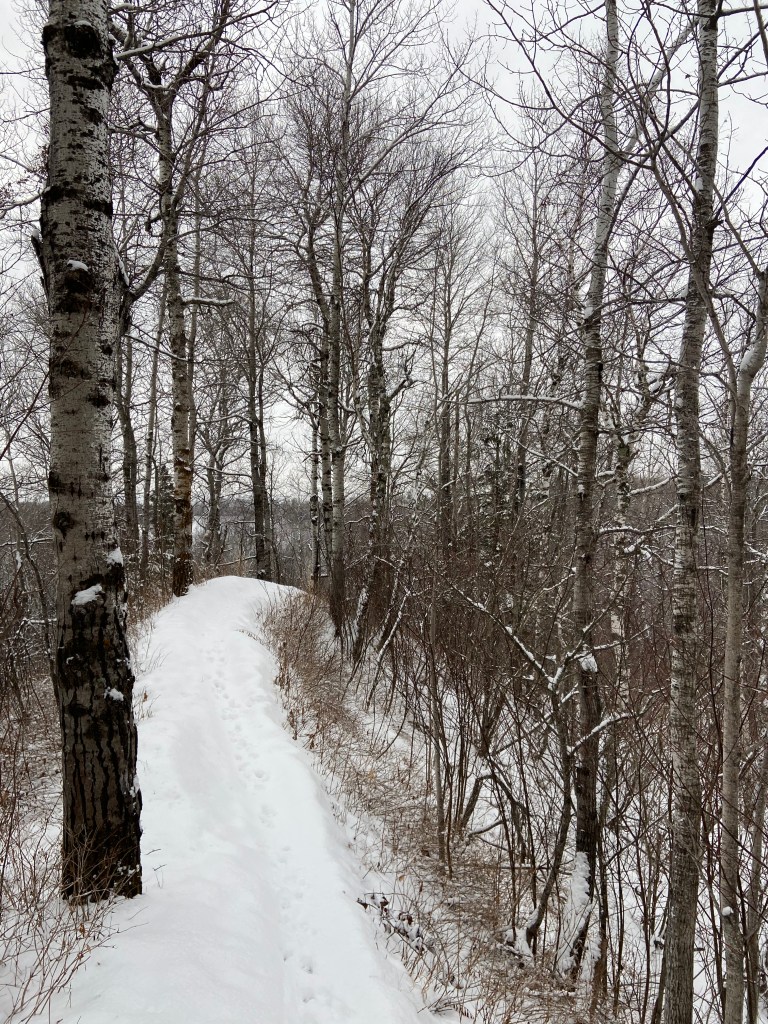
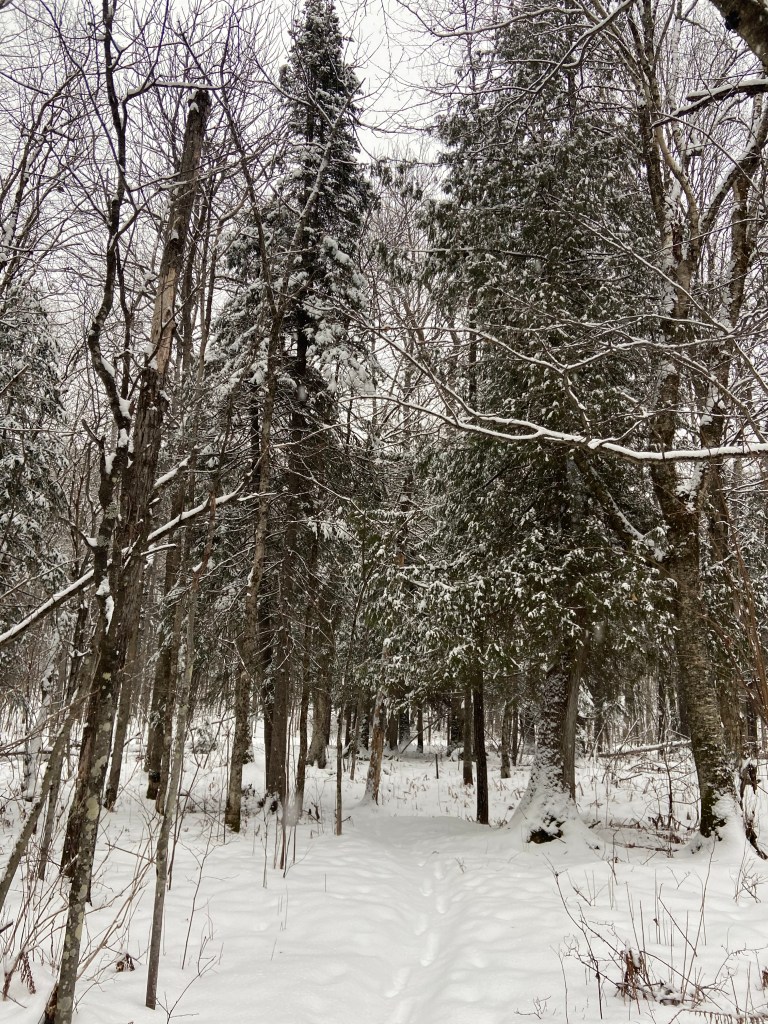
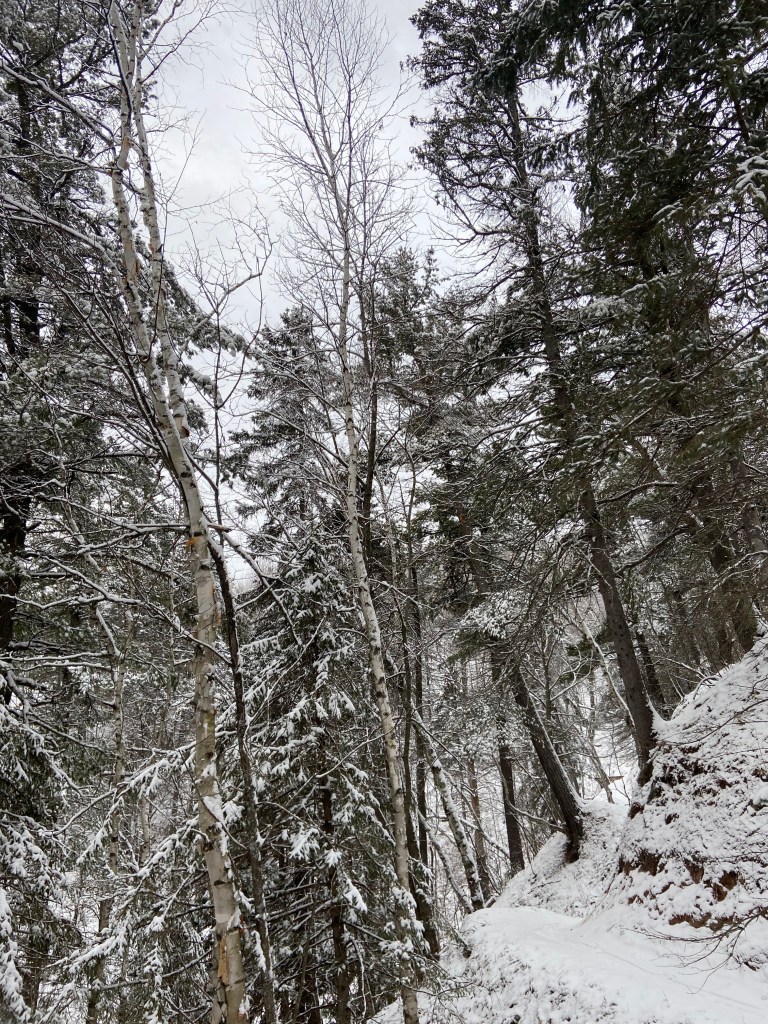
When looking at my pictures, I realize that a lot of them are just pictures of the trail. They really don’t capture the experience: the soft crunch of my steps as they broke through the thin layer of crust on top of the snow, the general hush of the snow-covered woods, the flitting wing beats of the chickadees and woodpeckers, and the tracks of grouse, fox, deer, and other forest creatures as they went about their lives.
As I got to my turn-around time, I lamented the prospect of having to retrace my steps. Now, I almost always do out-and-backs for my hikes and runs, but today I was a little sad since turning around meant that I would no longer be breaking fresh trail and it meant that my adventure was getting closer to ending. However, right when I neared an overlook that provided a perfect point to turn around, I started getting pelted with snow – the little, ice ball kind.
I laughed out loud, and then quieted to listen to the sound of the snow as it filtered its way through the pine needles and bounced off of my jacket. As I made my way back the way I came, I was in awe at how much this sound and the sensation of getting pelted by the little icy balls changed the experience. Despite being the same location, it was a whole new trail. I spent quite a bit of time trying to think of the right word to describe the sound, but never came up with a perfect one. “Tinkle” just didn’t seem right. Nor did “swish.” Maybe the sound of a rainstick? There are some things that words, at least English ones, just cannot capture.
As I came back to the main loop of the trail, I still had what I knew to be a fun section left. The trail travels up and along a ridge with towering pines before a spur provides the option to descend, hugging contours as it winds its way back down to the trailhead. It was on top of this final ridge that I saw my first other hiker on the trail. Since I had had most of the afternoon to myself, I was overjoyed that another human was able to experience the beauty too. He had headphones in, but we gave each other a distanced nod and smile and continued on our ways.
As I descended to the trailhead, I was struck again with gratitude: for living in a place with opportunities to explore and for having the time and ability to do so.
As the wind whips outside, I’ll leave you with one more lovely quote from The Book of Joy. Though it isn’t directly a part of my recent adventure, it resonates with me as we finish up this year:
“When you are grateful, you are not fearful, and when you are not fearful, you are not violent. When you are grateful, you act out of a sense of enough and not out of a sense of scarcity, and you are willing to share. If you are grateful, you are enjoying the differences between people and respectful to all people. A grateful world is a world of joyful people. Grateful people are joyful people. A grateful world is a happy world.” (p.246)
I wish you all health and happiness as we look towards 2021. I’m grateful for you all!
For any who would like to read The Book of Joy (I recommend) and to find the quotes included, here’s the citation:
Bstan-‘dzin-rgya-mtsho, Tutu, D., & Abrams, D. (2016). The book of joy. Avery Publishing. ISBN 978-0-399-18504-5.
]]>2exploringedgeshttps://exploringedges.wordpress.com<![CDATA[Pictures of 2020]]>http://exploringedges.com/?p=8882020-10-18T21:45:18Z2020-10-18T21:45:18ZA usual autumn would have me looking back and sharing grand adventures that happened over the summer. Rather than listing all the adventures that could have been had and the all of the events that have been postponed, with this post I’ll share some of the beautiful things that I have been able to do and see this year. I’ll share them chronologically (mostly) starting from this spring and continuing through fall. The vast majority are from Duluth or within an hour or so drive, as I’ve stuck close to home. As you’ll gather from my pictures, I’ve spent much of the time outside, away from my computer as much as possible.
Also new this year: I got internet! For those of you who know me, this was a big change. This is my first blog post that I’m writing from my apartment – woah. However, despite easier access my habit of infrequent and sporadic blogging hasn’t changed. Since I do it so infrequently, and WordPress has updated how editing works, I’m trying out some of the new (to me) features on this blog. I’m not thrilled with some of the new formatting, but it’s probably operator error. To see the pictures individually in the galleries, you should be able to click on them. They also should have alternative text, if you need it. If you have any problems, please let me know. I hope you enjoy seeing what I’ve been up to these last few months.
Moonrise over Lake Superior.
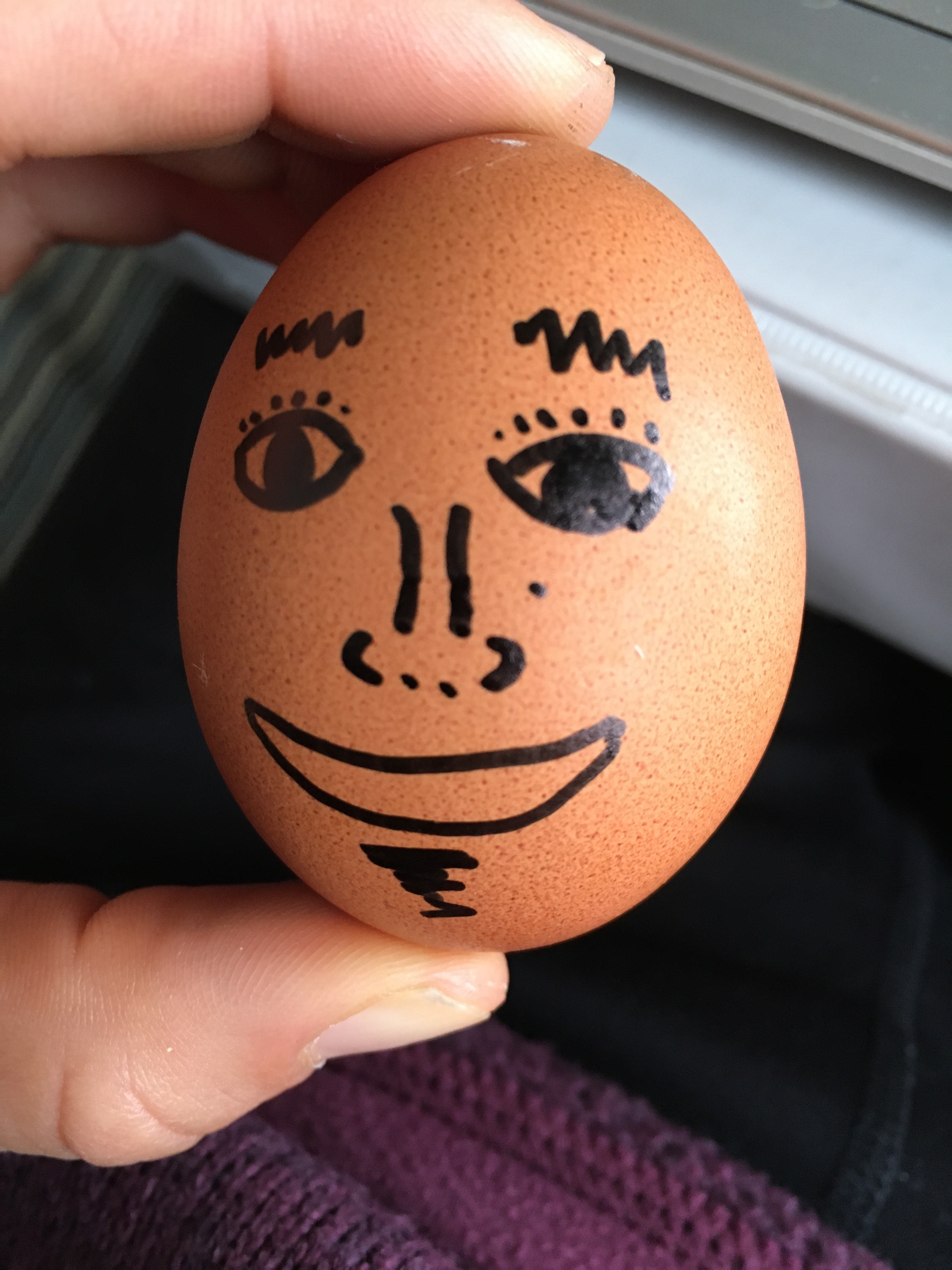
My friends from high school are great. Here are some eggs I decorated during our virtual Easter egg decorating hangout. I didn’t have dye or white eggs, so I got creative. It did make it harder to eat them afterwards!
While I was working from home this spring, I was able to get out on the Lakewalk a few mornings a week. This allowed me to catch some really nice sunrises and still be back at my computer in time for work.
Sunrise over Lake Superior
While I look forward to being able to travel, now more than ever I’m thankful for the easy access that I have to wild spaces. While I’ve had my own shares of ups and downs during this difficult time, I find relief in nature. Though our local trails and parks have been busy with tourists, I’m lucky enough to know some quieter local places to get away (feel free to email me if you’d like some insider tips). It’s during these times I am reminded of my wealth, since I get to live in a place that many only get to visit.
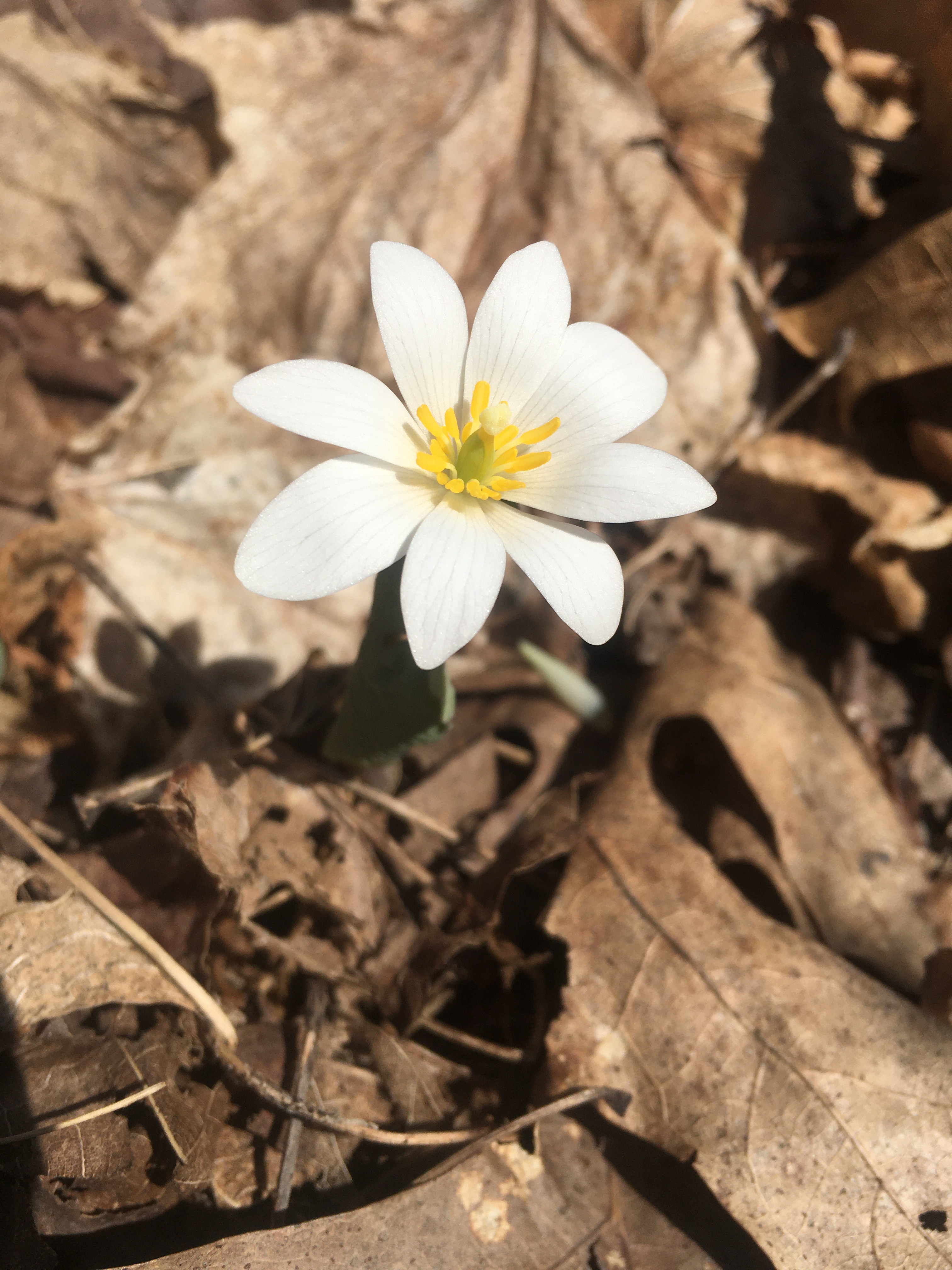
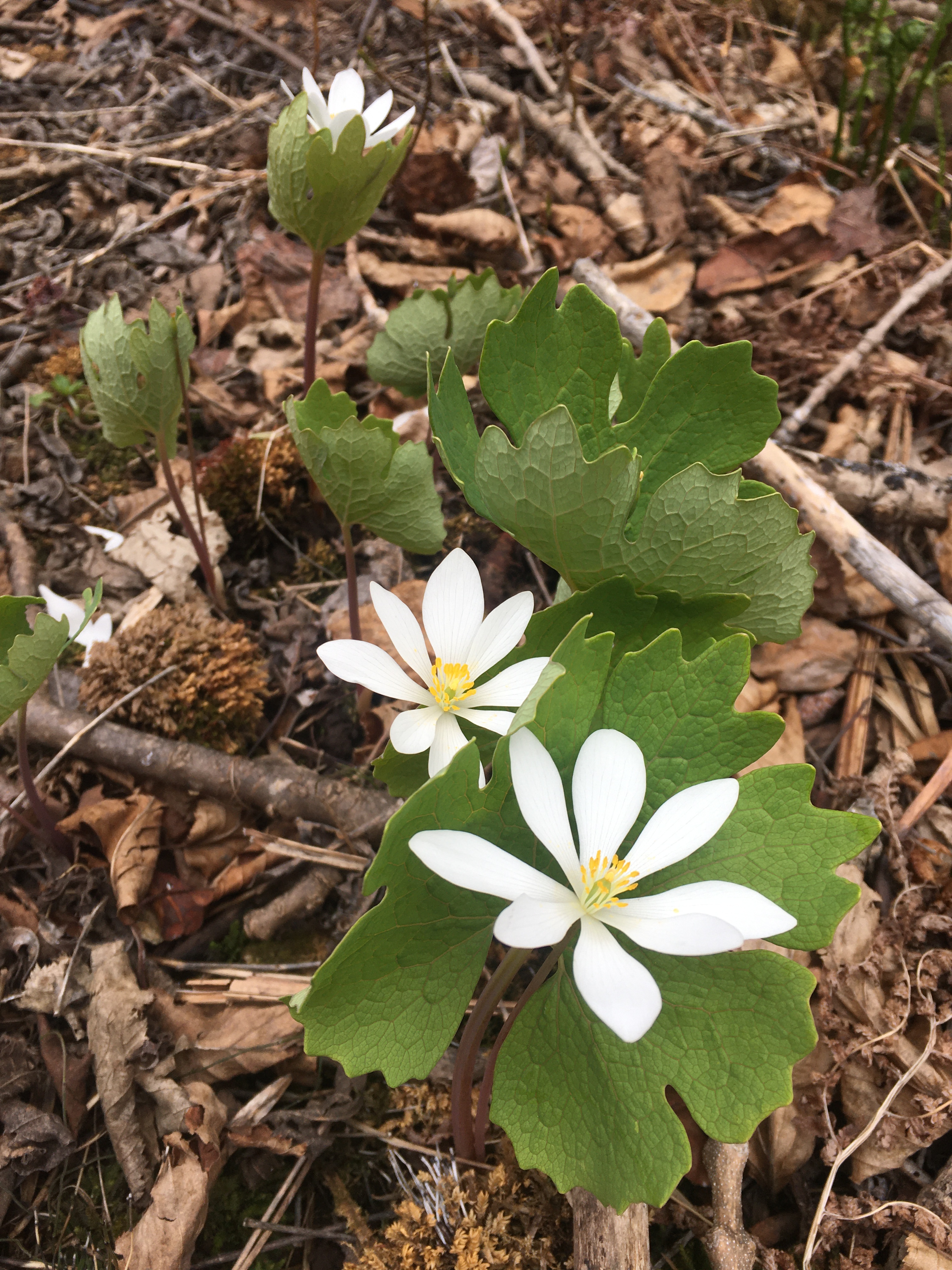
First bloodroot
Leeks
More leeks!
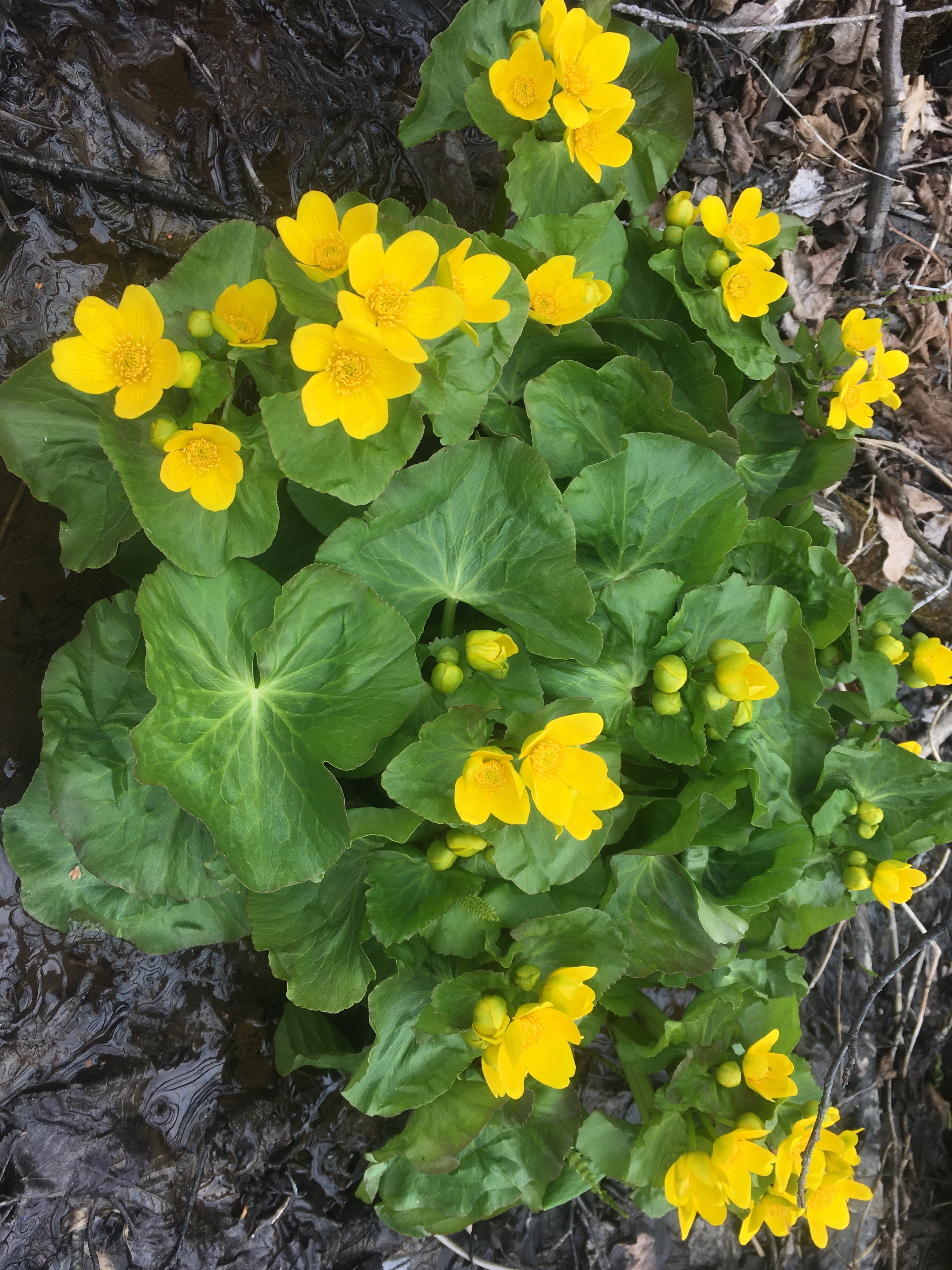
Marsh marigold
Bloodroot
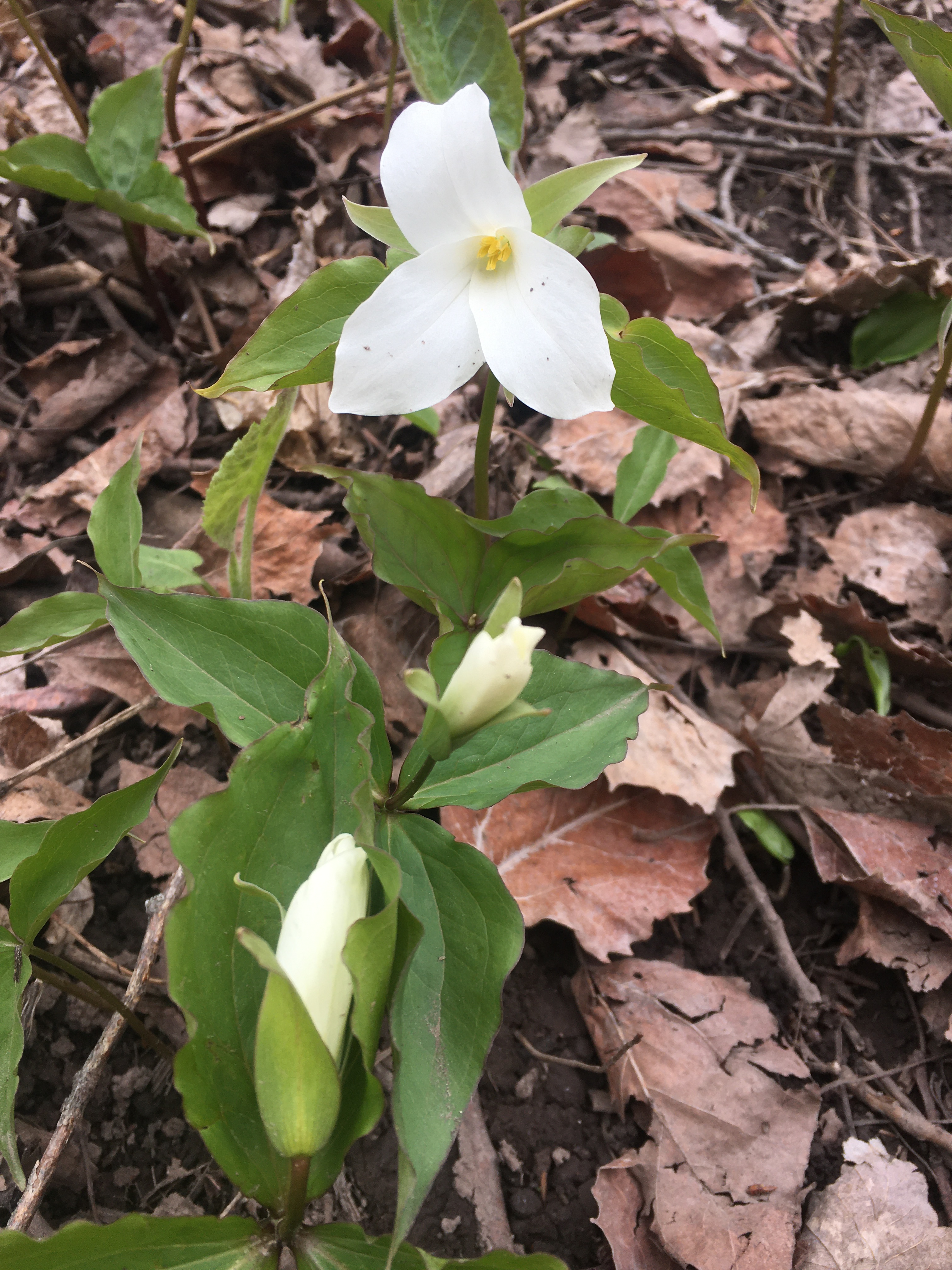
Trillium
Sessile bellwort
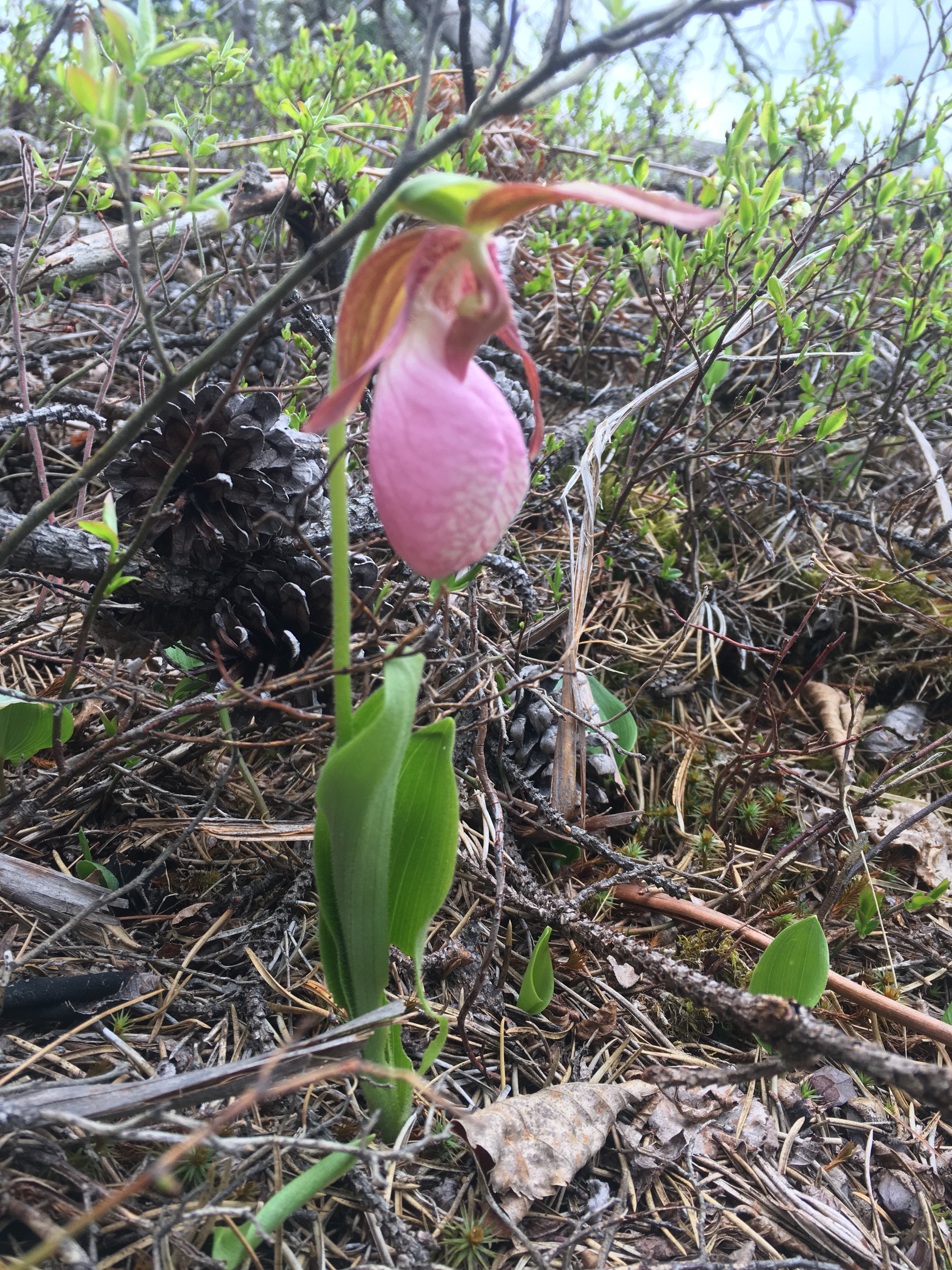
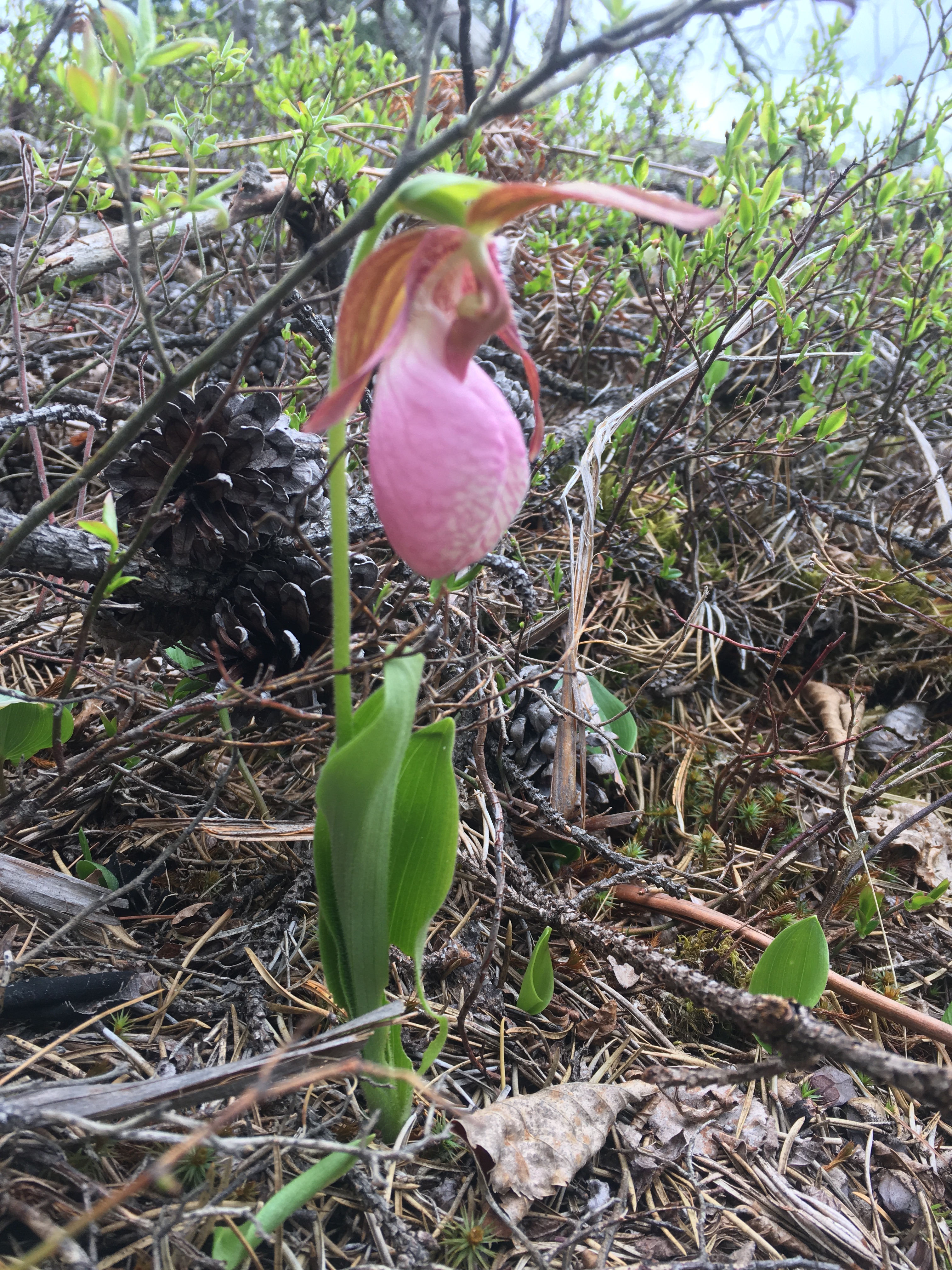
Pink lady slipper
Spring ephemerals Crayfish in the Lester River
In May I was lucky to be able to join a few other adventurous women for a weekend backpacking trip in the Boundary Waters Canoe Area. We met up at the trailhead, got our best socially distant start of the trip picture (unfortunately I don’t have that to share), and spent two nights enjoying the wilderness and the company (even though the black flies were thick)!
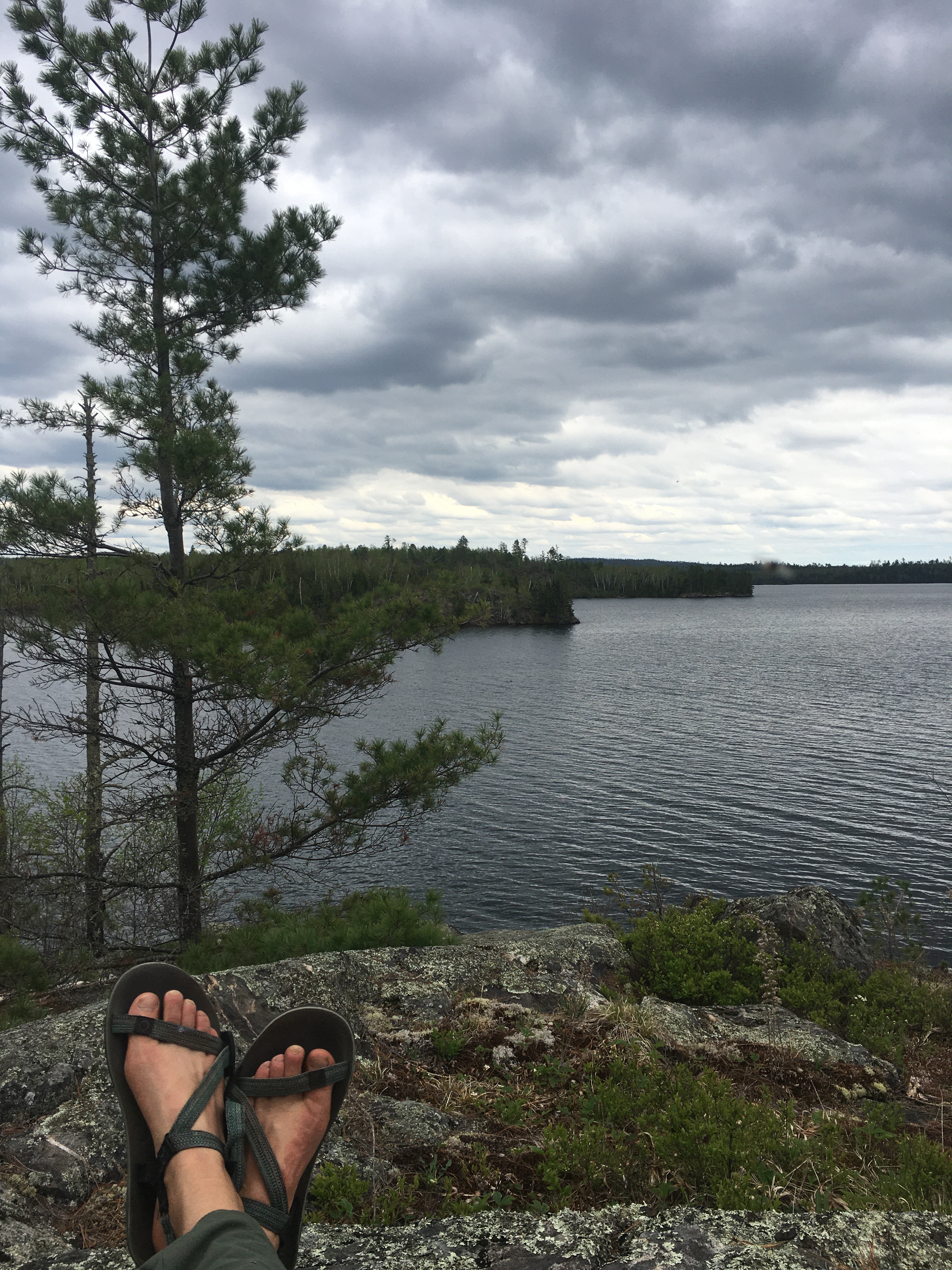
Campsite view
Pink lady slipper
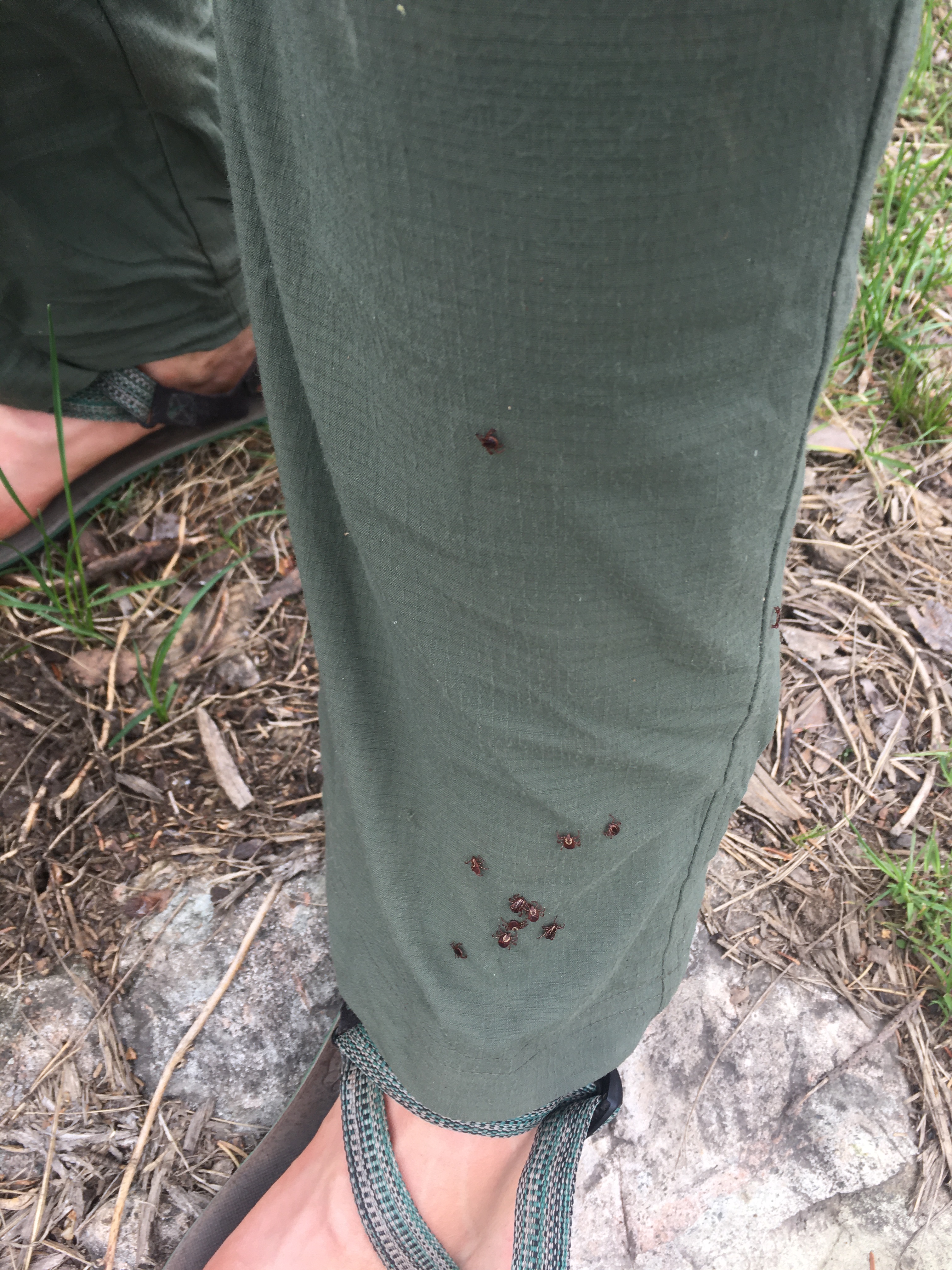
So many ticks!
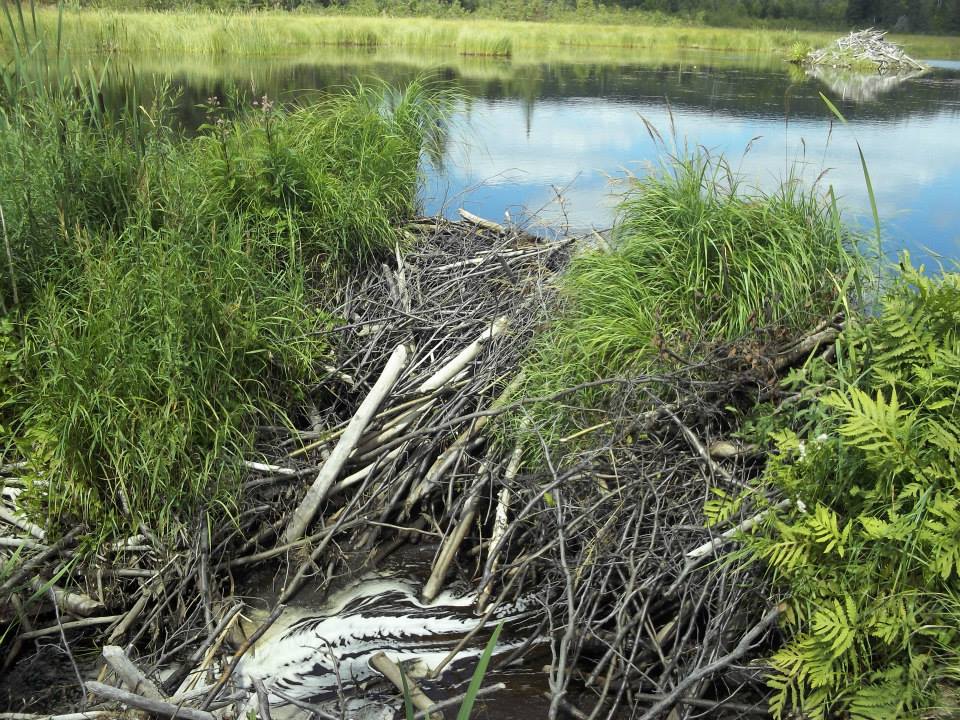
Hiking buddies traversing a beaver dam
Even though they happen every year, I do love the flowers of spring and summer – both wild and cultivated!
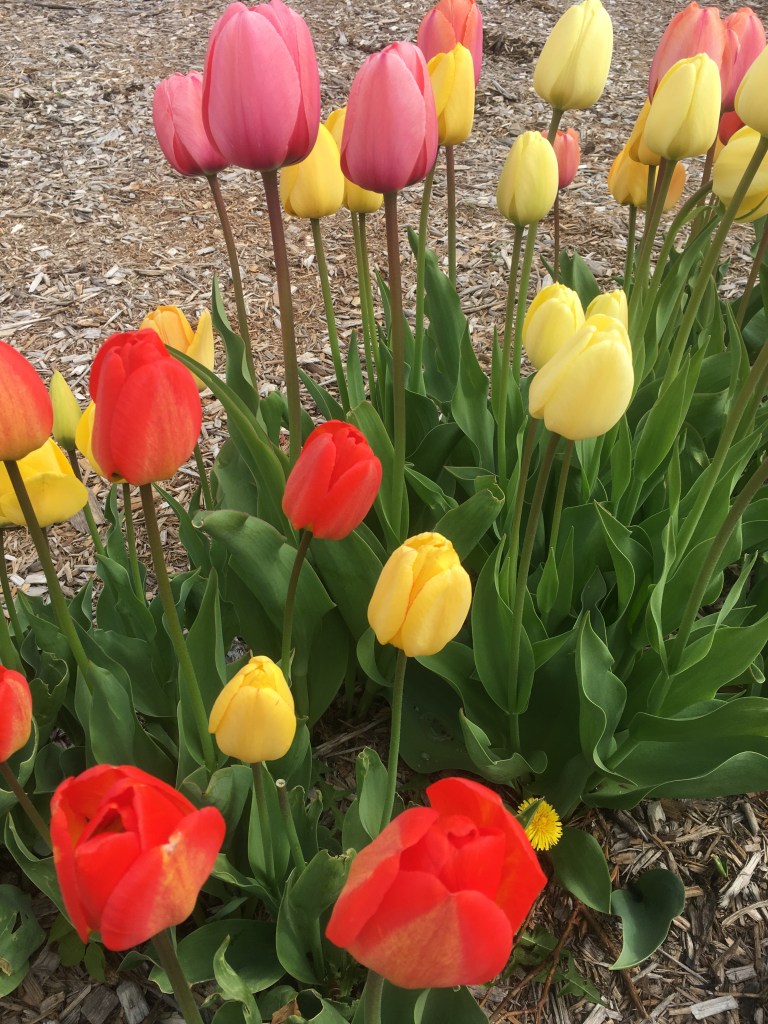
Tulips
Yellow lady slipper
Lily of the valley
Blue flag iris
One of many favorite sections of trail, within a half hour drive of my house. I always feel as though a dinosaur might spring out from the ferns.
It’s been a good year to see wildlife. I’m reminded that they don’t really care if we humans are having a pandemic.
Mama turtle
Mama deer
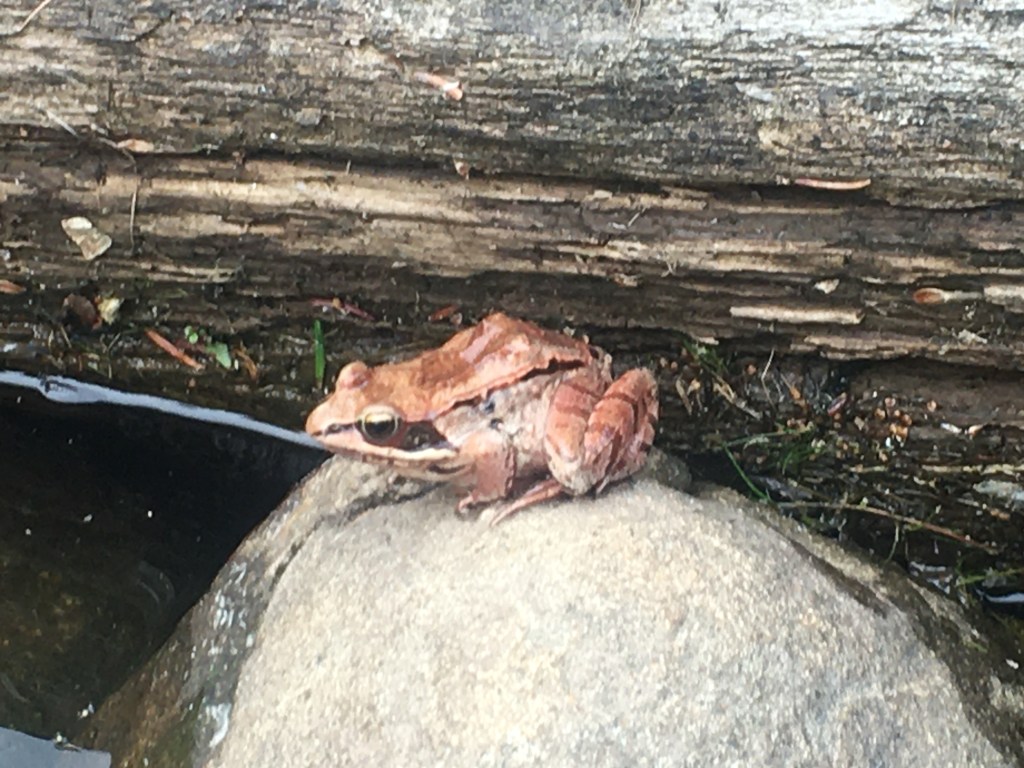
Wood frog
It was very powerful to join up with the peaceful protest in Duluth after the murder of George Floyd. Black Lives Matter, racism is the other pandemic in the United States, and I have been spending time working on my own biases. Thank you for those of you who have helped me.
.
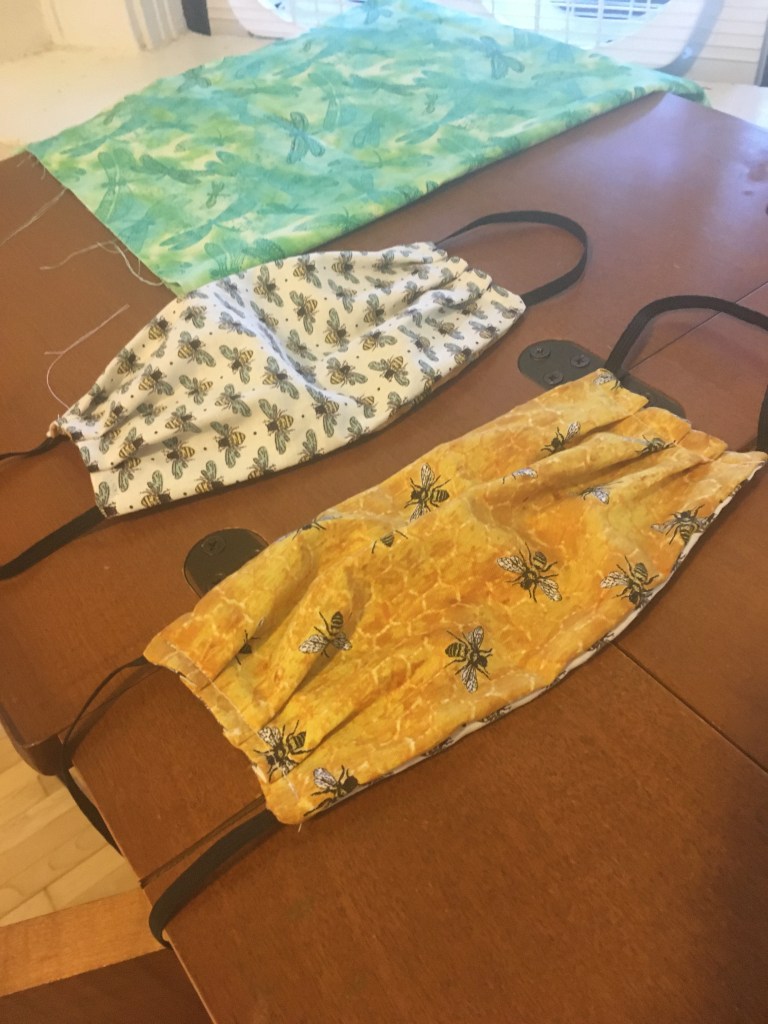
After living in my apartment for almost three years, I finally got a small table to eat and work from. This allowed me to move my sewing table and devote it to projects – like sewing masks, since it seems as though we’ll be wearing them for a while.
I was able to see the comet NEOWISE as it was visible in July. It was a good reminder that we are infinitely small in our vast universe! I don’t have a good camera or the patience to take good pictures, so I just enjoyed the comet itself in the present moment.
Boulder Lake sunset, waiting for views of the comet.
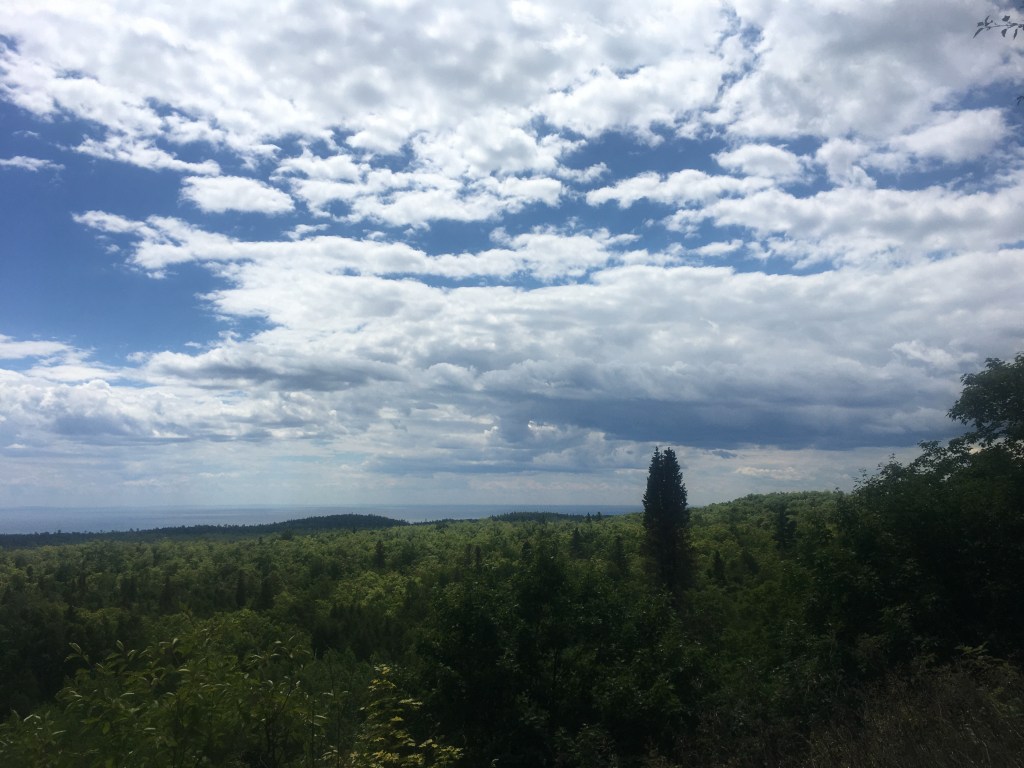
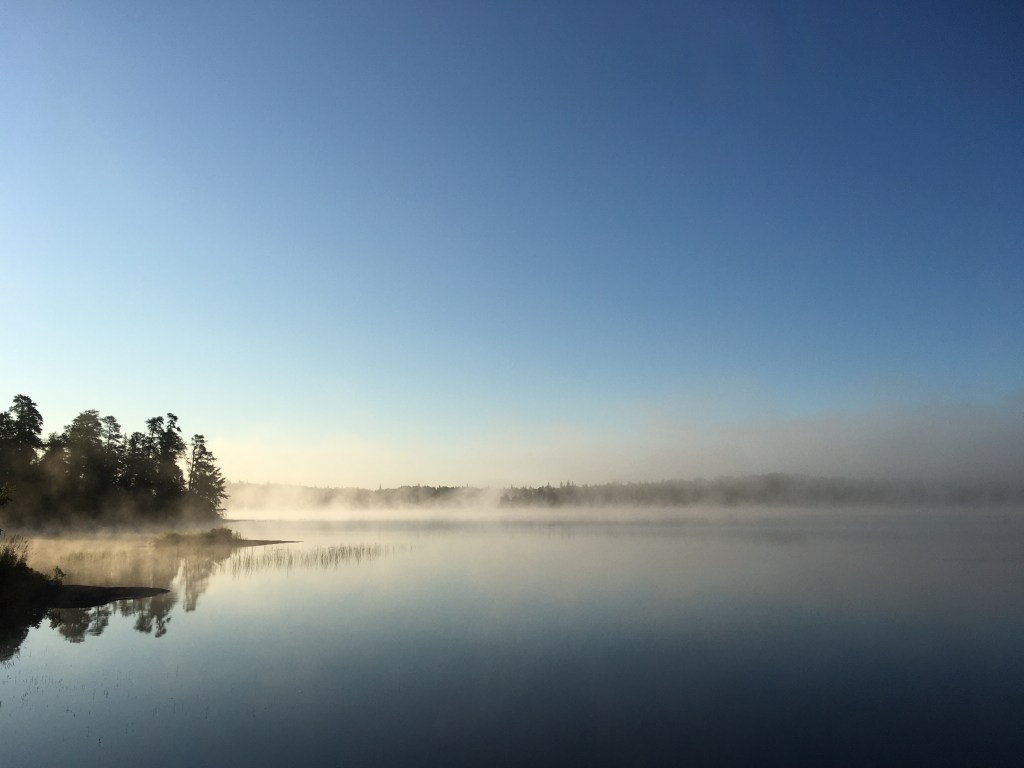
In August I was reminded of the wealth I have in where I live. A short backpacking trip up the shore provided a welcome break from technology and routine.
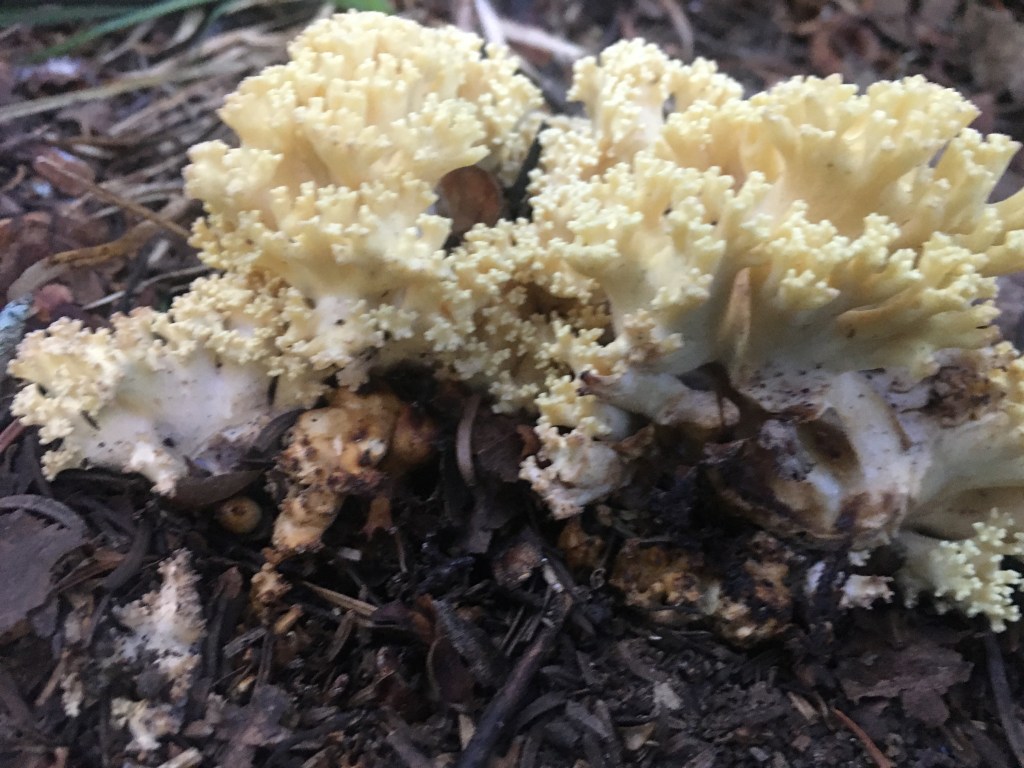
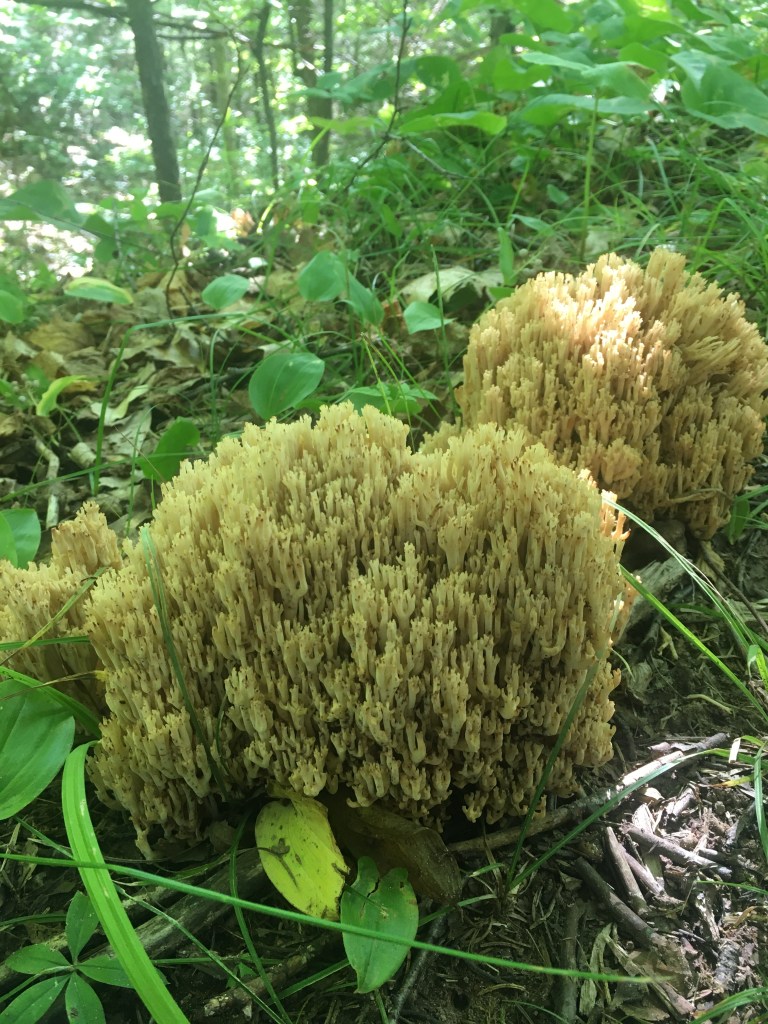
Coral F’ungus
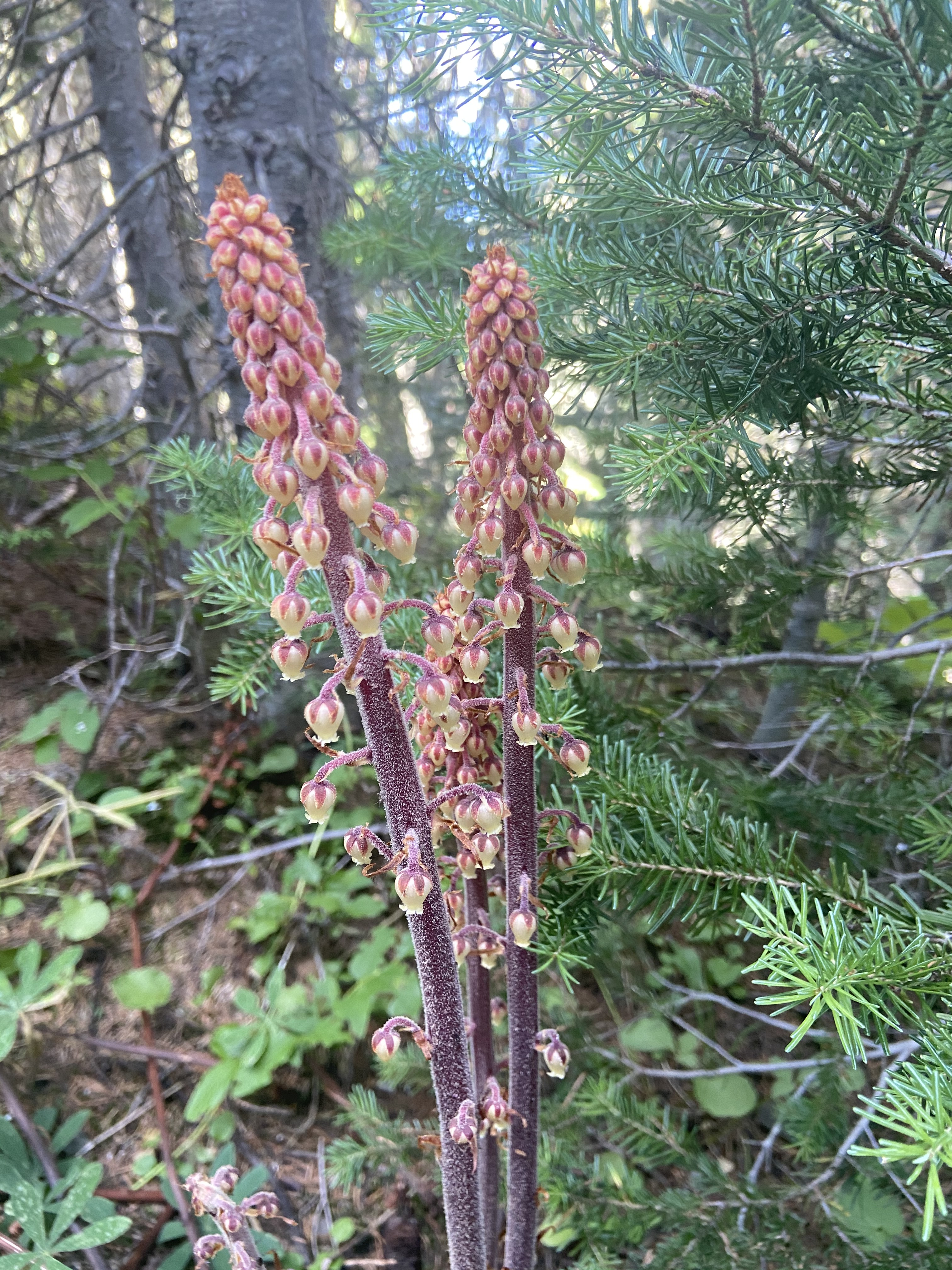
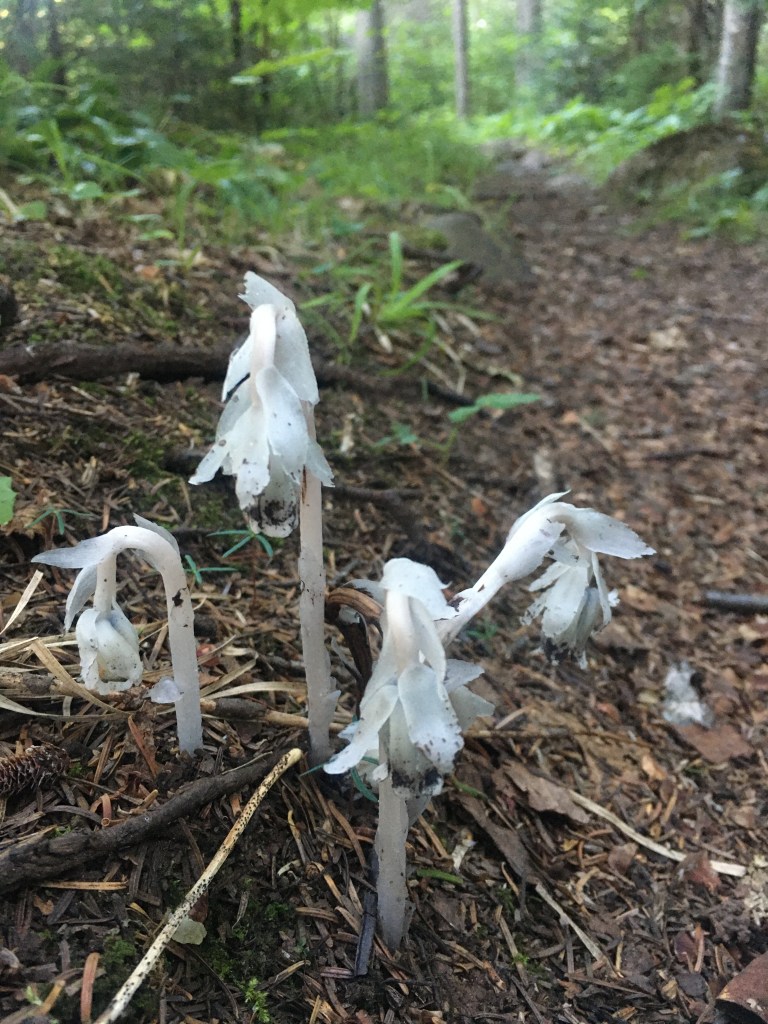
Ghost pipe flowers
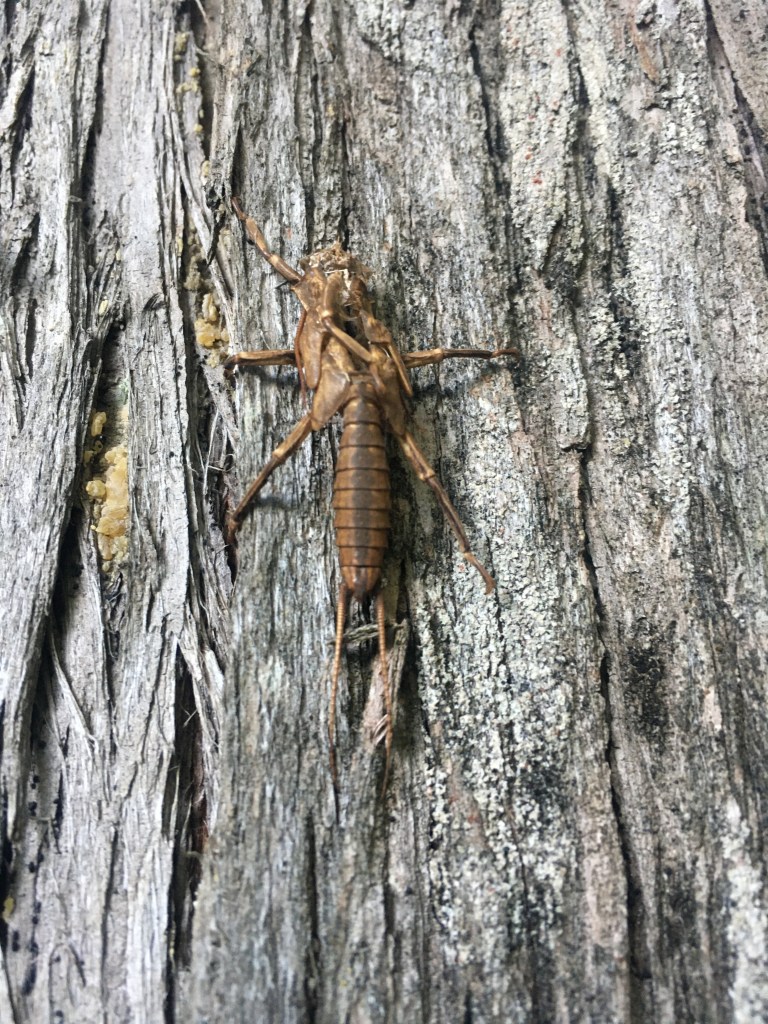
Caterpillar!
Sometimes, you are just in the right place at the right time. I took this picture of a tanker and a rainbow from the Super One grocery store parking lot. The spectacular and fleeting moment drew a few other folks, and we reveled in our good fortune – and found connection in the moment.
Two short canoe trips to the Boundary Waters didn’t disappoint. Again, I am in awe of the wealth that we have in our wild places! Sigurd Olson said it well, “Wilderness to the people of America is a spiritual necessity, an antidote to the high pressure of modern life, a means of regaining serenity and equilibrium.”
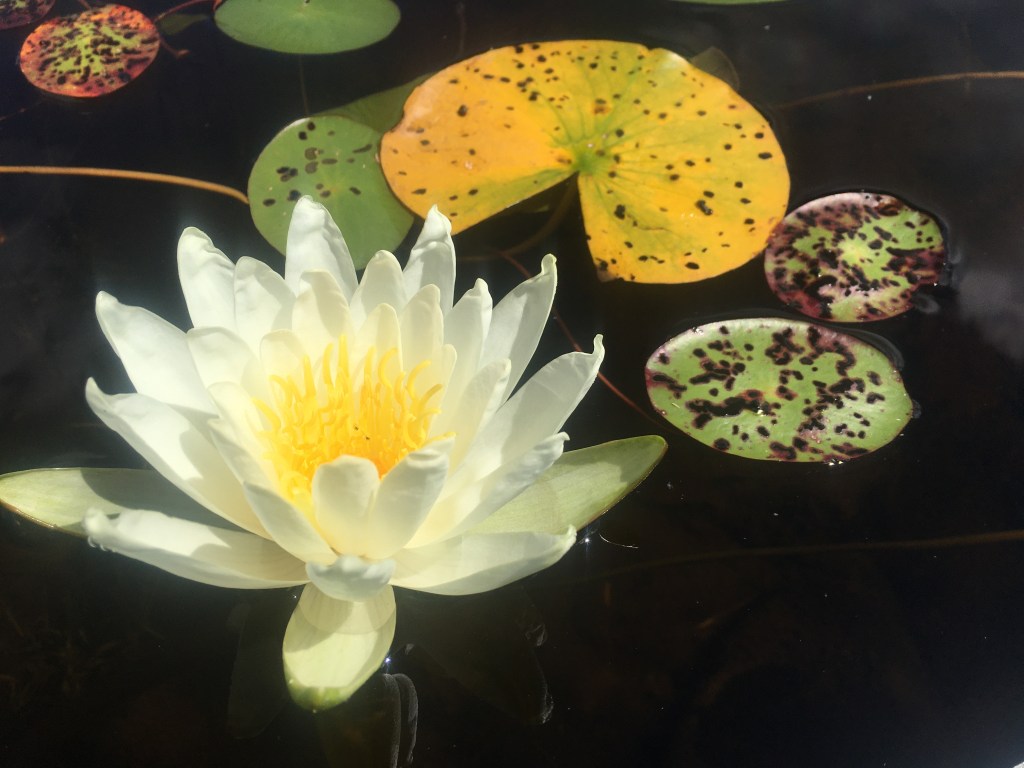
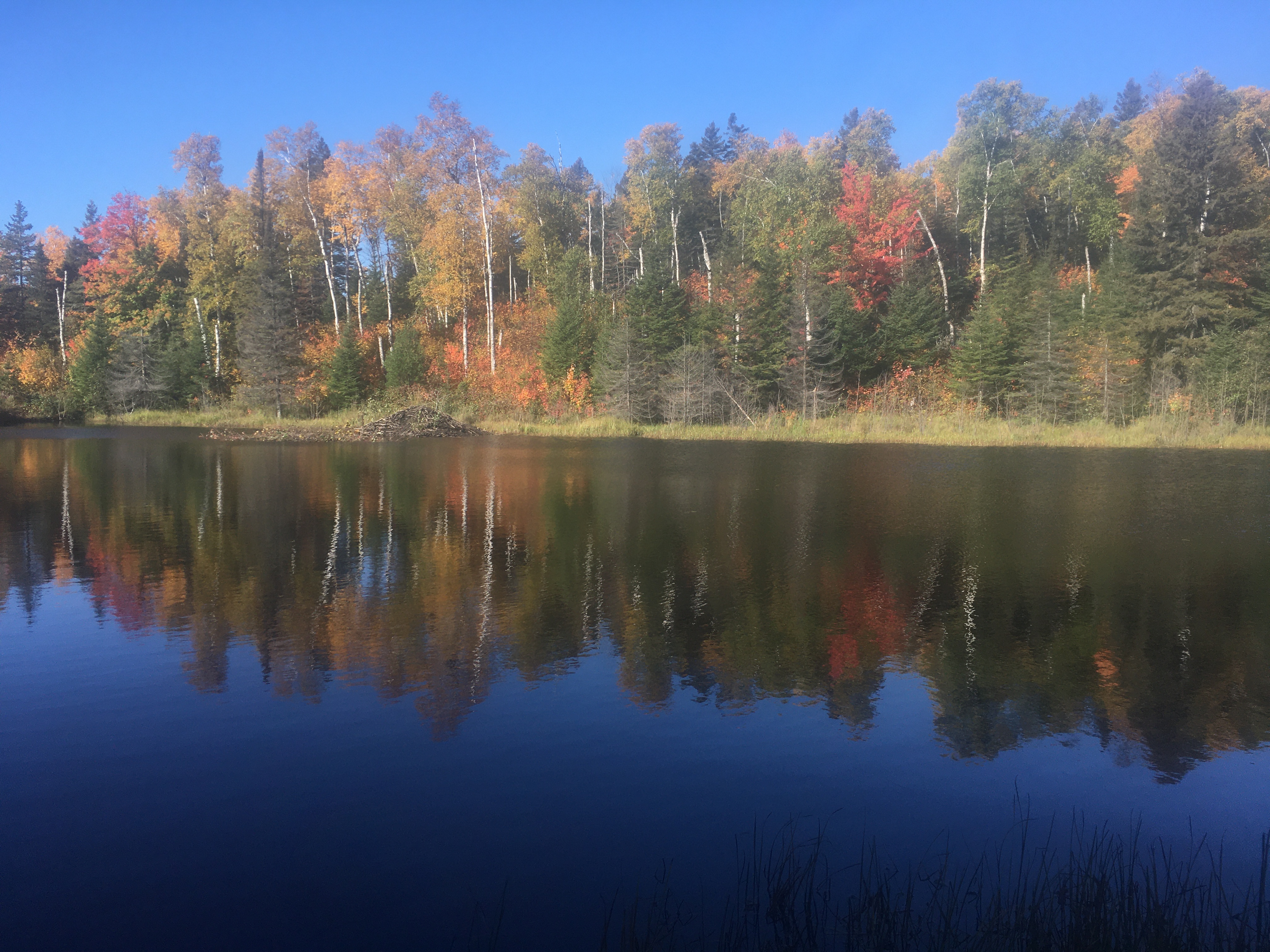
Sights in the Boundary Waters Canoe Area
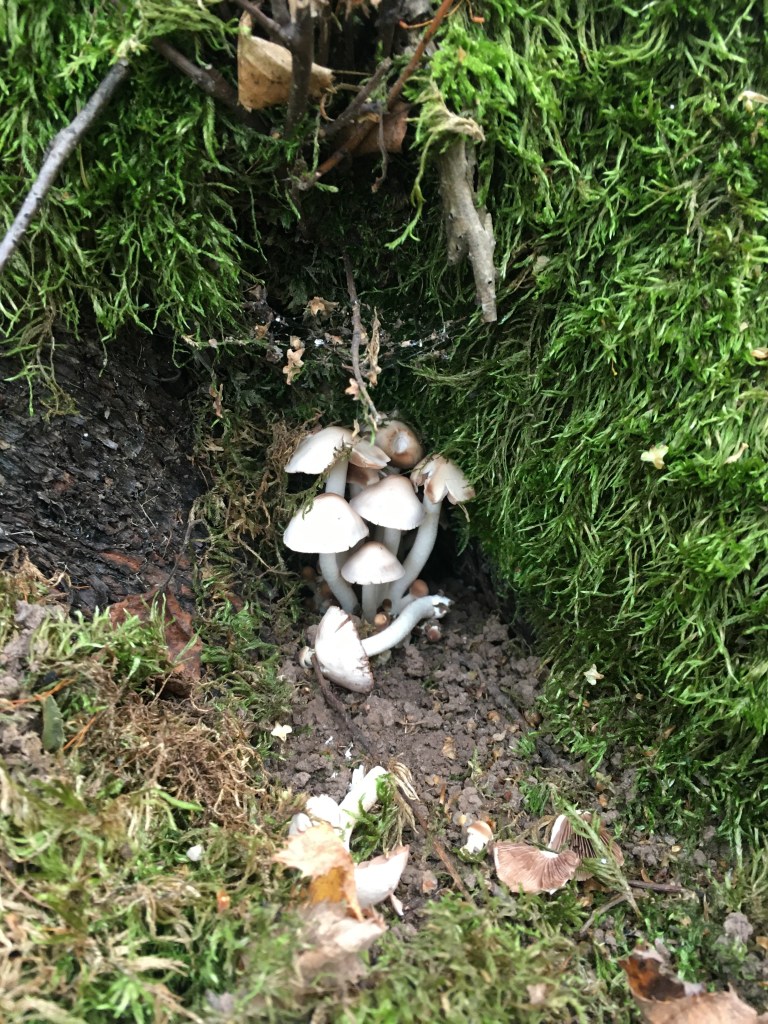
An assortment of cool fungi I found!
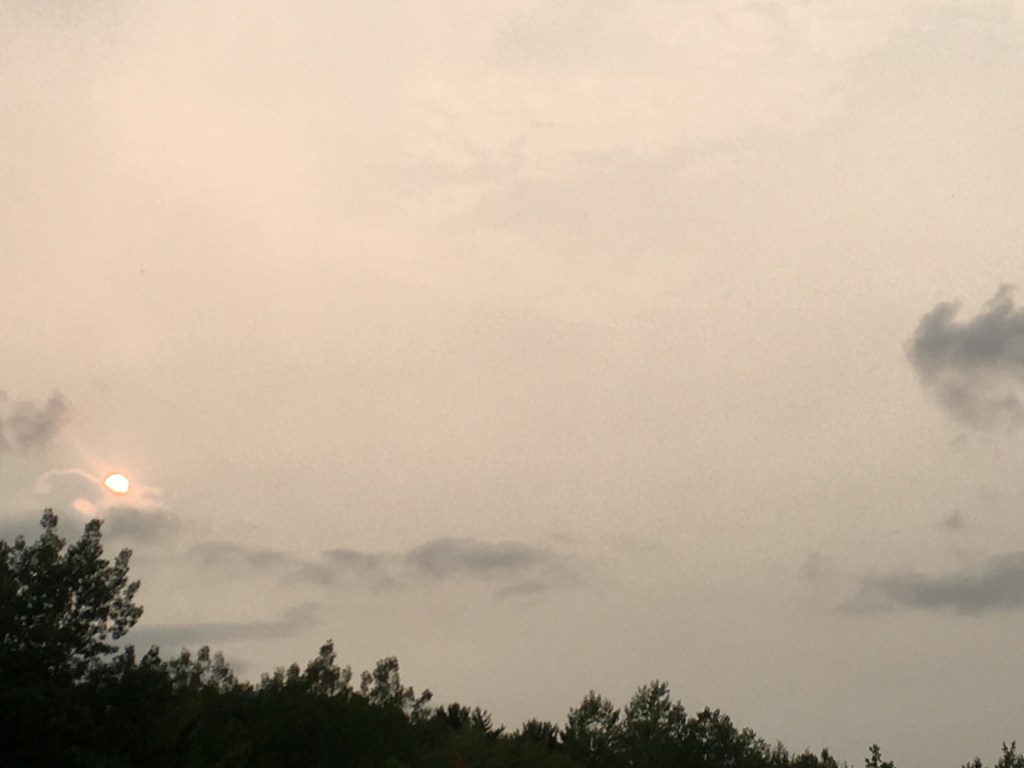
Back working in person this fall, I snapped the following picture over a lunch break. The light was eerie as it filtered through the smoke that had traveled thousands of miles from its origin. My heart goes out to those more closely impacted.
Fall colors and dry trails made for some great trail running in September. While I opted out of running any organized races this year (of the few that did take place) I still found grounding in being able to go out and spend some hours on the trails each weekend. Since others were seeking that too, I found some quieter trailheads and took the backroads home to avoid the crowds and traffic. Again, I’m reminded how lucky I am to know some alternative spots to take in the colors.
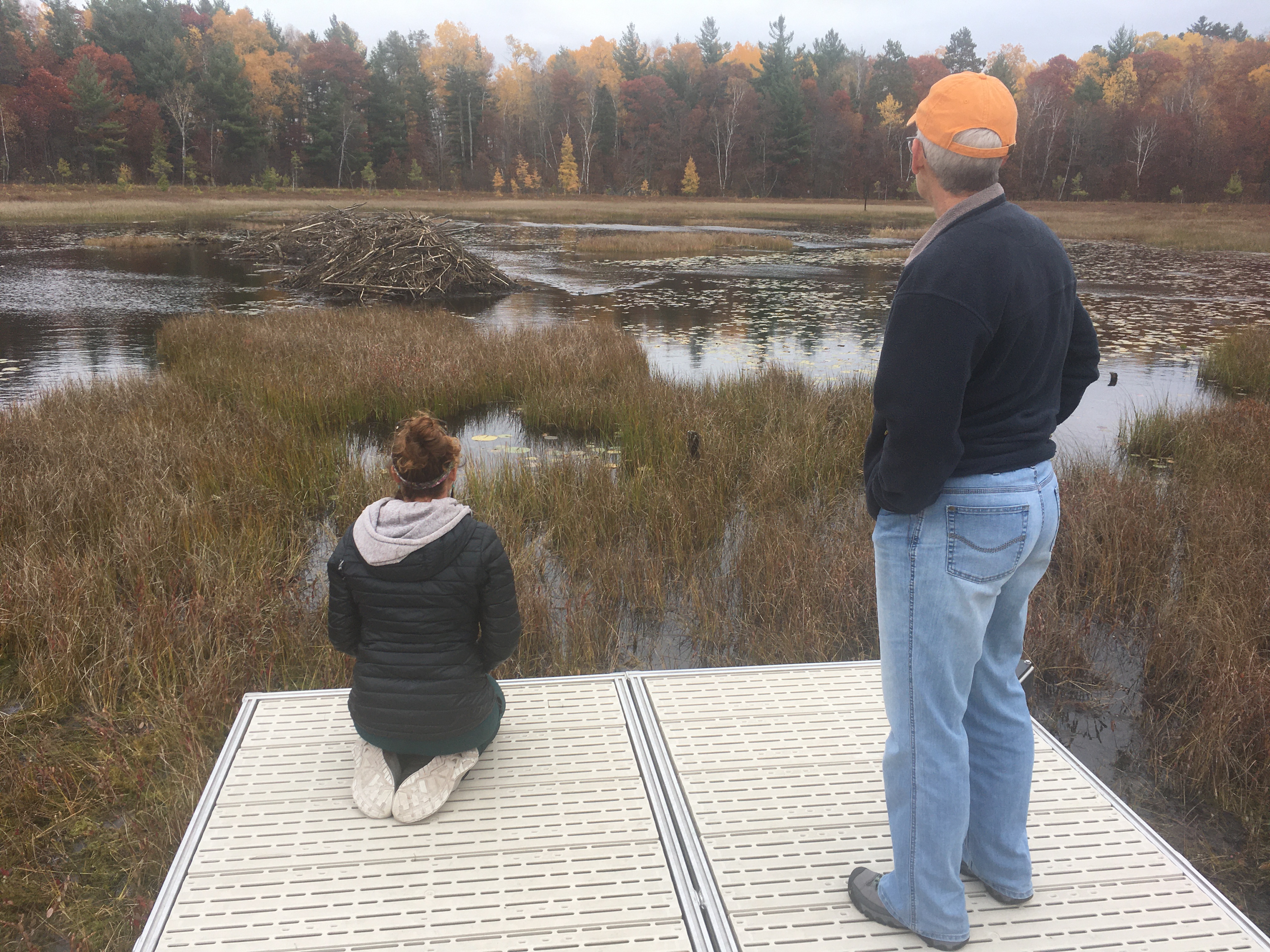
On one very exciting weekend, I made it over the Deep Portage Learning Center, a place near and dear to my heart, and was able to spend a few hours enjoying the trails with a couple dear, close friends. We even got the very special treatment of seeing a beaver at the bog! It was good for the soul.
As we enter into the darker, colder months, it will be harder to get outside. For me, being active outside is crucial to maintaining my mental health, even in a good year. Outside has also been how I’ve done most of my socializing for the last six months, something else good for mental health. My plan going into winter: get a brighter headlamp and a reflective vest or jacket so I can ski by headlamp if we have snow snow or run if we don’t.
What have you been up to these last few months? What’s your plan to maintain (or better) your mental health this winter?
A wet, cold day in October
I’ll leave you with one more Sigurd Olson quote:
“Joys come from simple and natural things; mist over meadows, sunlight on leaves, the path of the moon over water. Even rain and wind and stormy clouds bring joy.”
Sending love and peace to you all!
]]>1exploringedgeshttps://exploringedges.wordpress.com<![CDATA[Solo in the Boundary Waters]]>http://exploringedges.com/?p=7422023-04-06T14:29:37Z2020-01-22T14:00:54ZThis summer I embarked on an impromptu solo canoe trip. Though I’ve been on multiple trips to the Boundary Waters Canoe Area, I’ve never gone alone, and it definitely tested me in new and unexpected ways. Sure, I’ve backpacked and traveled internationally solo, but I’ve never ventured out overnight with a canoe alone. What if I didn’t tie it down right and it flew off my car? What if I wasn’t strong enough to portage it? What if weather came in? Have I not done this yet because I’m scared?
That was it: I wasn’t pulling the trigger on this adventure because I was anxious about my own abilities, about the WHAT IF. And this is important to consider: venturing out alone is more risky, and one has to consider who will be put in danger coming to rescue you if something bad does happen. However, looking at the risks, and actively working to mitigate and manage them helped me to feel good about embarking on this short adventure.
After practicing portaging and loading it on my car in her yard, I borrowed a friend’s canoe (which made me anxious in itself, no one wants to wreck someone else’s canoe!) and took off on a Sunday headed toward Ely. I camped at a Forest Service campground near my entry point so I could get an early start the next day.
In lieu of keeping a written journal, I made series of short voice recordings while out there to help encapsulate my story. They were done on my phone, and with no script, and mostly in a single take – so they capture a bit of the weather conditions as well as what I was thinking right at the moment (and they aren’t edited…so, enjoy). Please let me know if you aren’t able to listen to the links and I’ll troubleshoot! Here is a link to the transcript of the audio recordings: Solo BWCA transcript
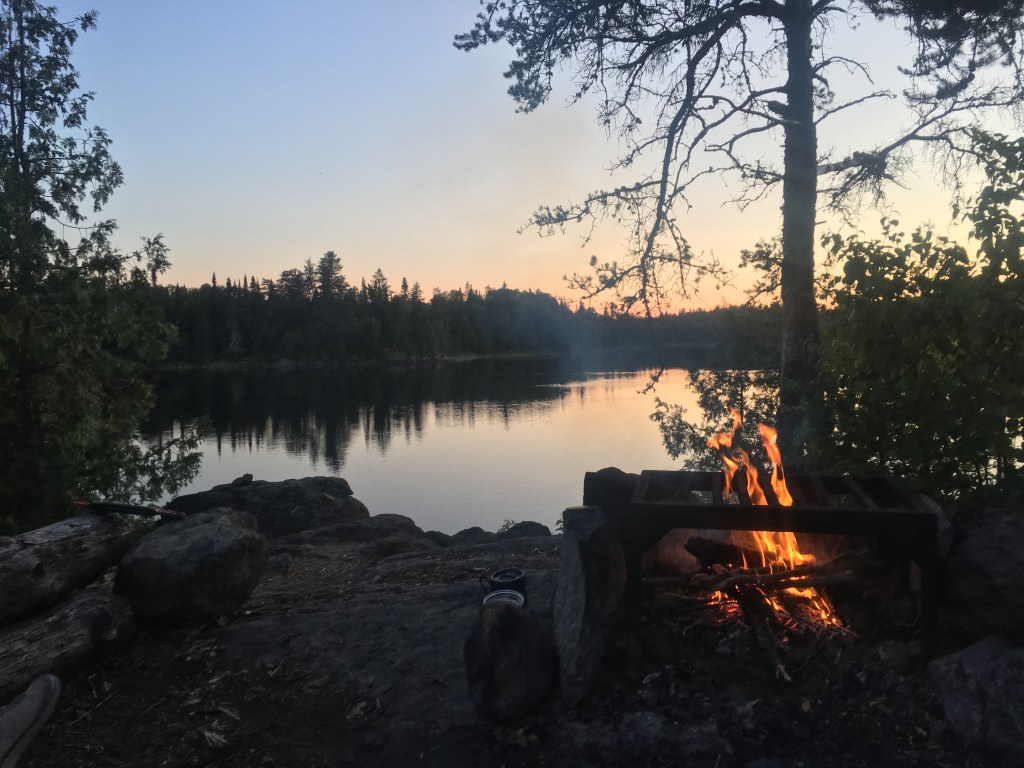
The pictures mostly go in chronological order, but they don’t necessarily match up with the days spoken about.
Though a short trip, it was an excellent way to get my feet wet in solo canoe adventuring. I am so grateful to have been able to borrow such a sweet canoe and for the ease of access and proximity of the Boundary Waters Canoe Area Wilderness. Though I would do a few things differently if I venture out solo by canoe again, I am happy that I opted in on this adventure.
What is it that you’ve been opting out of because of the WHAT IFs? Are your fears grounded, or can they be mitigated by some planning and preparation?